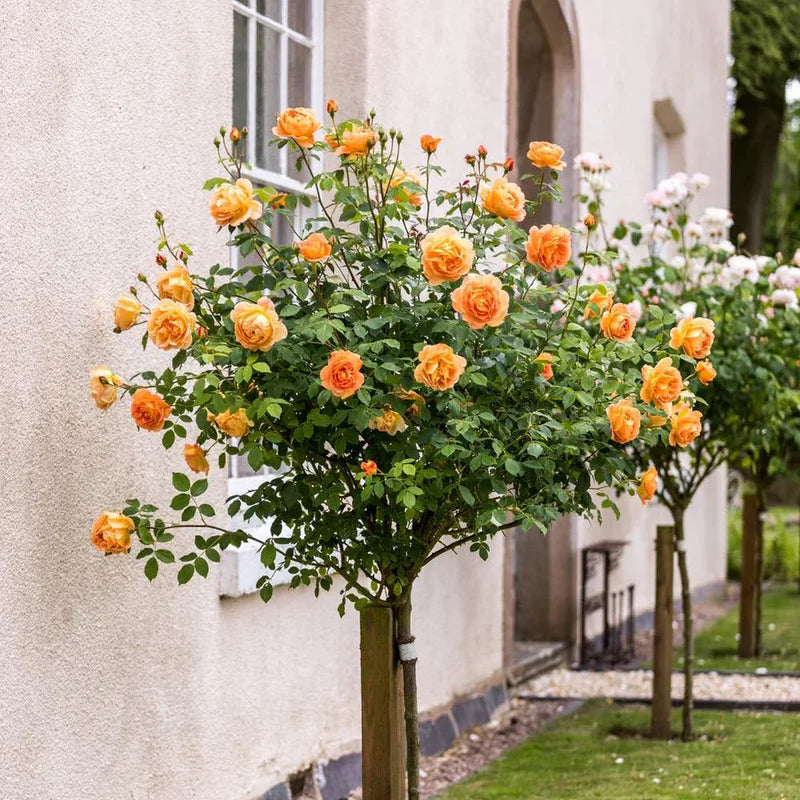

How to Design and Use Pink Roses in Your Garden
Pink roses possess a remarkable adaptability that allows them to completely alter the character of a garden. Depending on the shades and combinations you choose, they can create a soft, romantic pathway, a vibrant, modern border, or a rich landscape filled with deep jewel tones. Reliable and timeless, pink offers a beautiful shade and growth habit for every style of garden.
Achieving a balanced display requires a deliberate approach to selecting your palette, layering different growth habits, and choosing the correct companion plants to support them.

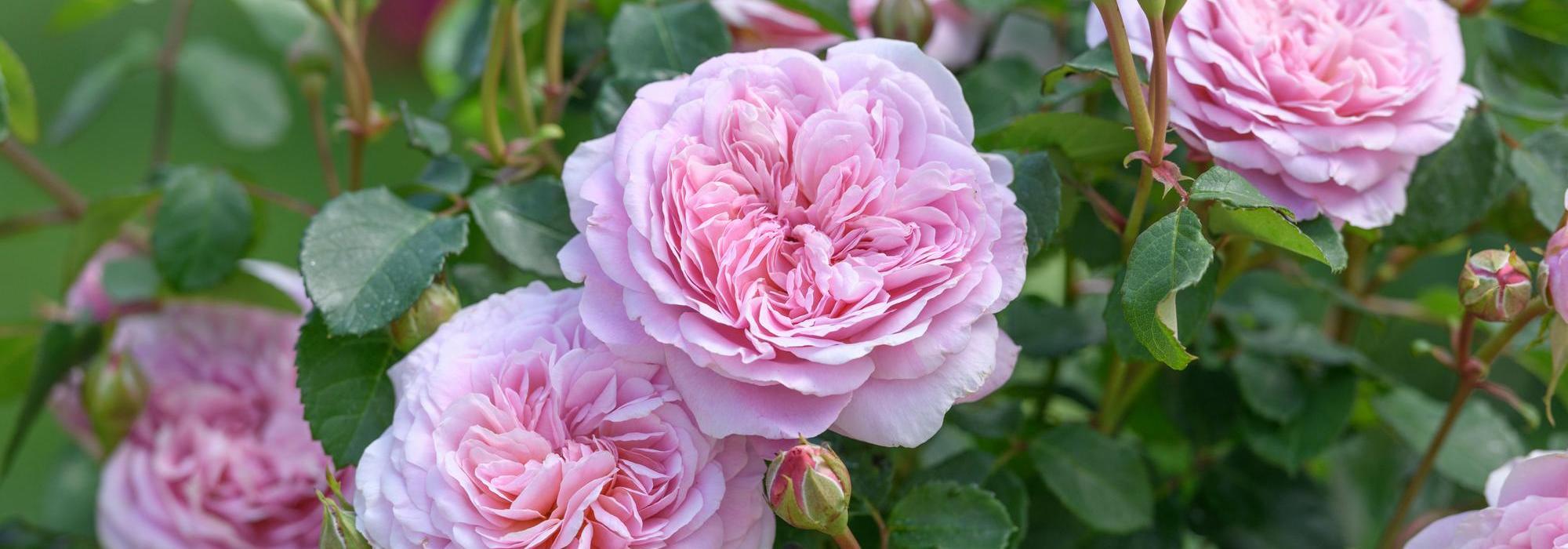
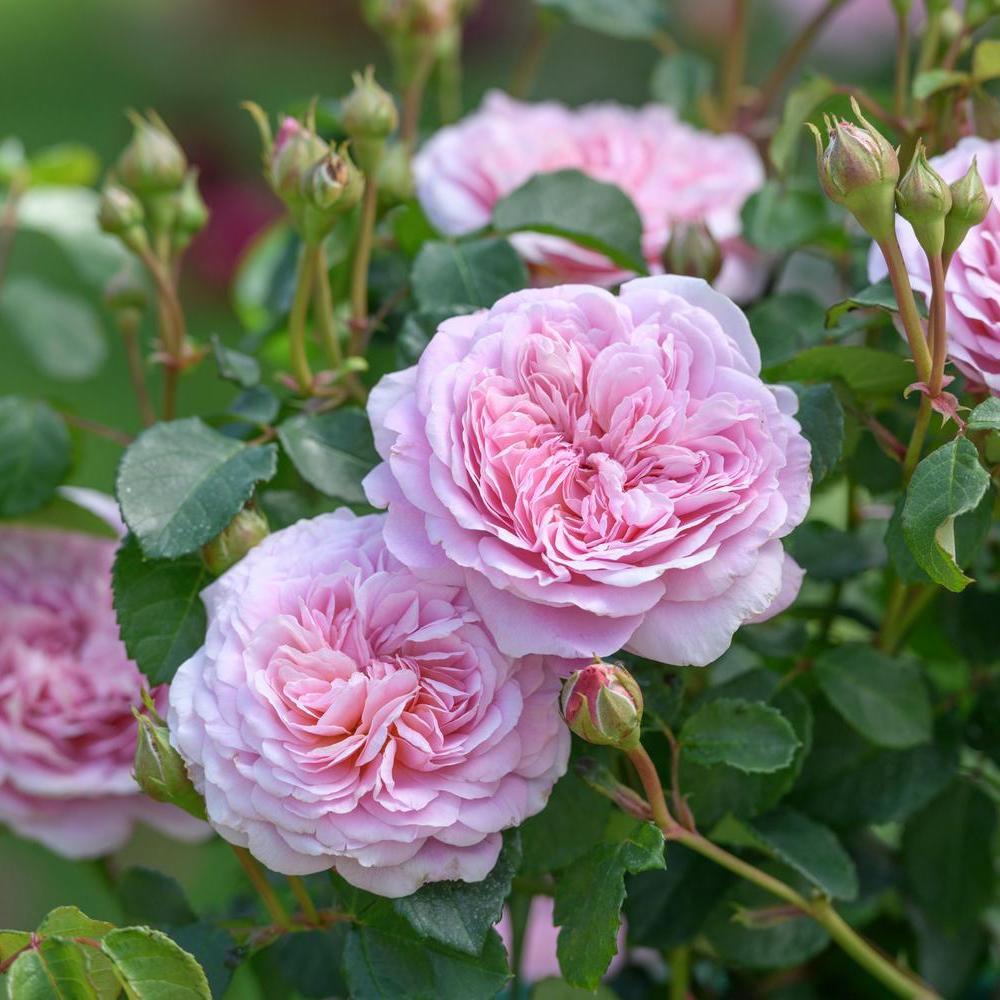
Step 1: Establish Your Palette and Garden Style
Before choosing varieties, decide on the visual tone you want to set. Layering different intensities of pink allows you to direct the mood of the space.
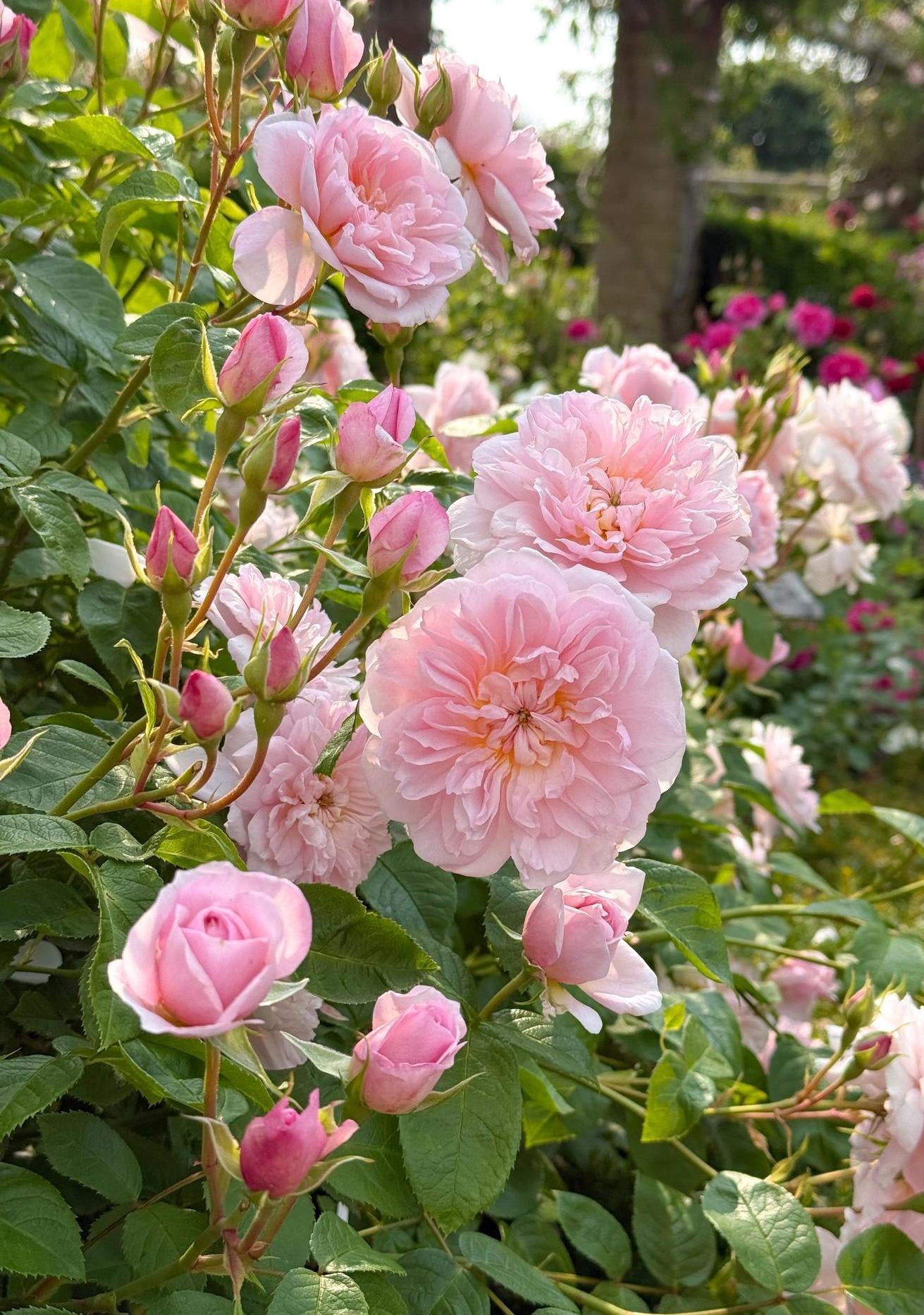
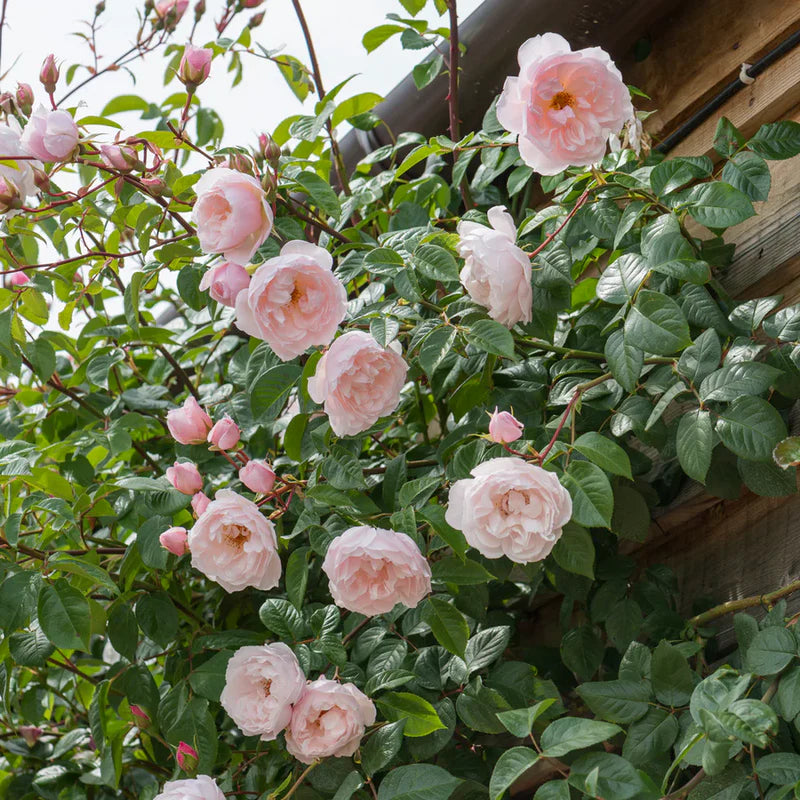
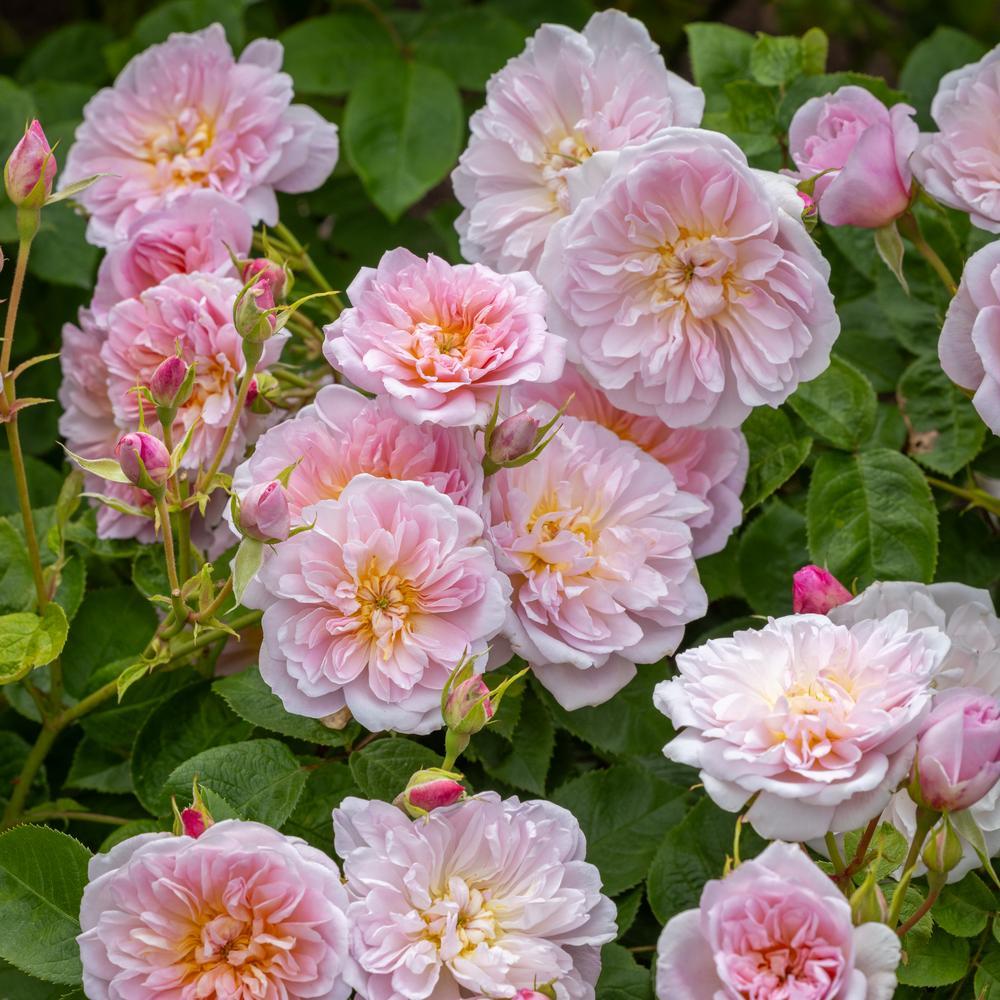
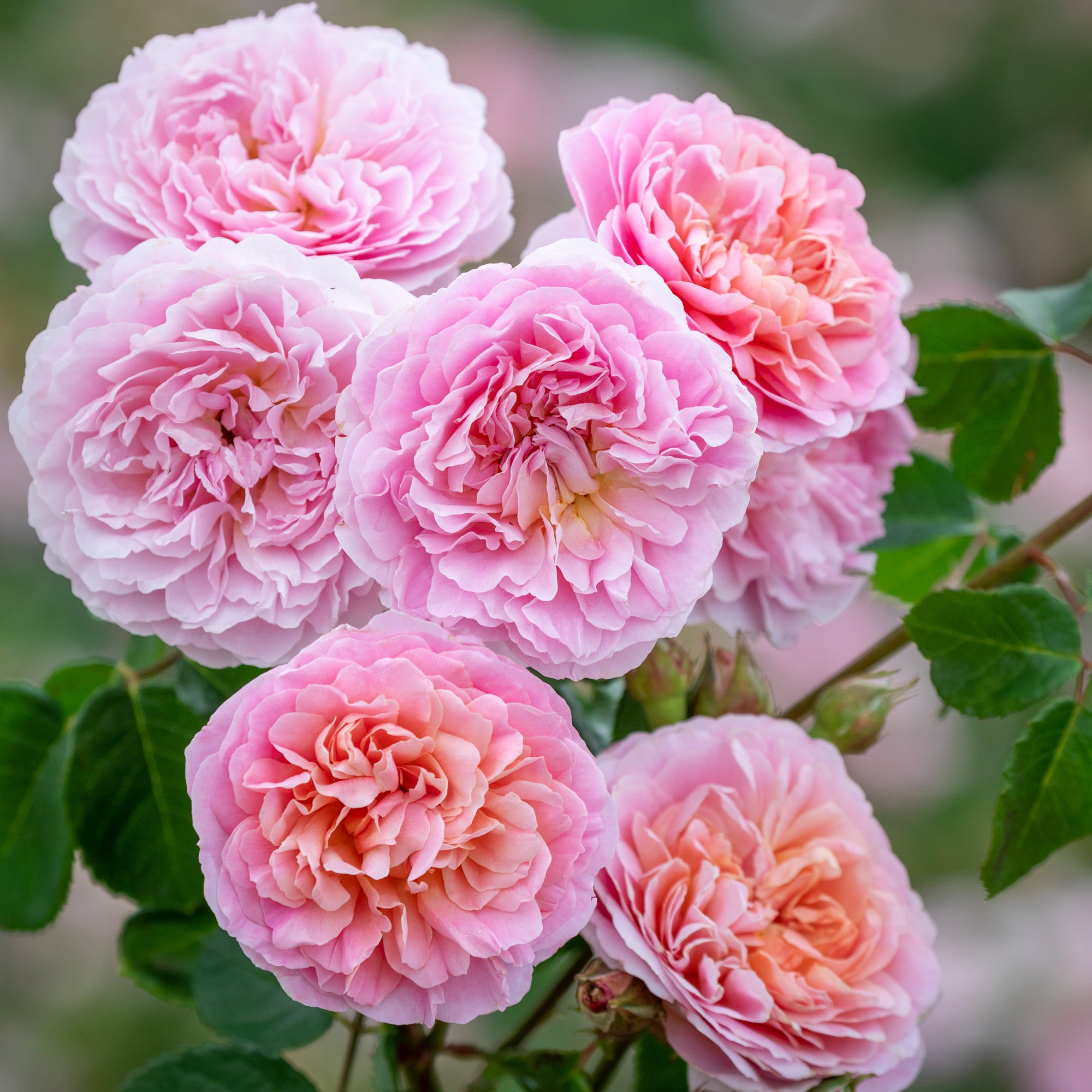
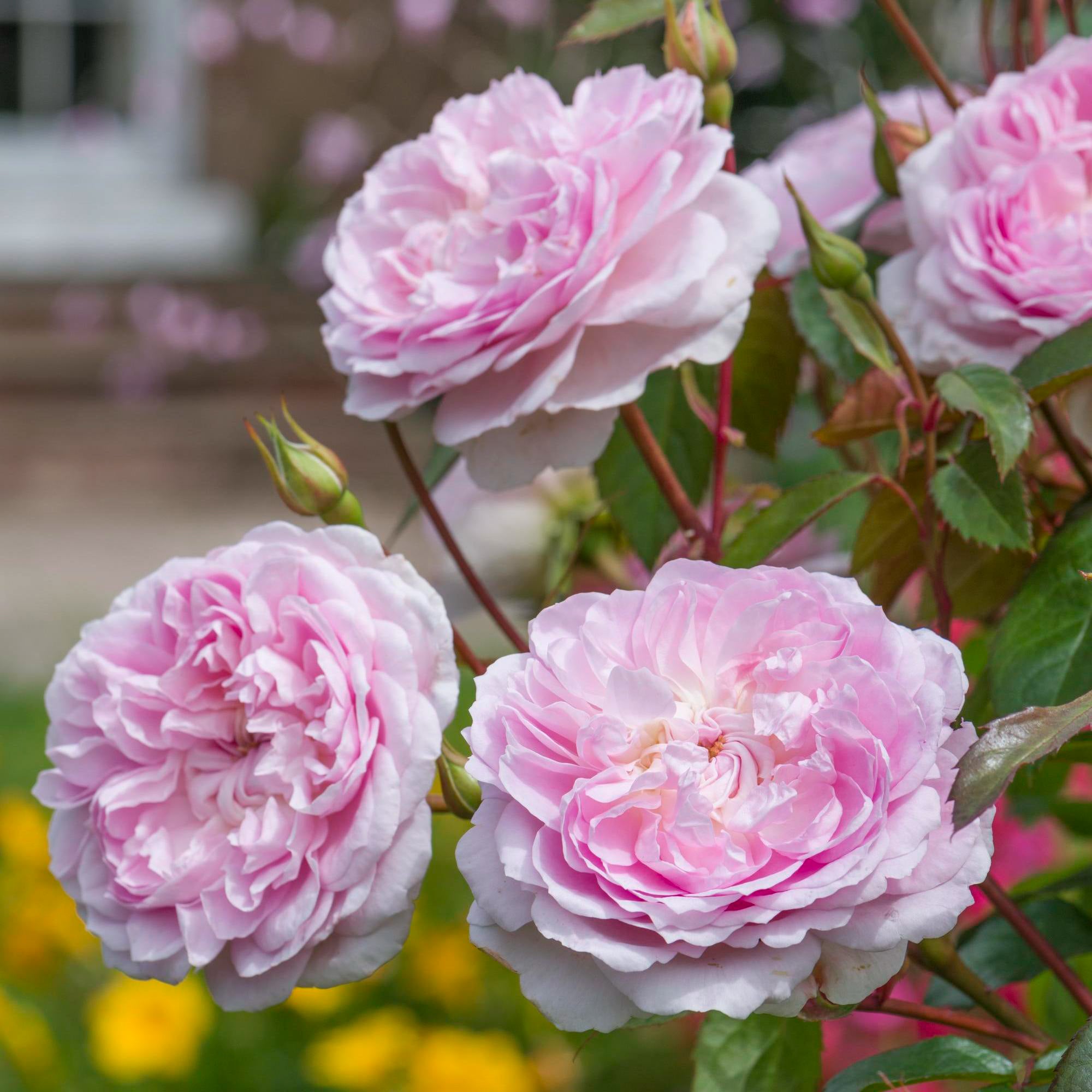
For a Calming Atmosphere: Group delicate blush and pale pink roses together. Varieties like Elizabeth® or The Generous Gardener® soften hard landscaping and weathered stone, making them ideal for framing quiet seating areas.
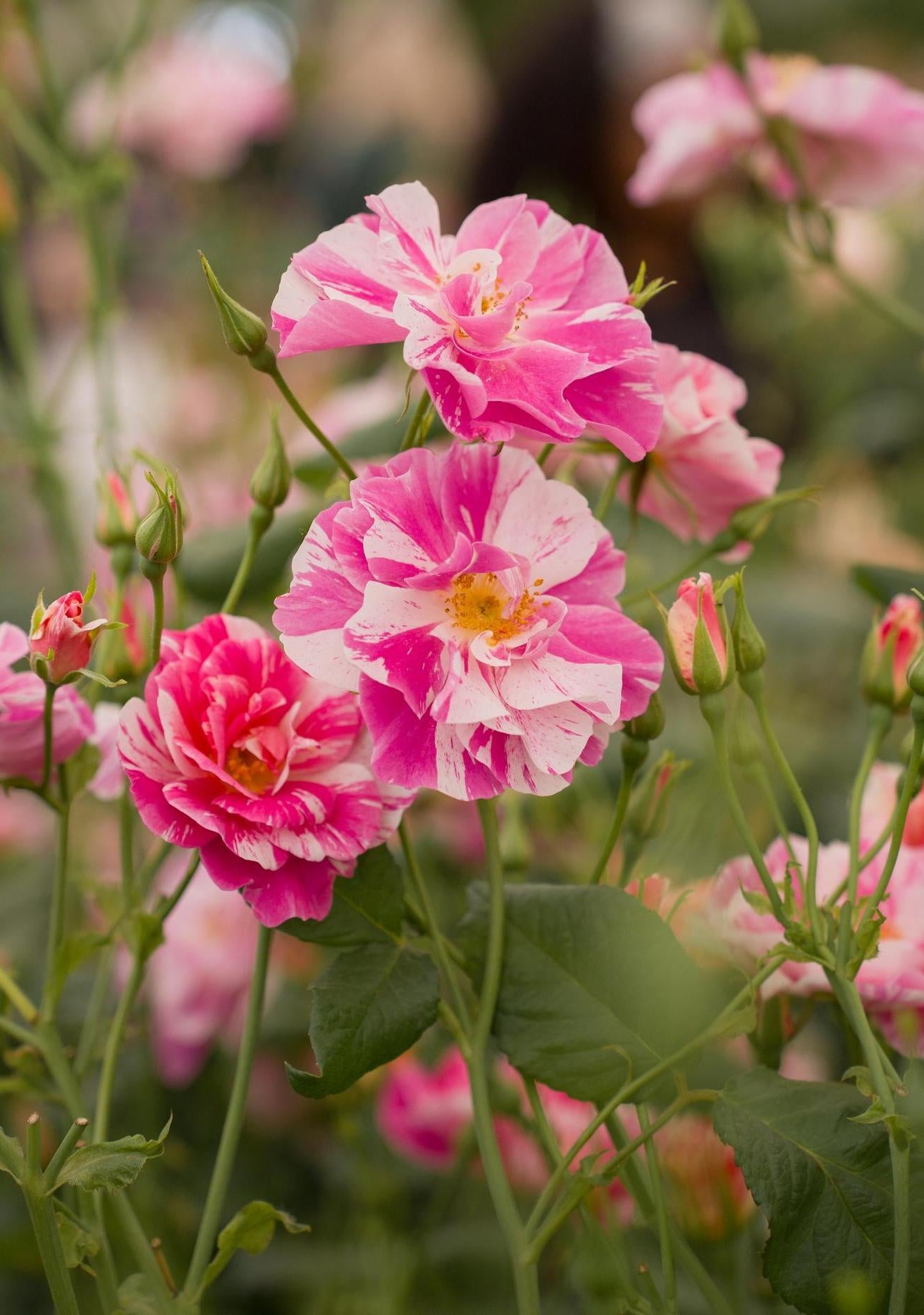
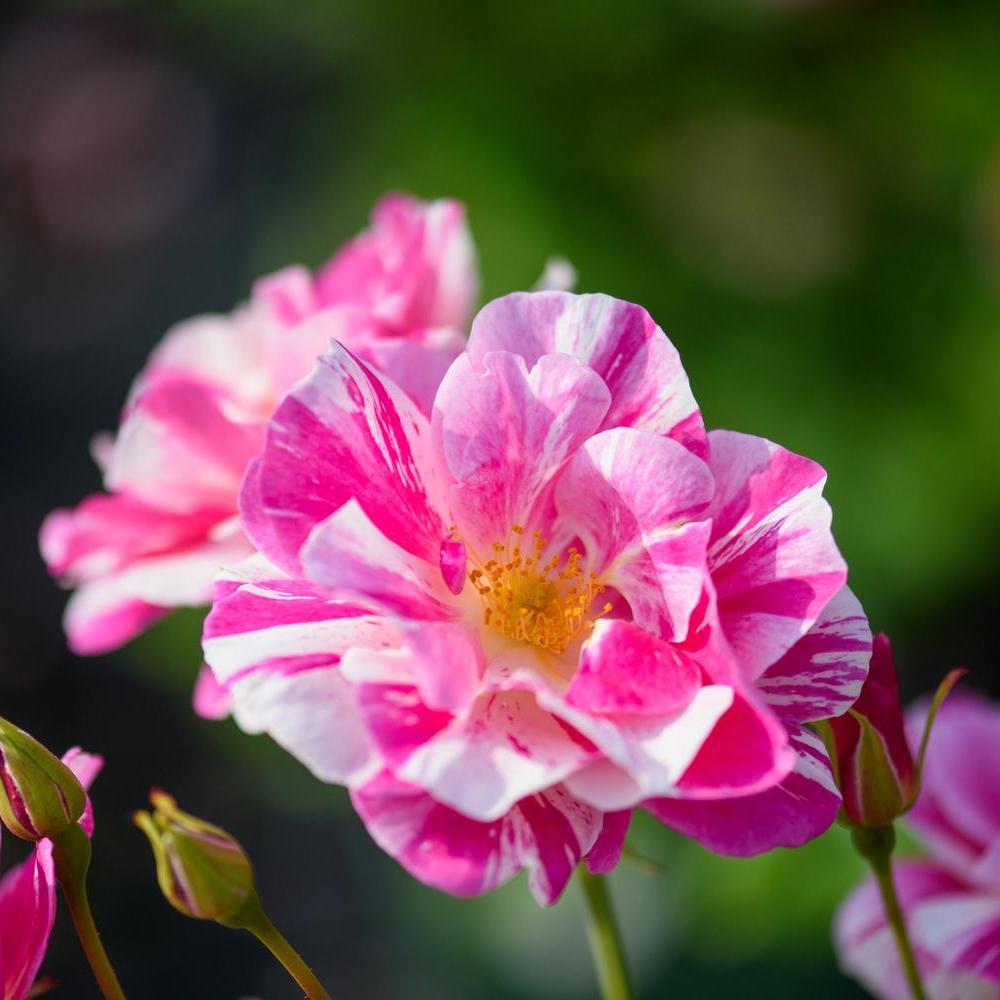
For an Energetic Border: Mix mid-pink roses with unexpected, shifting tones or unique patterns. Combining the coral and lilac qualities of Emma Bridgewater® with the distinctive fuchsia-and-white stripes of The King's Rose® creates a cheerful, modern landscape that captures attention.
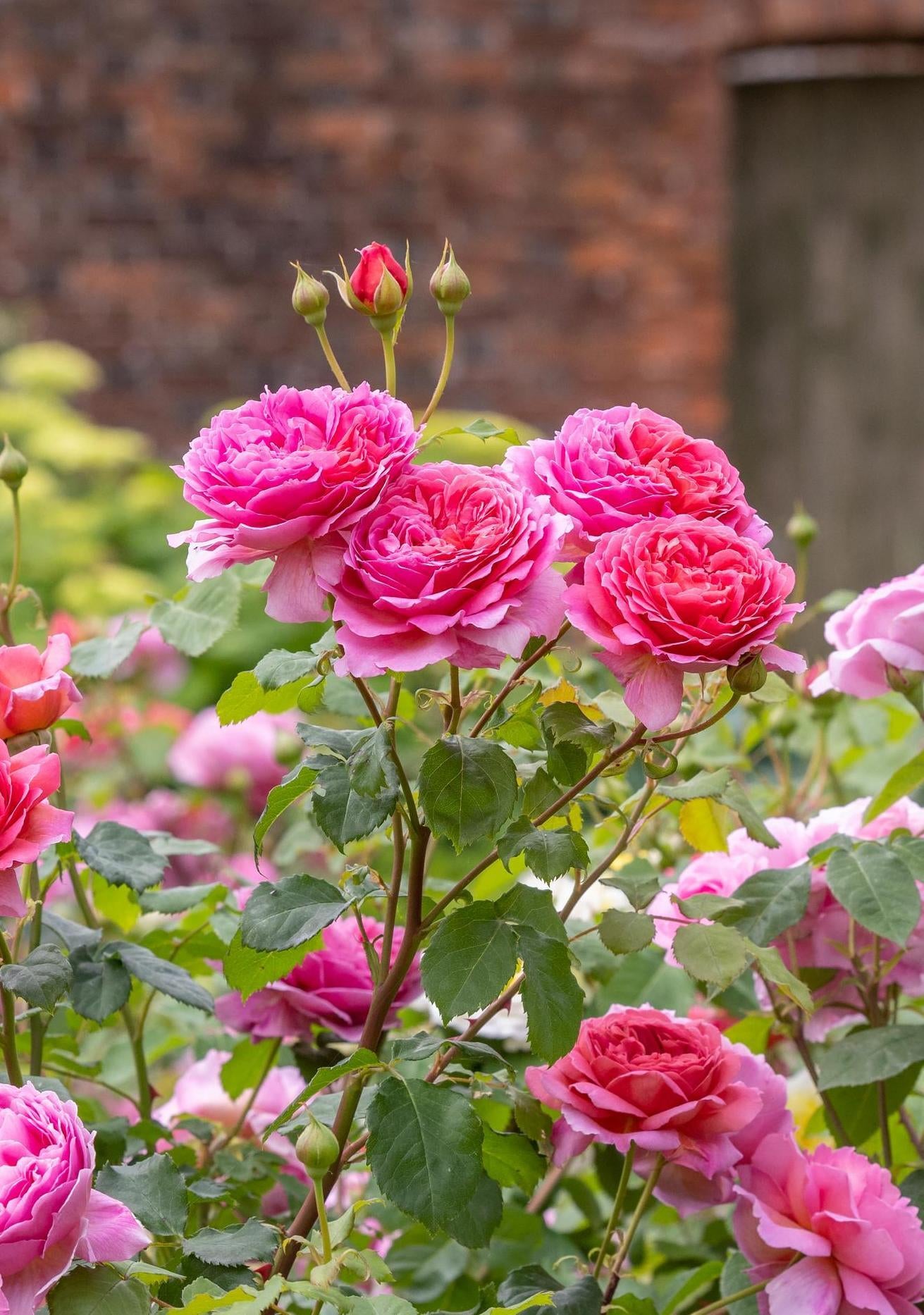
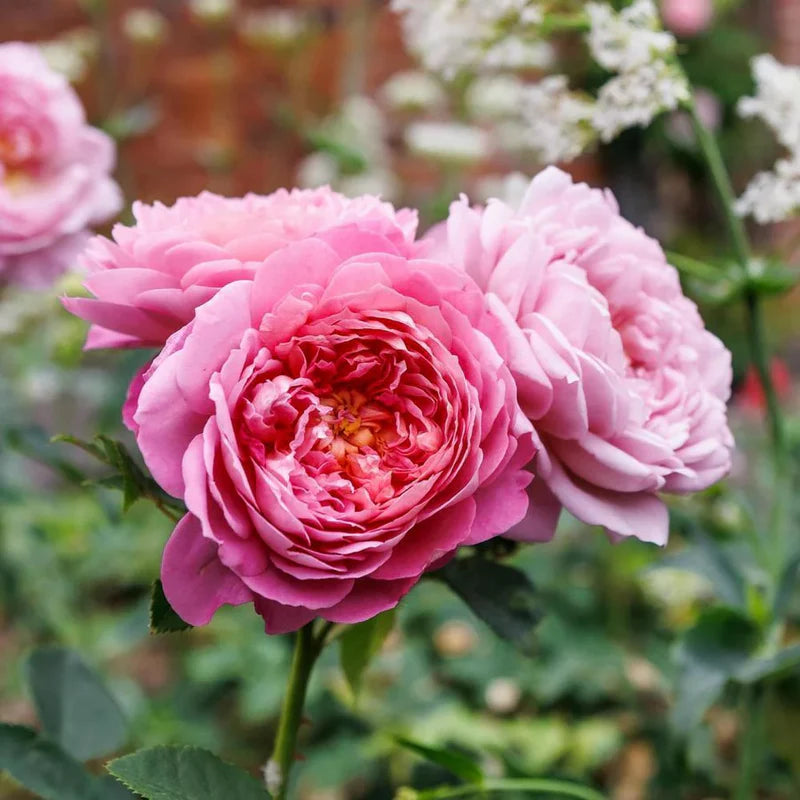
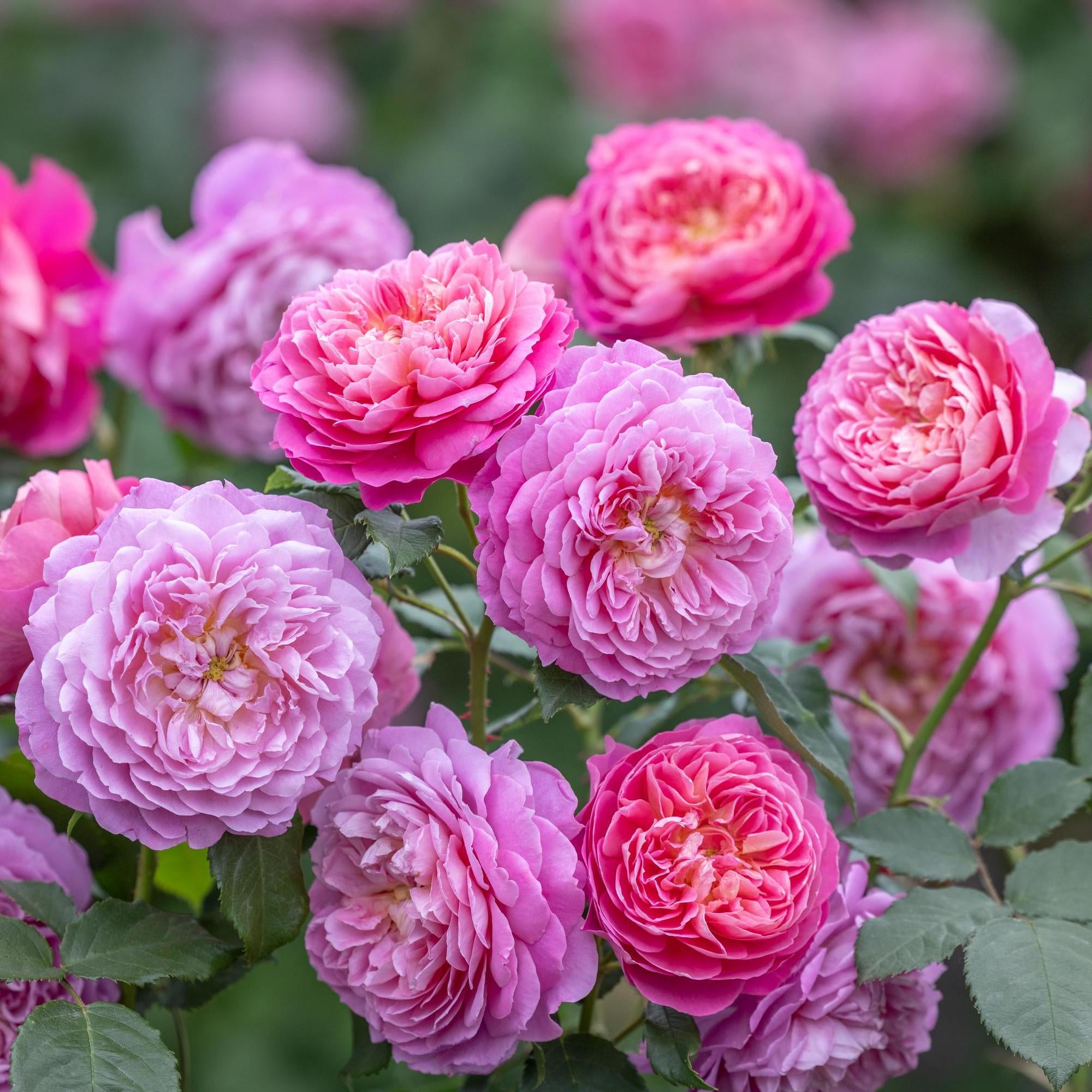
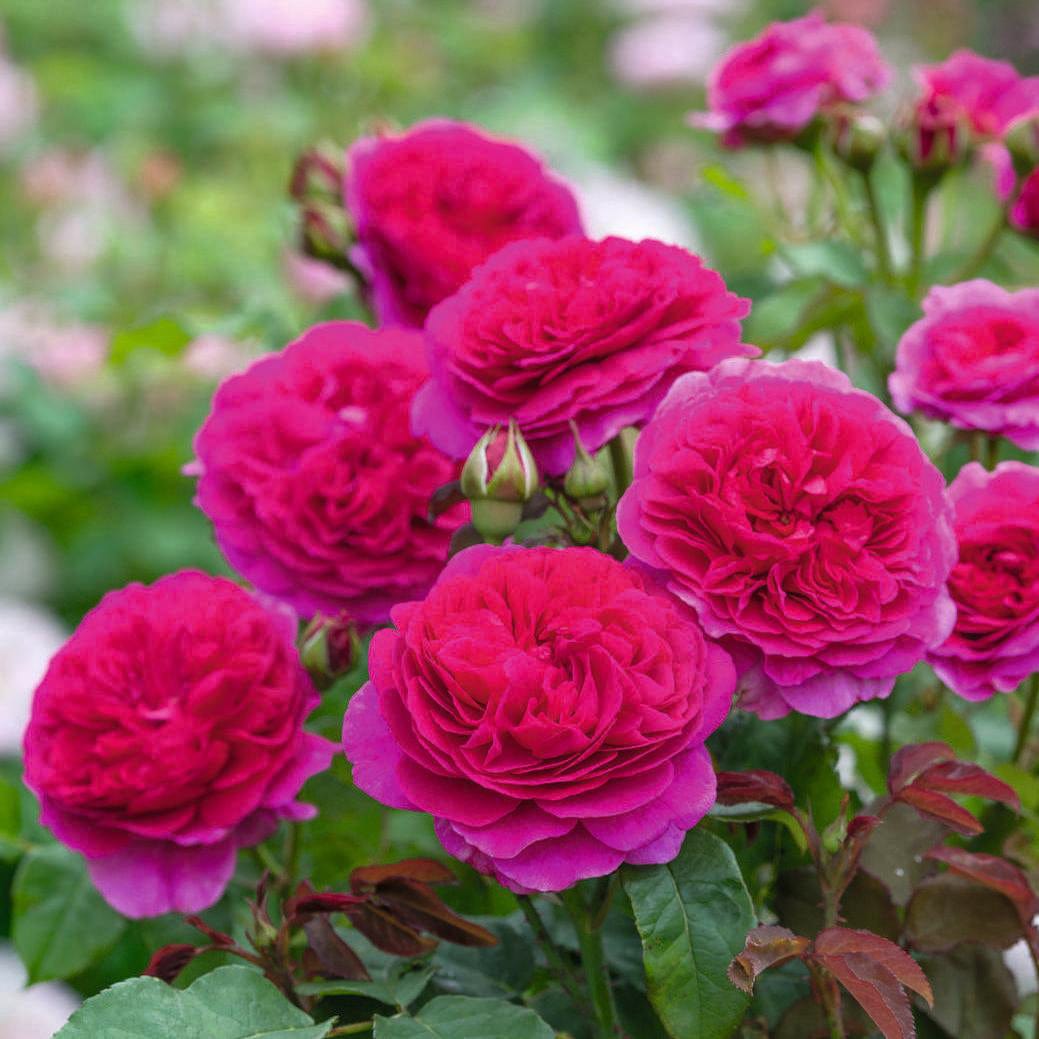
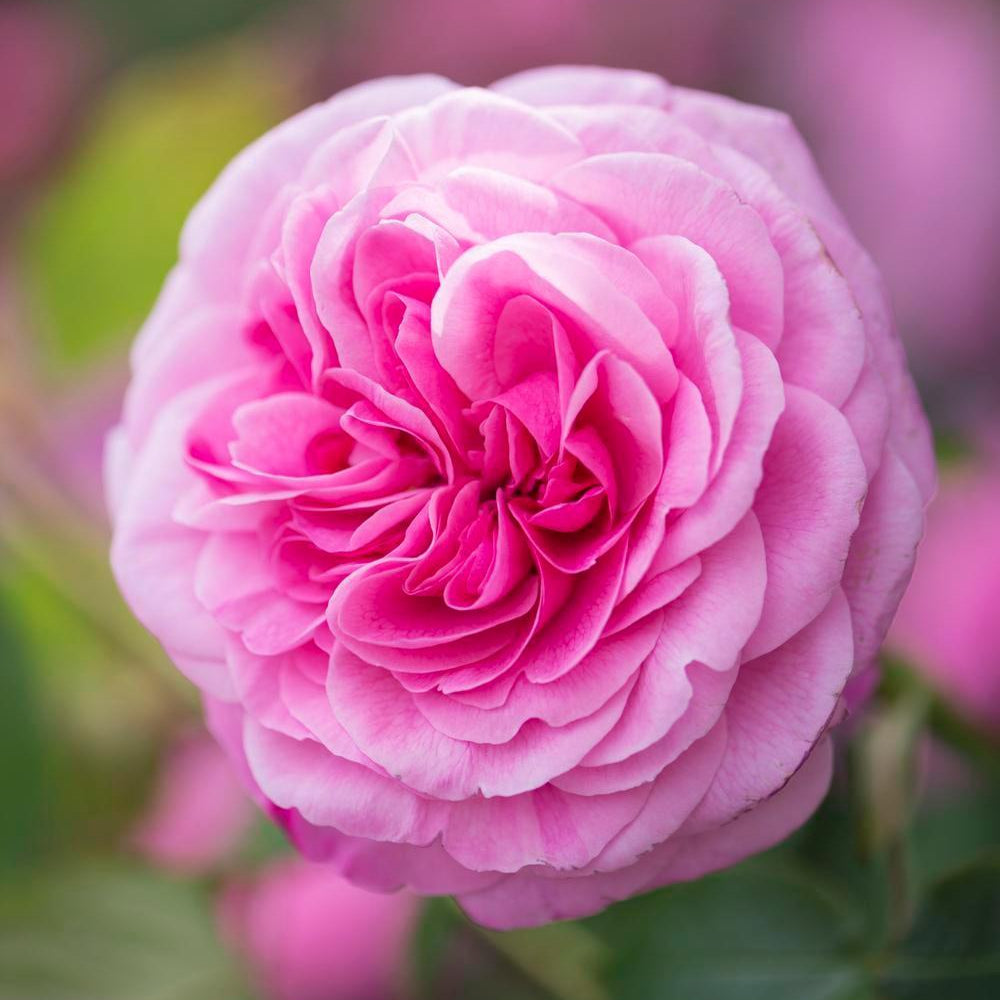
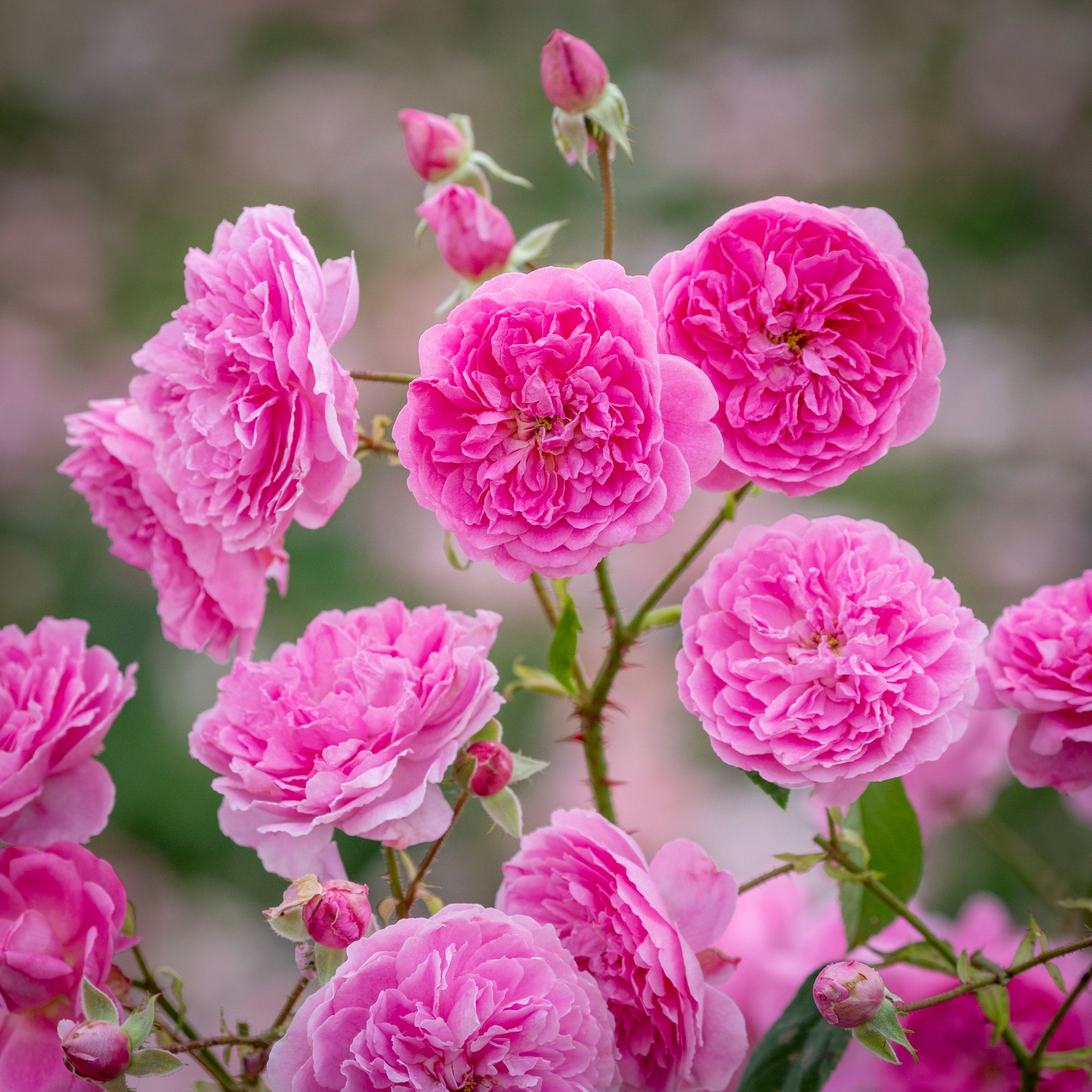
For Rich Depth: Incorporate deep magentas, crimson-pinks, and warm glowing tones. Planting Gabriel Oak®, Gertrude Jekyll®, or the unusually large, deeply cupped blooms of Princess Alexandra of Kent® provides strong visual anchors that draw the eye toward key focal points.
Step 2: Layer Your Growth Habits
To prevent your garden from looking flat, integrate a mix of shrubs, climbers, and container plants to build height and structure.
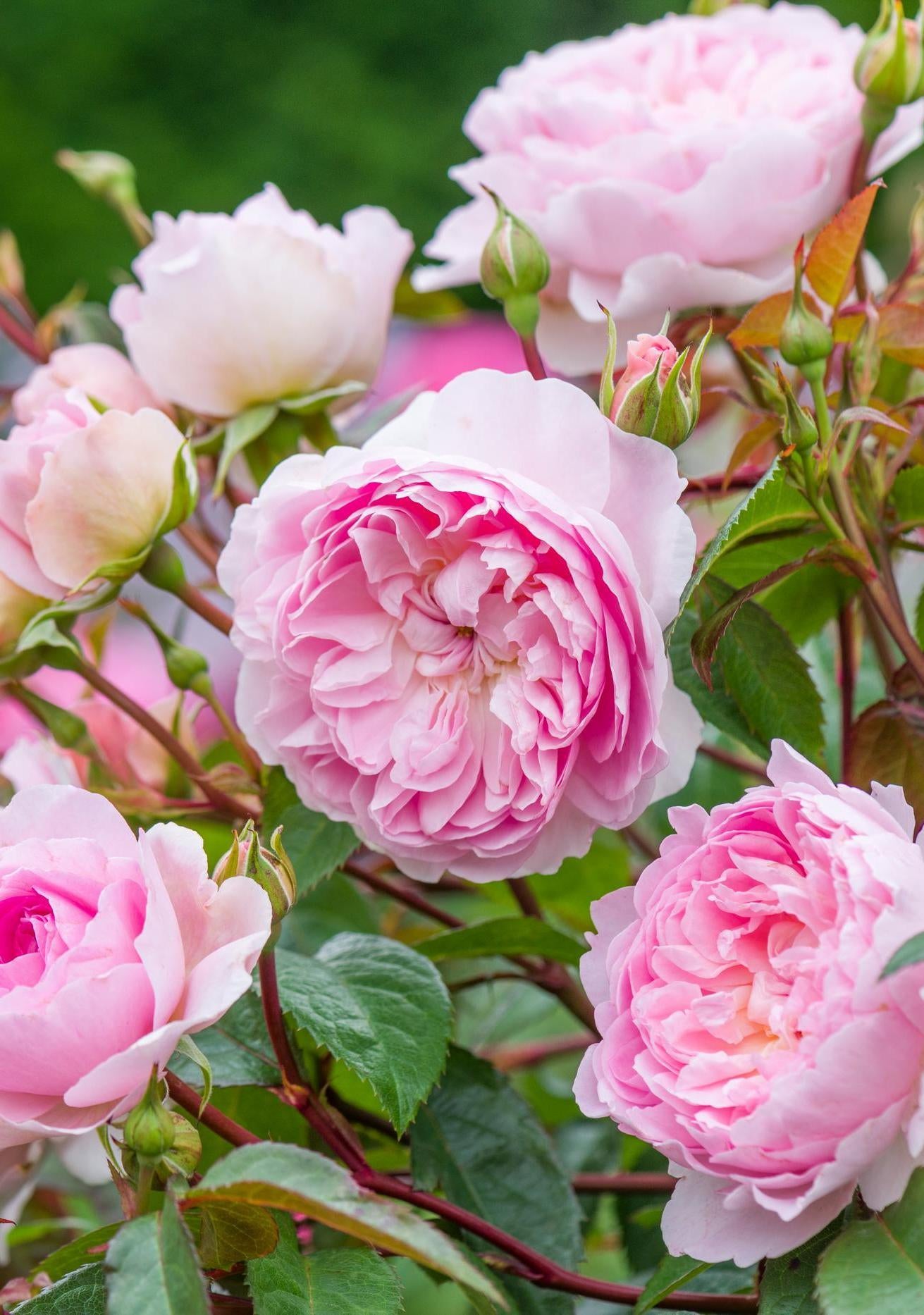
Position Shrub Roses as the Foundation: Shrub roses form the backbone of garden beds. Plant reliable, low-maintenance varieties like Olivia Rose Austin® or the robust, vase-shaped The King's Rose® at the centre of mixed borders. For a more relaxed, arching form, position Silas Marner® where its ruffled blooms and distinct red stems can add structural character.
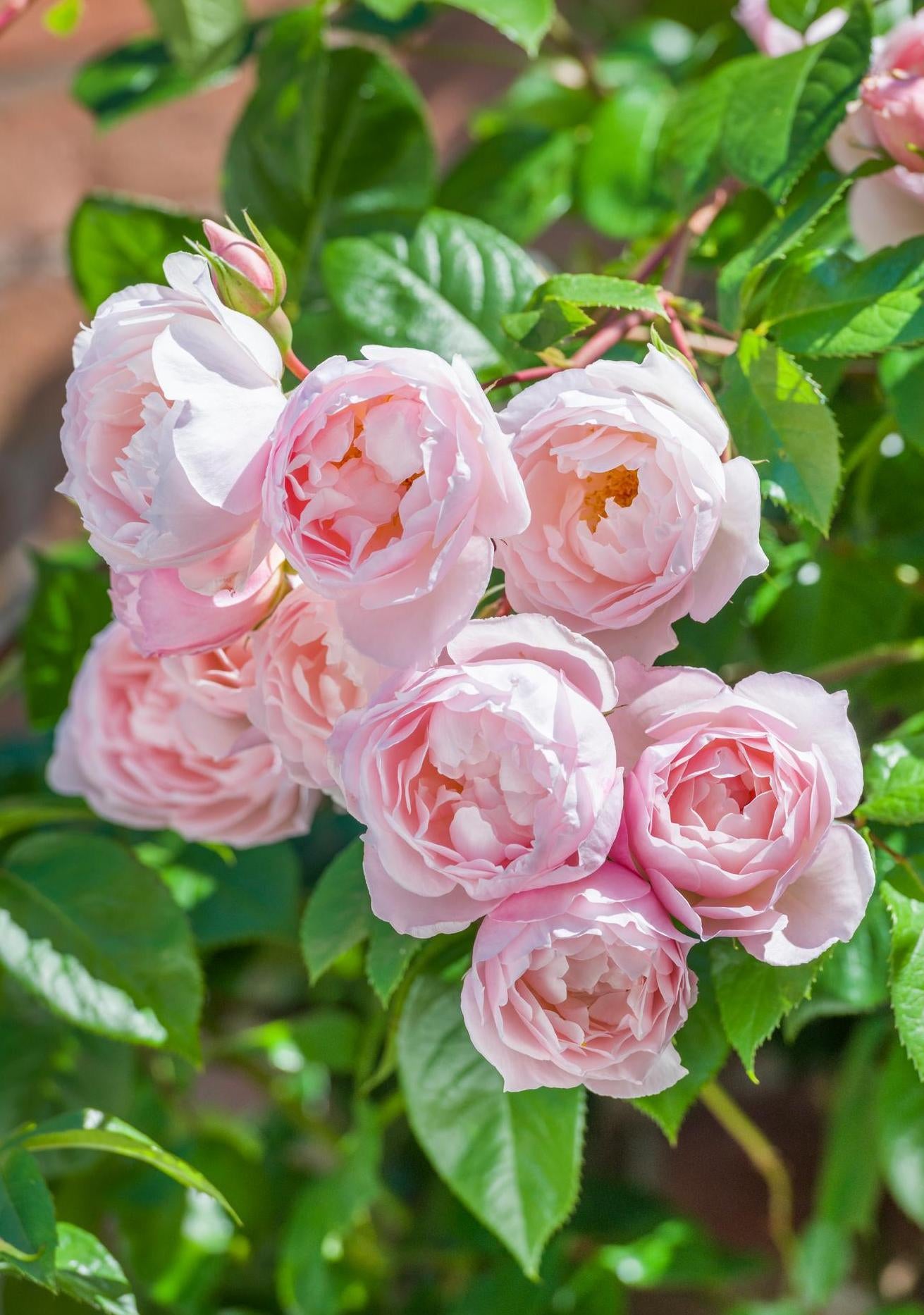
Train Climbers Vertically: To lift colour off the ground, use climbing varieties to frame doorways, pergolas, or bare walls. Secure the main stems of varieties like The Generous Gardener® to a sturdy support structure, training the canes slightly horizontally to encourage more flowering side shoots to cascade at eye level.
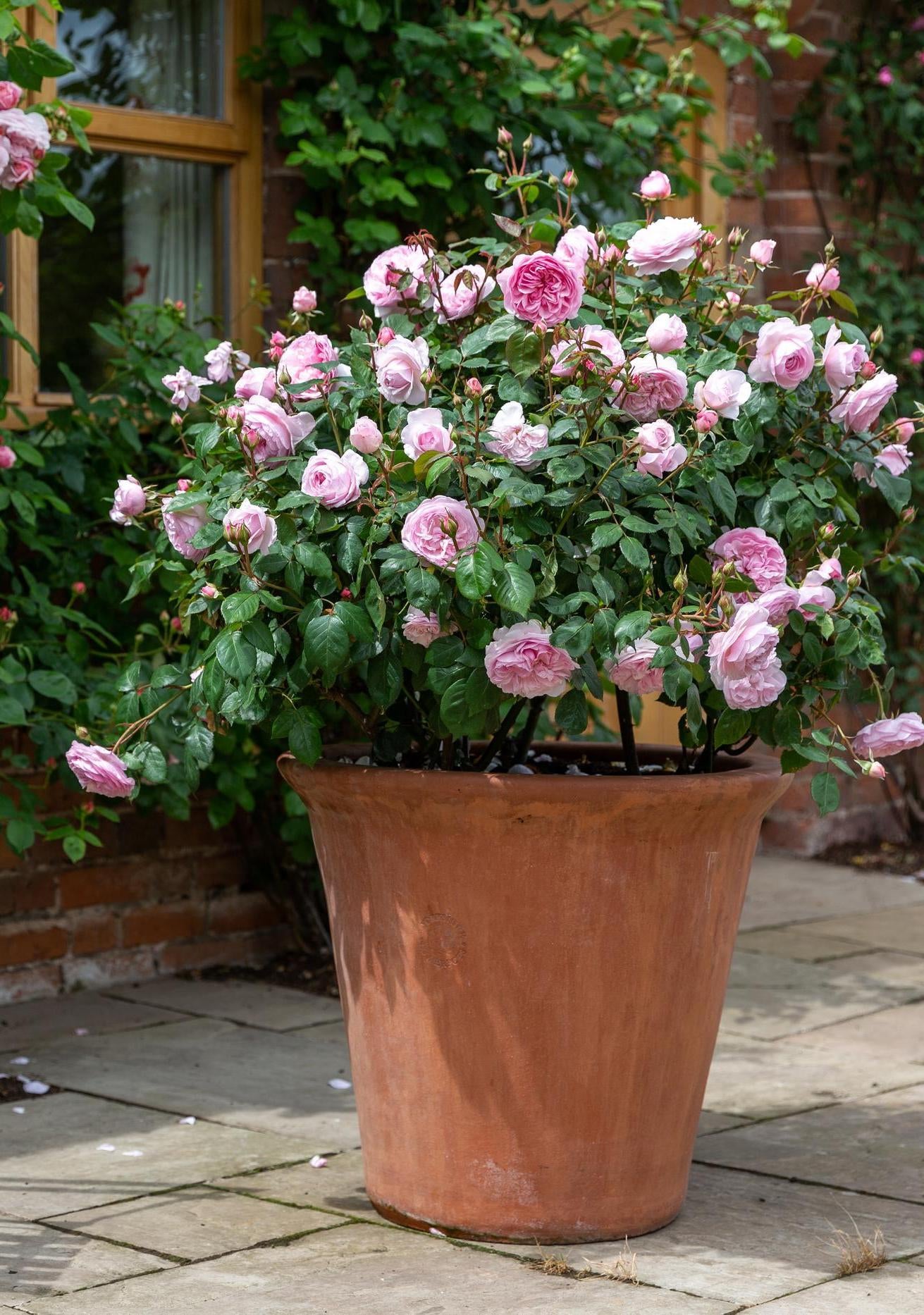
Pot Up Compact Varieties for Patios: If ground space is limited, use containers to introduce pink roses to terraces and courtyards. Select a generous pot with excellent drainage holes. While a compact shrub like Olivia Rose Austin® adapts beautifully to pot culture, you can also successfully grow the magnificent Princess Alexandra of Kent® as a standard (tree-form) rose in a large container, bringing its massive, fragrant pink blooms right up to eye level next to your seating areas.
Step 3: Integrate Companion Plants
The final step is selecting companion plants that highlight your pink roses while concealing bare stems near the base of the shrubs.
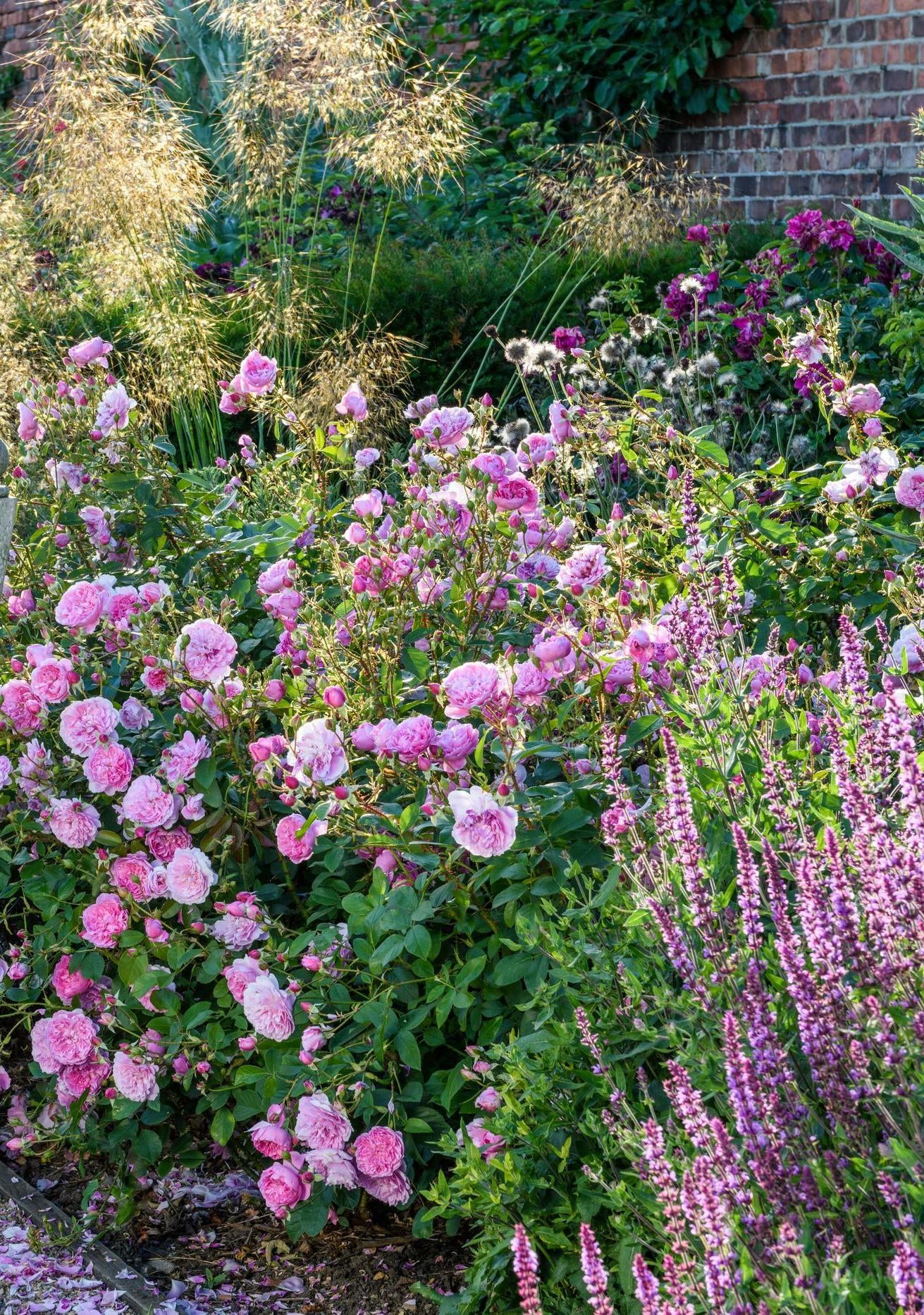
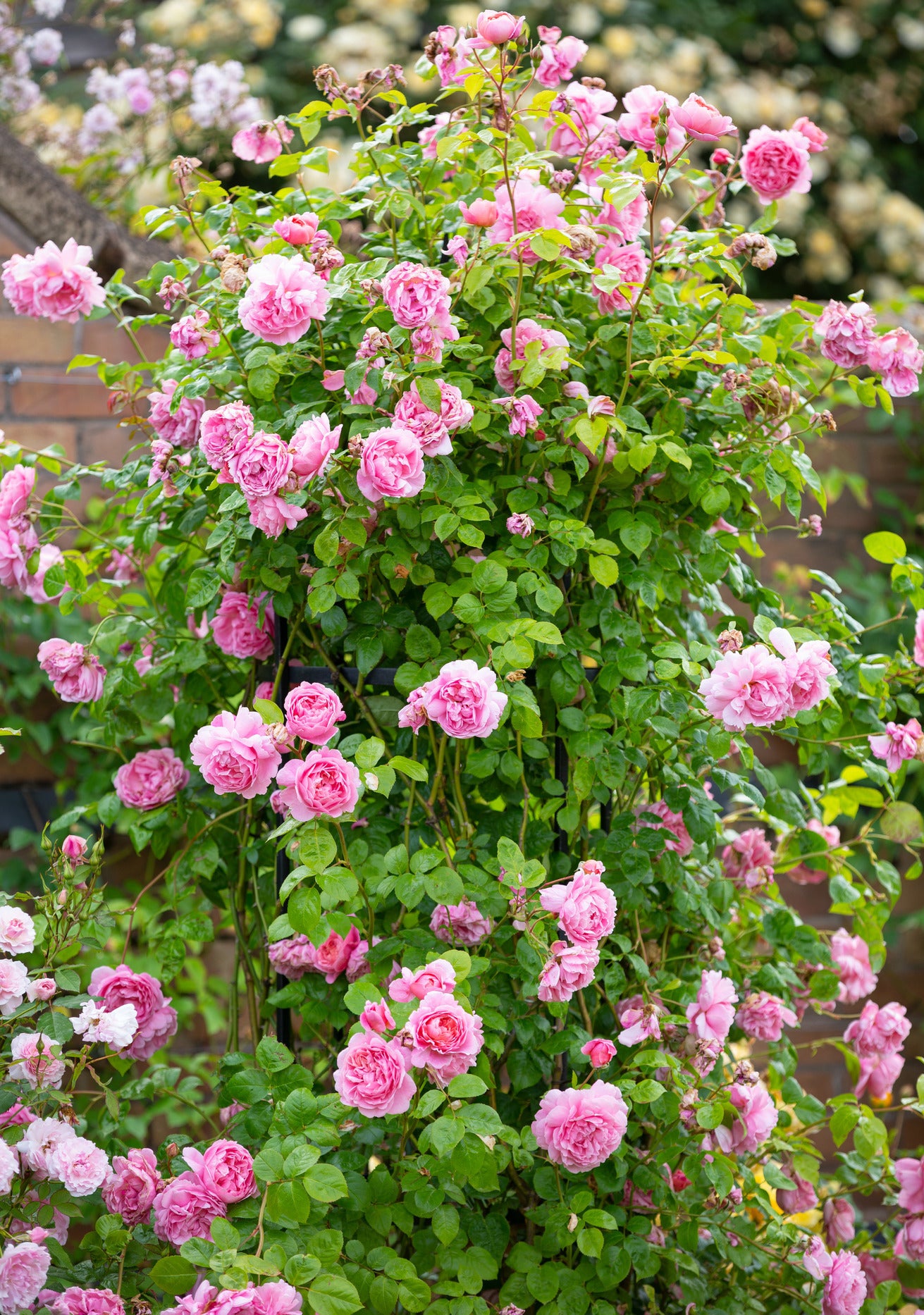
Ground the Palette with Foliage: Ensure your planting scheme remains balanced by choosing companion plants with strong green foliage. The deep green leaves of varieties like Strawberry Hill® provide an essential, grounding backdrop that prevents an all-pink border from looking overly complicated or cluttered.
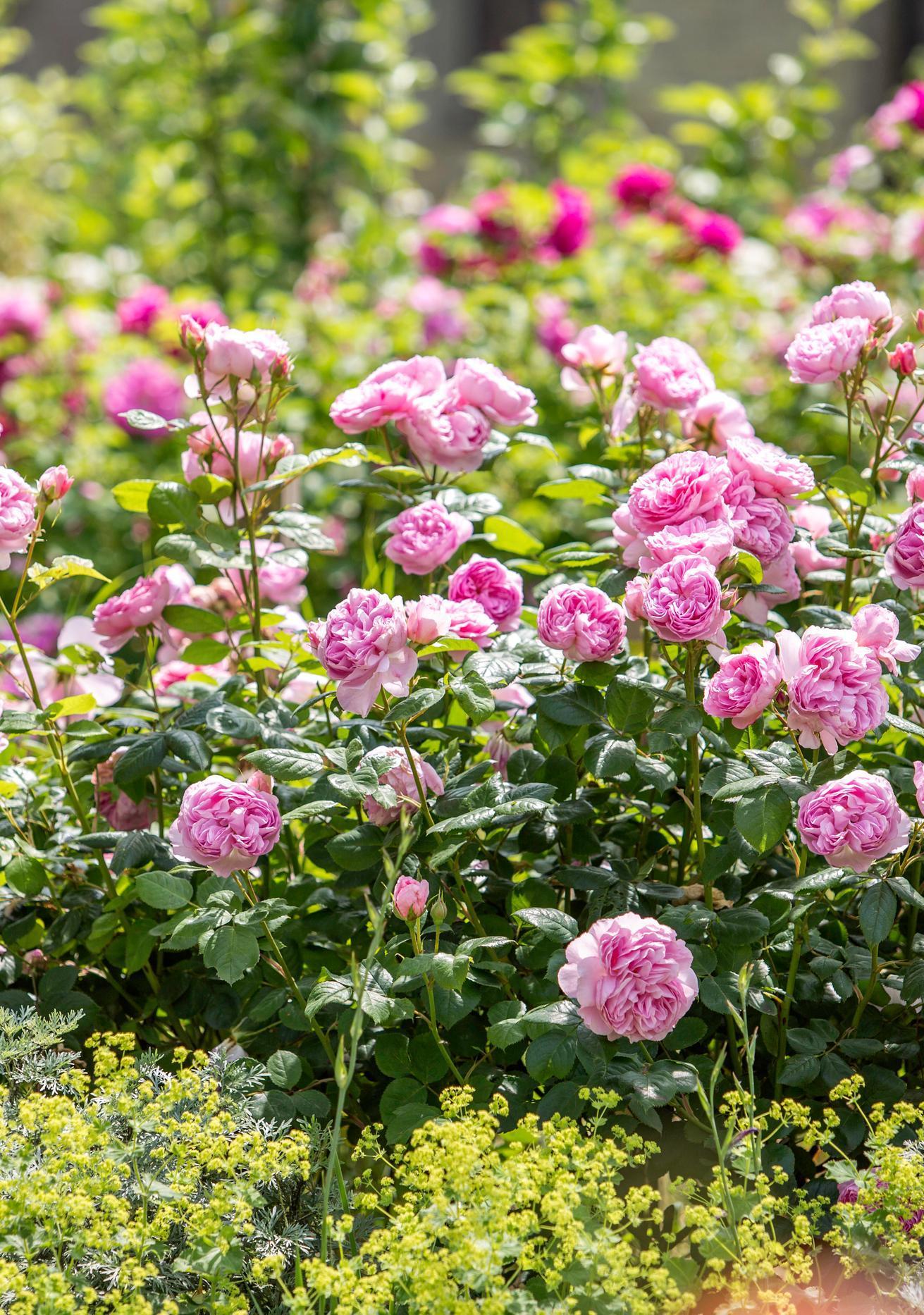
Create Contrast with Acid Yellow: To create a fresh, high-contrast display, underplant bright or mid-pink roses with acid-yellow flowers or foliage. Varieties such as The Ancient Mariner® or Eustacia Vye® contrast spectacularly when paired with Alchemilla mollis (Lady’s Mantle) or Heuchera ‘Lime Marmalade’, adding instant vibrancy to the border.
-
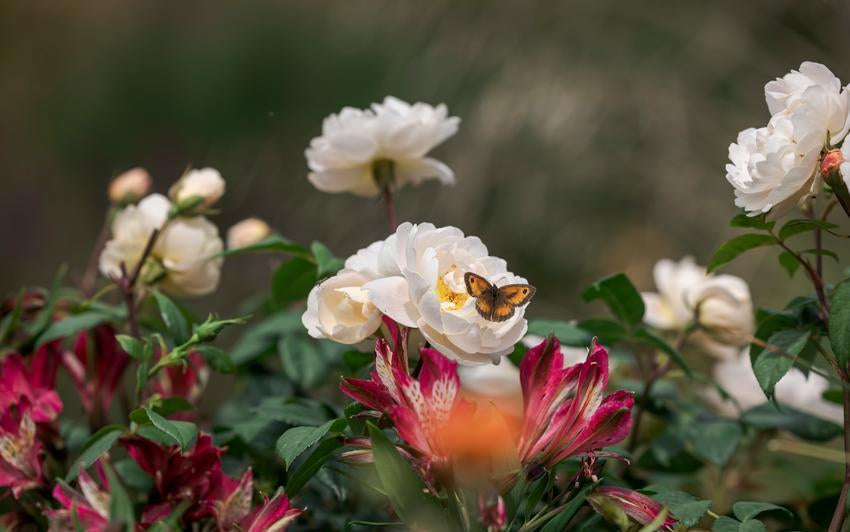
White and Cream Roses in the GardenThere is a quiet luminosity to white and cream roses. Soft yet radiant, they have a remarkable ability to lift the garden and bring a sense of calm to the planting around them. Equally at home in traditional gardens and more contemporary spaces, they offer a timeless elegance that never feels overstated. Whether woven through mixed borders, trained over old walls or planted generously in sweeping drifts, white and cream roses bring light, softness and cohesion wherever they grow.
-
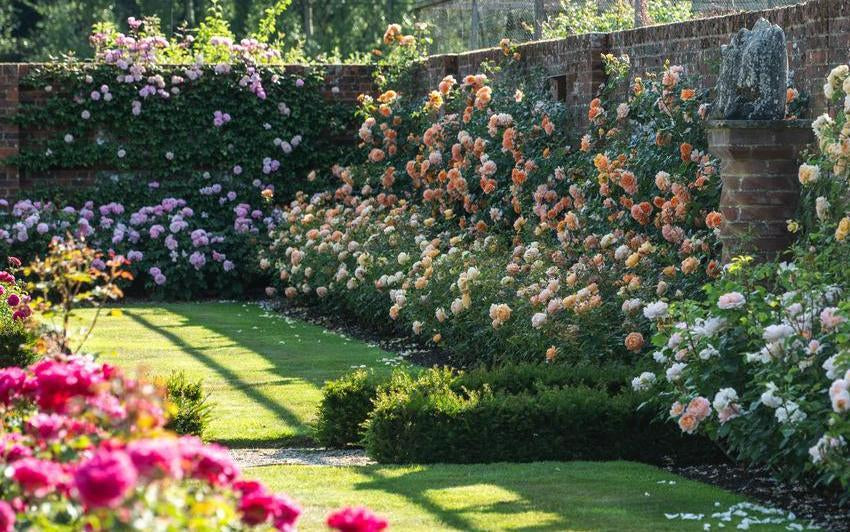
Finding the Right Rose for Your Garden: Choosing Your Rose ColourWhen choosing a rose, colour is often the first thing that captures our attention. Long before we notice fragrance or the form of the bloom, it is usually the colour that quietly draws us in.
-
Using Colour in the Garden: Creating Mood and HarmonyA garden is never simply planted. It is designed with intention, shaped by light, season, and colour. Every bloom plays a role, and together they form a living canvas that changes from morning to evening and from spring to autumn. Colour is one of the most powerful tools a gardener has. It influences how large a space feels, where the eye travels, and even how relaxed or energised we feel when we step outside. When understood and used thoughtfully, colour transforms a collection of plants into a harmonious, expressive garden.

-
Pantone Colour of the Year 2026: Cloud Dancer, a Soft White Palette for the Moon GardenSoft, luminous whites are taking centre stage in 2026, inspired by Cloud Dancer, the Colour of the Year from Pantone. Chosen for its gentle warmth and airy elegance, this subtle shade reflects a growing desire for calm, light, and restorative spaces. In the garden, Cloud Dancer finds its most natural expression in the moon garden, also known as a lunar garden, where pale blooms are chosen specifically to glow in evening light.

-
Brighten Your Garden with YellowBrighten Your Garden with Uplifting Yellow English Roses