

Giving Roses Room to Grow: A Guide to Planting Distances
Allowing the right amount of space between roses is one of the quiet secrets of a well-balanced garden. When shrub roses are planted too closely together, the border can quickly feel crowded as the plants mature. Planted too far apart, however, and the planting may appear sparse, with bare patches of soil between each rose.
When deciding where to place your roses, it is helpful to think about their mature size rather than how they look on planting day. Roses naturally need time to establish, so it is perfectly normal to see small gaps between plants during the first seasons. As they grow, these spaces will gradually fill, creating a fuller and more harmonious border.
Planting Single Plants
Many gardeners enjoy combining different varieties of roses within the same border. A single rose may also be planted among other companion plants in a mixed planting scheme.
In both situations, it is important to allow enough space for the rose to reach its natural spread. As a general rule, plant roses far enough from neighbouring plants so that their mature widths do not compete with one another. This usually means leaving around 2–3 ft (60–90 cm) between a shrub rose and surrounding companion plants, depending on the size of the rose and the growth of the neighbouring plants.
Giving each plant sufficient room encourages good air circulation, allows light to reach the centre of the plant, and helps maintain a balanced and healthy border.
Diagram shows one rose planted in a bed or border.

Creating Larger Bushes (Three or More Roses)
Planting several roses of the same variety together can create a particularly beautiful effect. By placing three shrub roses in a small group, the plants gradually grow together to give the impression of one larger, more generous shrub.
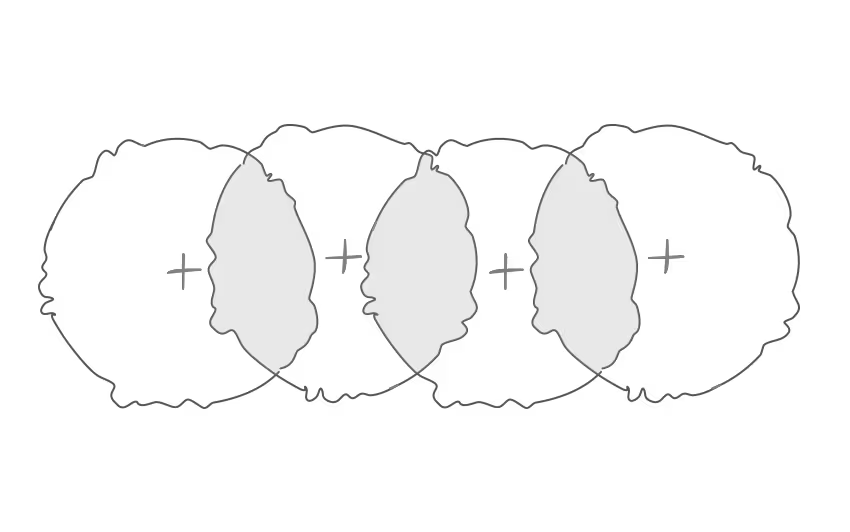
To achieve this, plant the roses closer together than usual, arranging them in a triangular formation. Each plant should overlap roughly half of its mature width with its neighbours. Over time the plants will grow into one another, forming a fuller and more substantial presence in the garden.
During the early stages of growth, small gaps between the plants are perfectly normal while they establish themselves.
Diagram shows three roses planted together as a larger bush.

Planting a Rose Hedge
Shrub roses can also be used to create a soft and flowering hedge. To achieve this effect, plant five to ten roses of the same variety in a single line.
For a continuous and dense hedge, place the roses closer together than you would when planting individually, allowing the plants to overlap by about half of their mature width. As they grow, the shrubs will gradually knit together, forming a flowing line of foliage and blooms that brings both structure and beauty to the garden.

Planting Distance Guide
The exact spacing between roses will depend on the mature width of the variety.
Planting single roses with companion plants or different varieties within a border
- Mature width 2–3 ft → plant 3 ft apart
- Mature width 3.5–4 ft → plant 4 ft apart
- Mature width 4.5–5 ft → plant 5 ft apart
Planting three roses together as one larger bush
- Mature width 2–3 ft → plant 1.5 ft apart
- Mature width 3.5–4 ft → plant 2 ft apart
- Mature width 4.5–5 ft → plant 2.5 ft apart
Planting a hedge of the same variety
- Mature width 2–3 ft → plant 1.5 ft apart
- Mature width 3.5–4 ft → plant 2 ft apart
- Mature width 4.5–5 ft → plant 2.5 ft apart


-
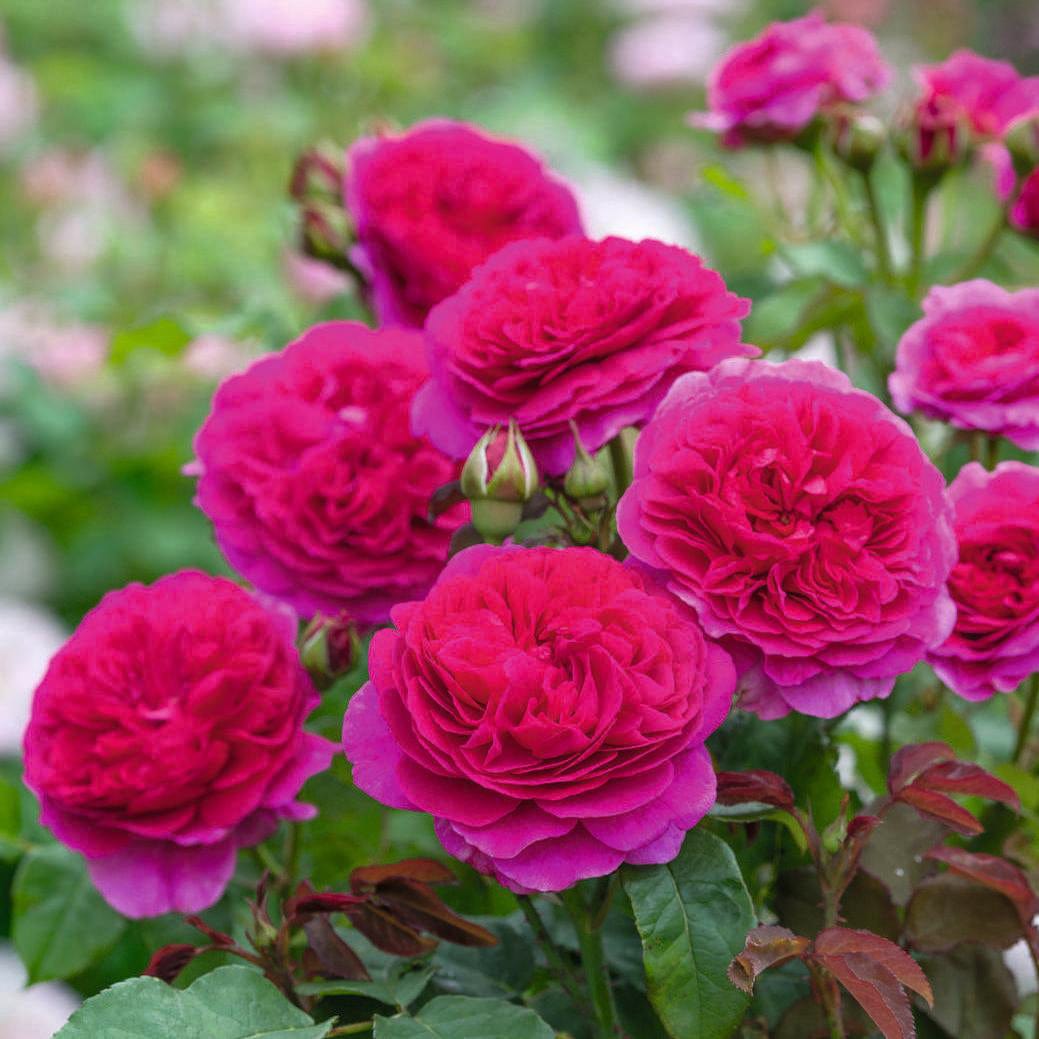
The Basics of Growing RosesRoses bring a quiet happiness to a garden. Their beauty feels effortless once they are settled, and even a new gardener can grow them with success. With sunlight, sound soil, and a little seasonal care, roses will flower generously and become dependable companions through the year.
-
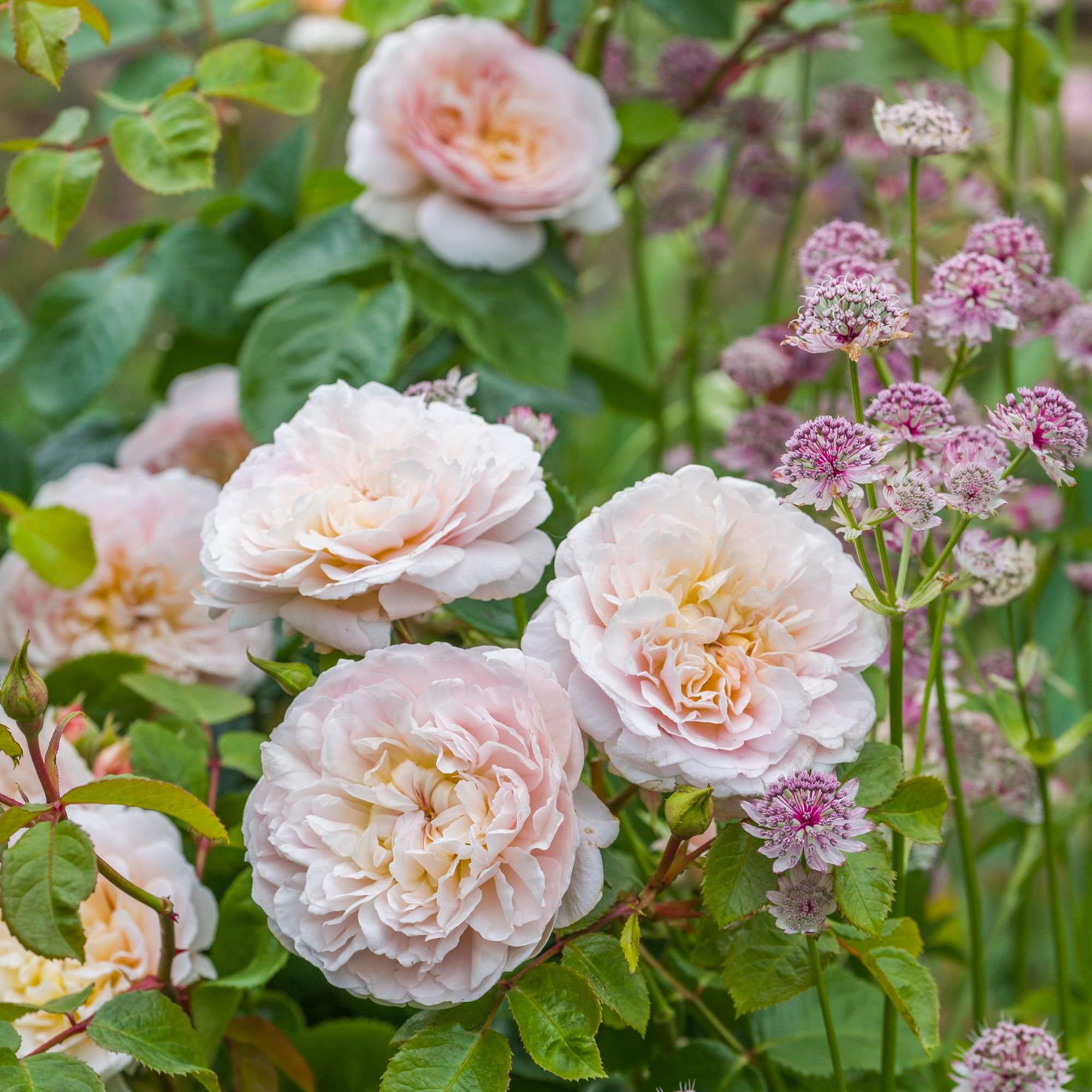
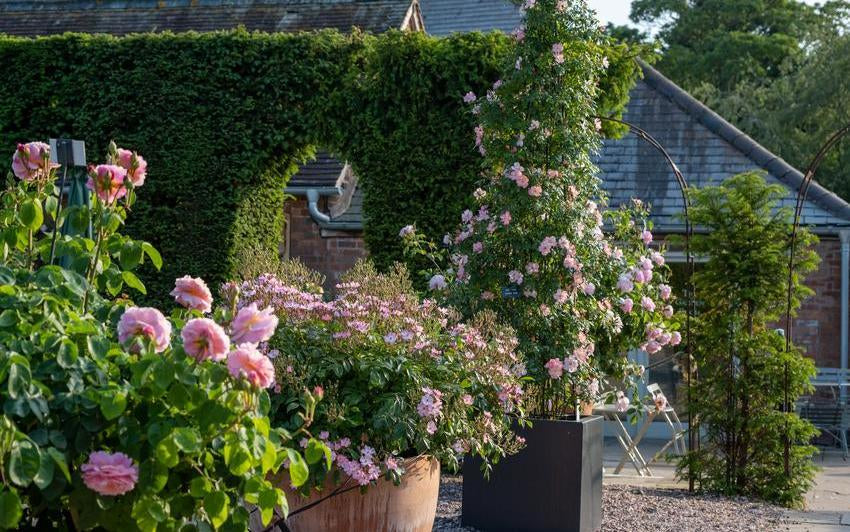
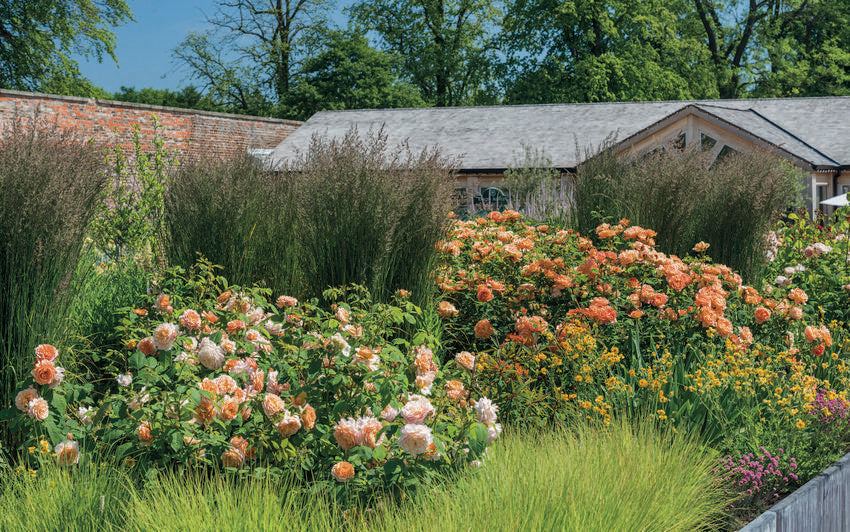
Drifts of Colour Planting English roses in threes, fives or moreWhen it comes to creating an interesting and harmonious garden, the way you arrange your plants can make all the difference. English roses, with their exquisite forms and captivating fragrances, are the perfect example. Planting them in clusters of three, five or more, particularly when you choose the same variety, is one of the simplest and most effective ways to bring both balance and character to your outdoor space.
-
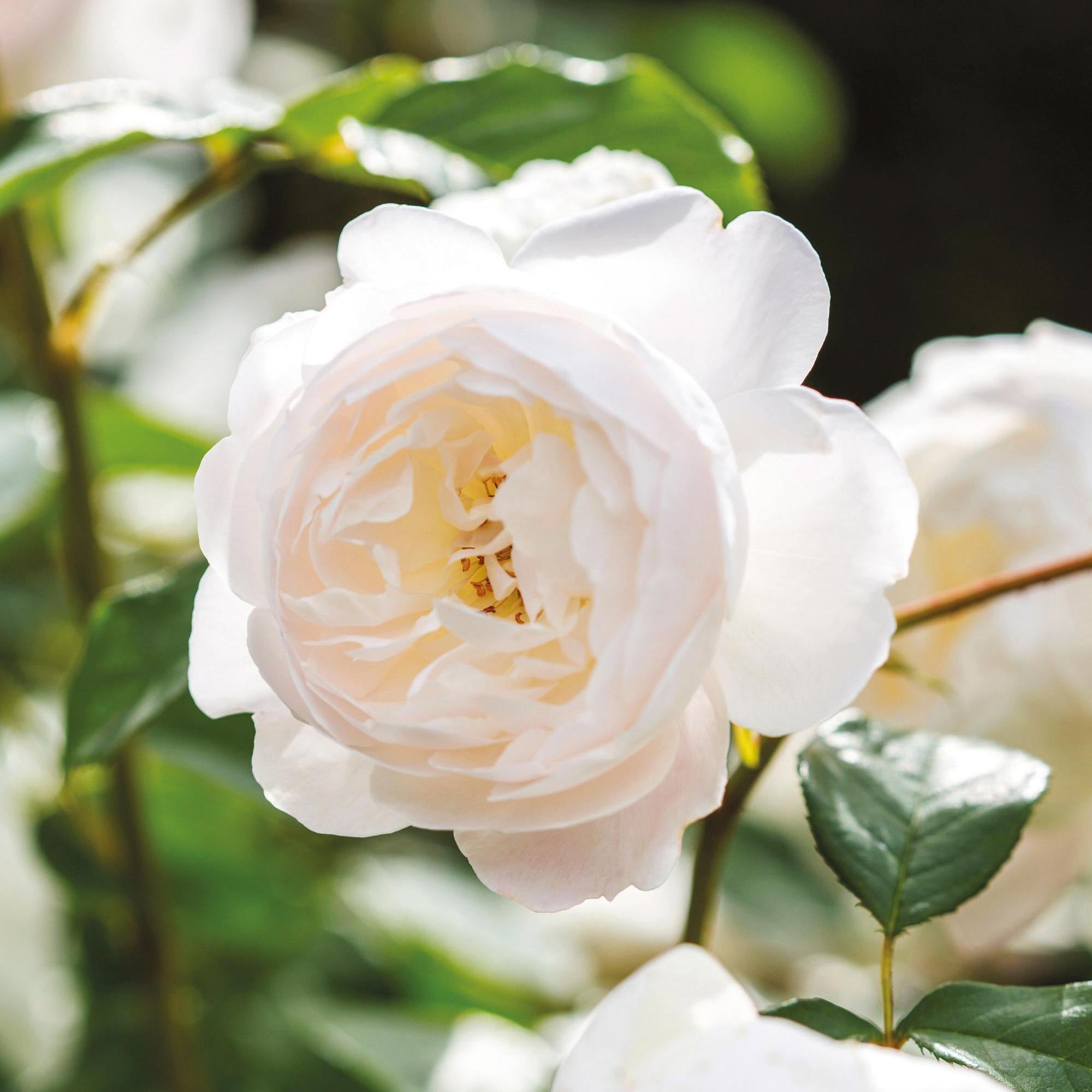
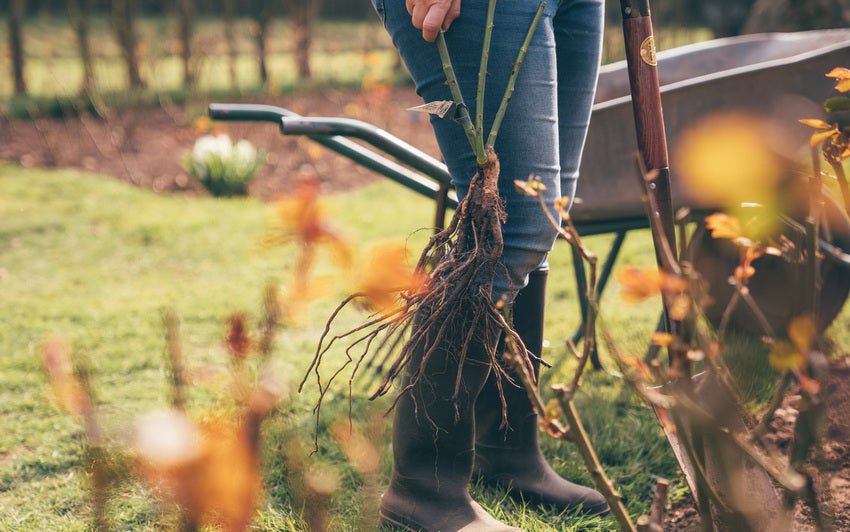
Planting Bare Root Roses: Step-by-Step for Garden and PotsBare root roses arrive simply, as stems and roots, quietly waiting for the garden to bring them to life. With care, they can transform into lush, flowering plants, filling a garden with colour, fragrance, and presence. Affordable, easy to handle, and a traditional favourite among gardeners, they offer both charm and reward.
-
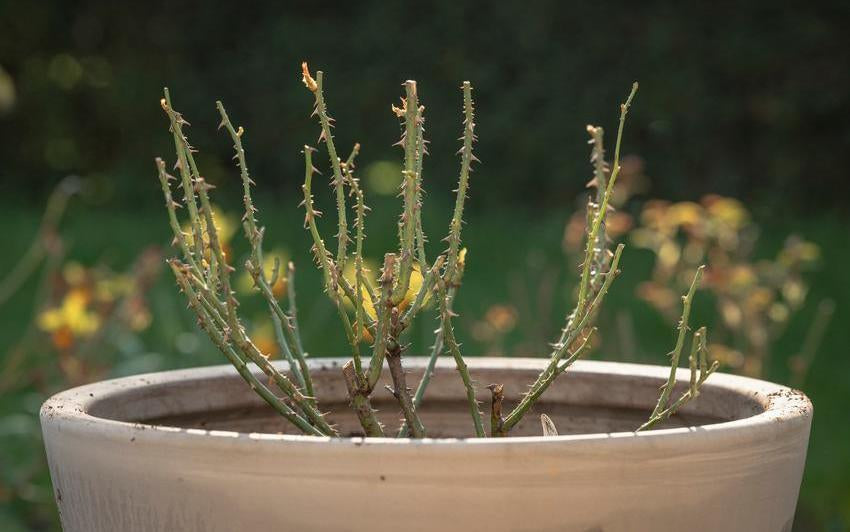
Planting Potted Shrub Roses in a Pot: Step-by-StepPlanting a rose in a pot is both versatile and deeply rewarding. It allows you to create moments of beauty wherever space allows, whether in a generous garden or a small, sunlit corner. With a little care at the outset, your shrub rose will settle with ease and grow into a balanced, free-flowering plant.
-
How to Keep English Roses at Their Best Until They Can Be PlantedGifting a rose is a thoughtful and much-loved gesture. Even in winter, when the garden rests and the days grow quieter, a rose carries the promise of colour and new life in the year ahead. Often, though, roses are bought well before they are given. If yours needs to be kept for a short while before it can be planted, caring for it is wonderfully simple. Roses are far more patient than they appear and will remain at their best with just a little attention.