

Planting Companions
for Continuous Summer Interest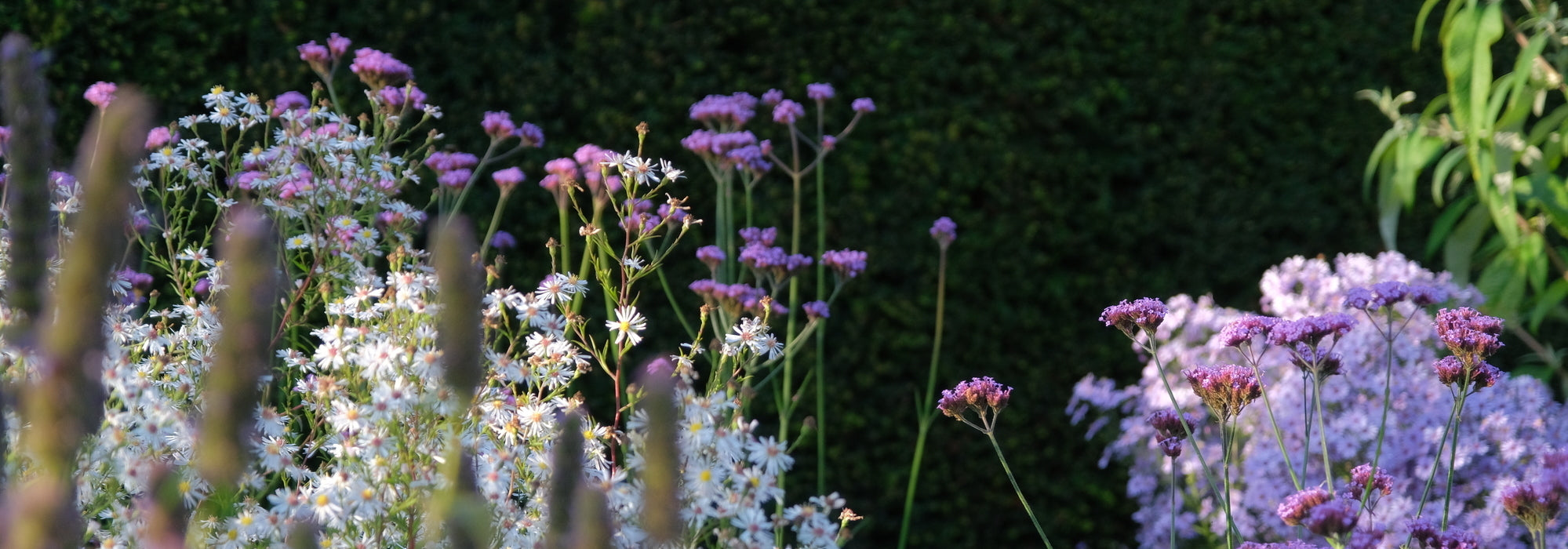

Every rose lover knows the feeling. Early summer arrives, and your garden transforms into a breathtaking explosion of colour and perfume. Branches heavy with blooms sway in the breeze, and for a few glorious weeks, the world feels entirely magical.
But roses, like all the best things in life, move to a natural rhythm. Most repeat-flowering varieties do not bloom continuously; instead, they flow in generous waves. Once that spectacular first flush fades, your roses take a well-deserved breath. They settle into a quieter phase, pushing out new growth and forming fresh buds.
For a few weeks, the grand spectacle softens.
Rather than viewing this midsummer pause as an empty gap to be filled, think of it as your garden’s greatest opportunity. By introducing thoughtfully chosen companion plants, you can create a dynamic, living tapestry. As your roses rest, these companions step gently into the spotlight, ensuring your borders remain full of movement, life, and colour from early summer straight through to the first autumn frosts.
The Golden Rules of Rose Companionship
Before diving into the plant palette, it helps to understand what makes a companion plant truly click. The finest partners share the exact same lifestyle preferences as your roses: fertile, well-drained soil and a generous dose of sunshine.
Beyond shared growing conditions, their primary job is to provide contrast. By mixing different shapes, textures, and growth habits, you can build a multi-layered border that feels rich and architectural.
Here are the four key plant styles you need to weave a seamless, season-long garden story.
Soft Mounds: Cloaking the Base
An essential role of a companion plant is to ground the design by softening the base of shrub roses. As roses mature, their lower stems naturally become woody and sparse. Low-growing, mounding perennials act as a visual anchor, concealing the bare wood while seamlessly knitting the entire border together.
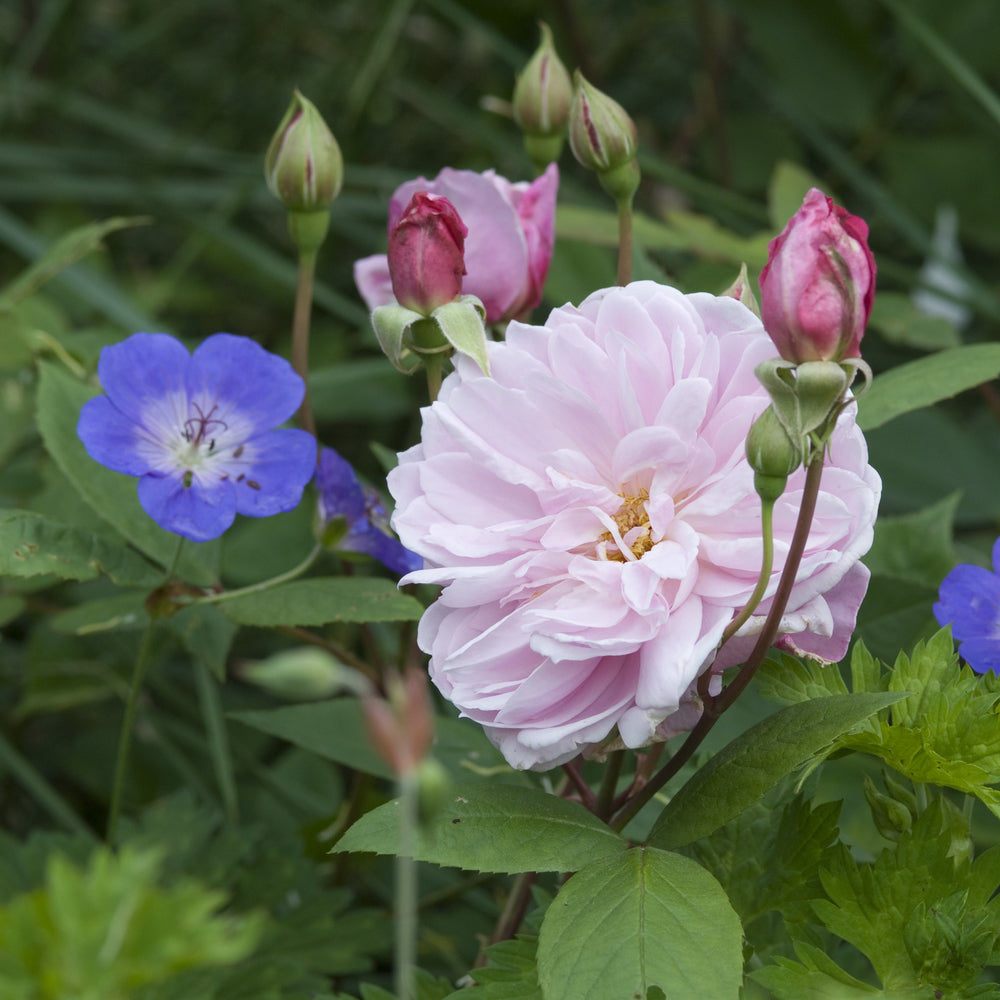 Geranium 'Rozanne'Arguably the hardiest worker in any border. Flowering tirelessly from early summer until the first hard frost, its violet-blue blooms spread in a relaxed, elegant mound. This cool blue tone works like magic in the garden, softening hot, fiery rose colours and beautifully highlighting whites, pale pinks, and delicate apricots. Plus, it requires almost zero maintenance.
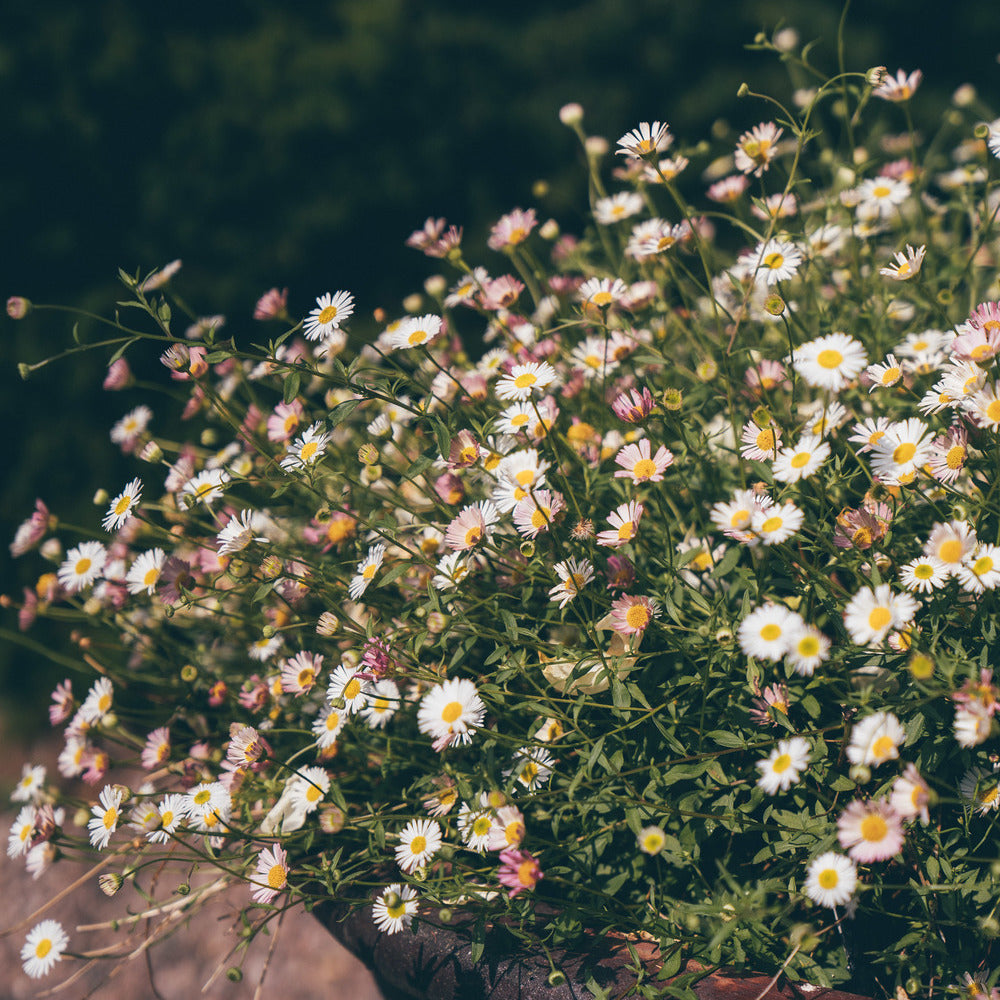 Erigeron karvinskianus (Mexican Fleabane)If you want a delicate, whimsical feel, this is your plant. Countless tiny, daisy-like flowers open pure white before blushing a soft, dusty pink as they age. It creates a low-growing haze of colour from late spring to autumn, making it ideal for tumbling over brick walls, softening stone pathways, or spilling from containers placed beside your favourite pots.
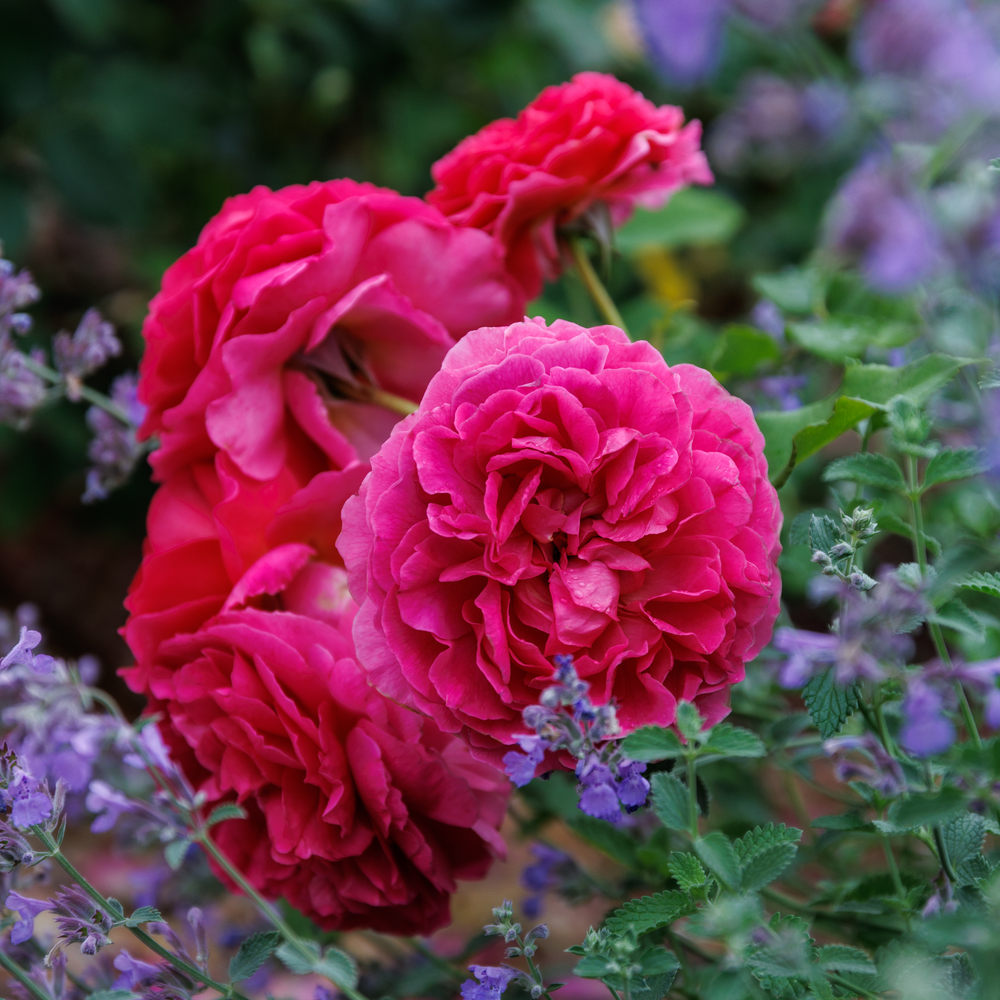
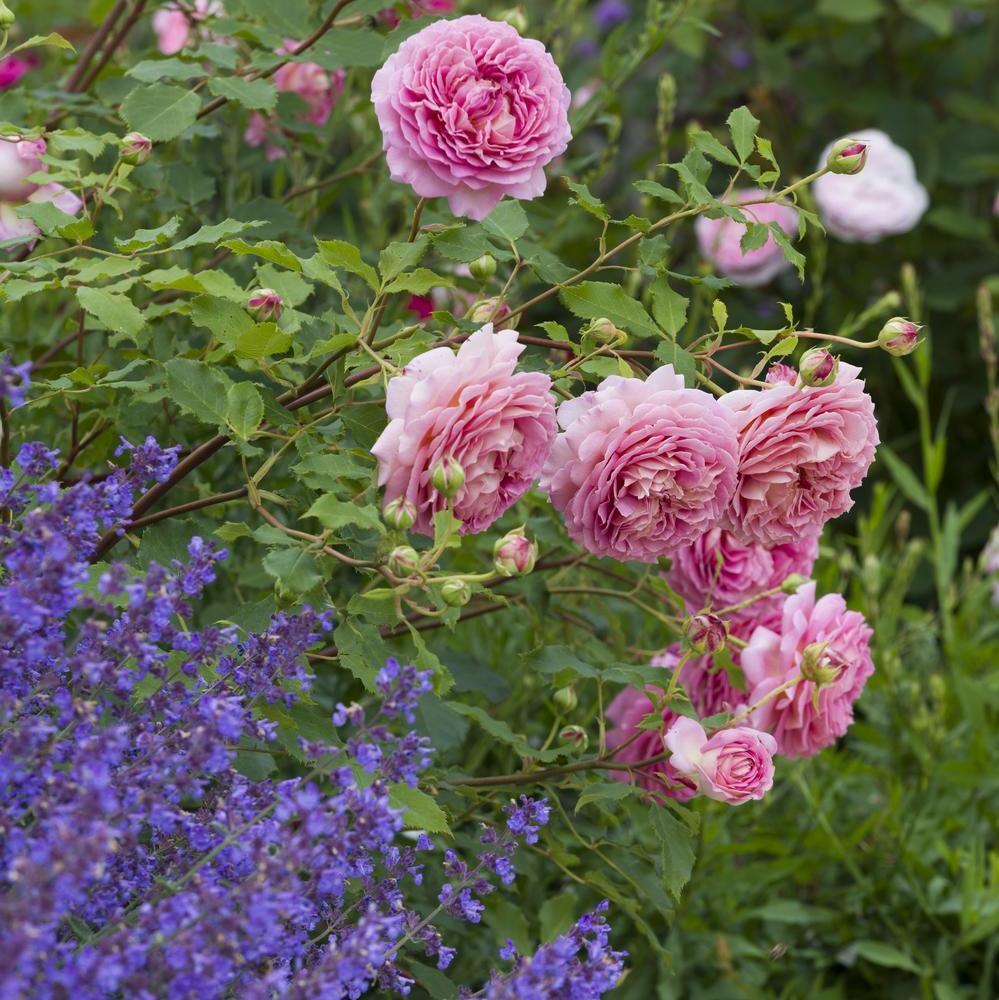 Nepeta (Catmint)A timeless classic for a reason. Its aromatic, grey-green foliage is topped with a hazy cloud of blue flowers for weeks on end. When allowed to spill casually over paths or border edges, catmint introduces a romantic, relaxed softness that perfectly balances the upright structure of traditional roses.
Airy Flowers: Bringing Movement and Light
While mounding plants anchor the bottom of the border, airy companions bring magic to the middle layers. These are the plants that seem to float, dance, and weave through the rose branches without ever competing for light or space.
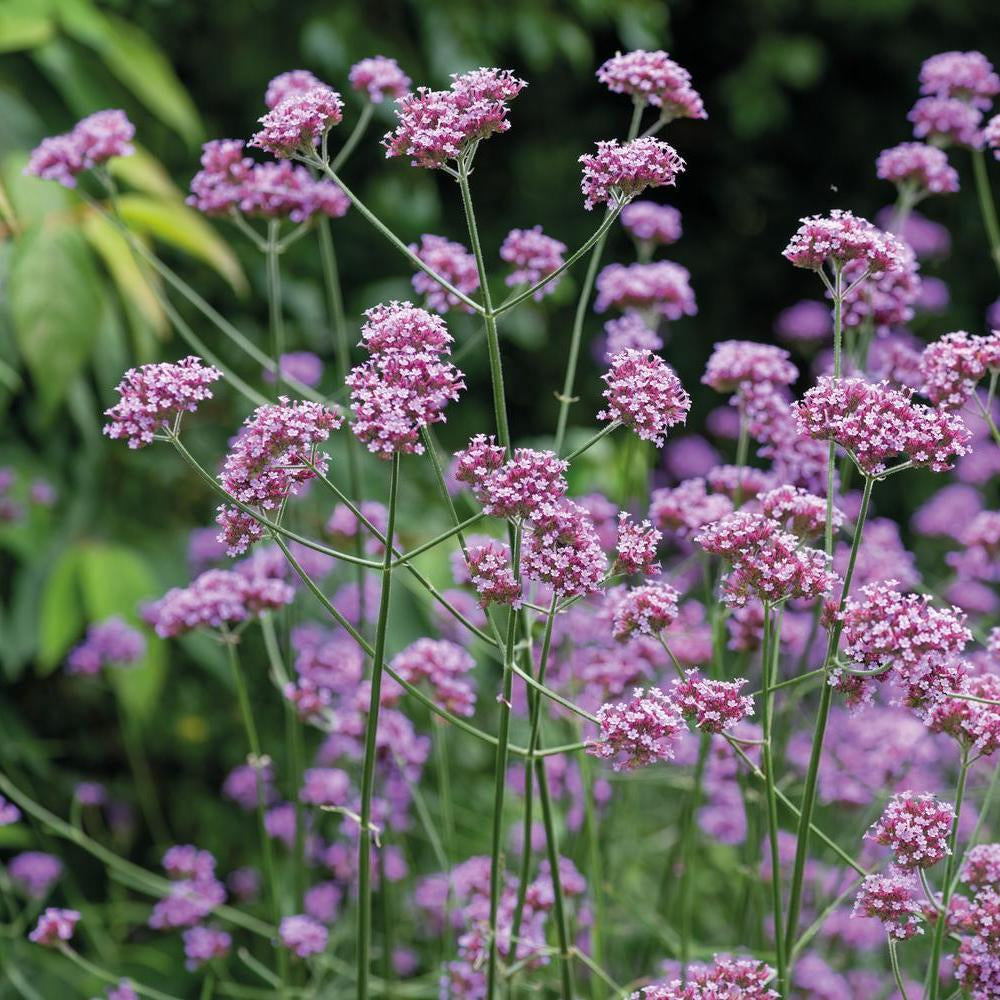 Verbena bonariensisThe epitome of architectural elegance. Its tall, wire-thin stems carry clusters of tiny violet flowers high above surrounding foliage from midsummer right into autumn. Because its structure is so open and see-through, it allows your roses to remain fully visible beneath while adding a playful, sky-high layer of colour that bees and butterflies absolutely adore.
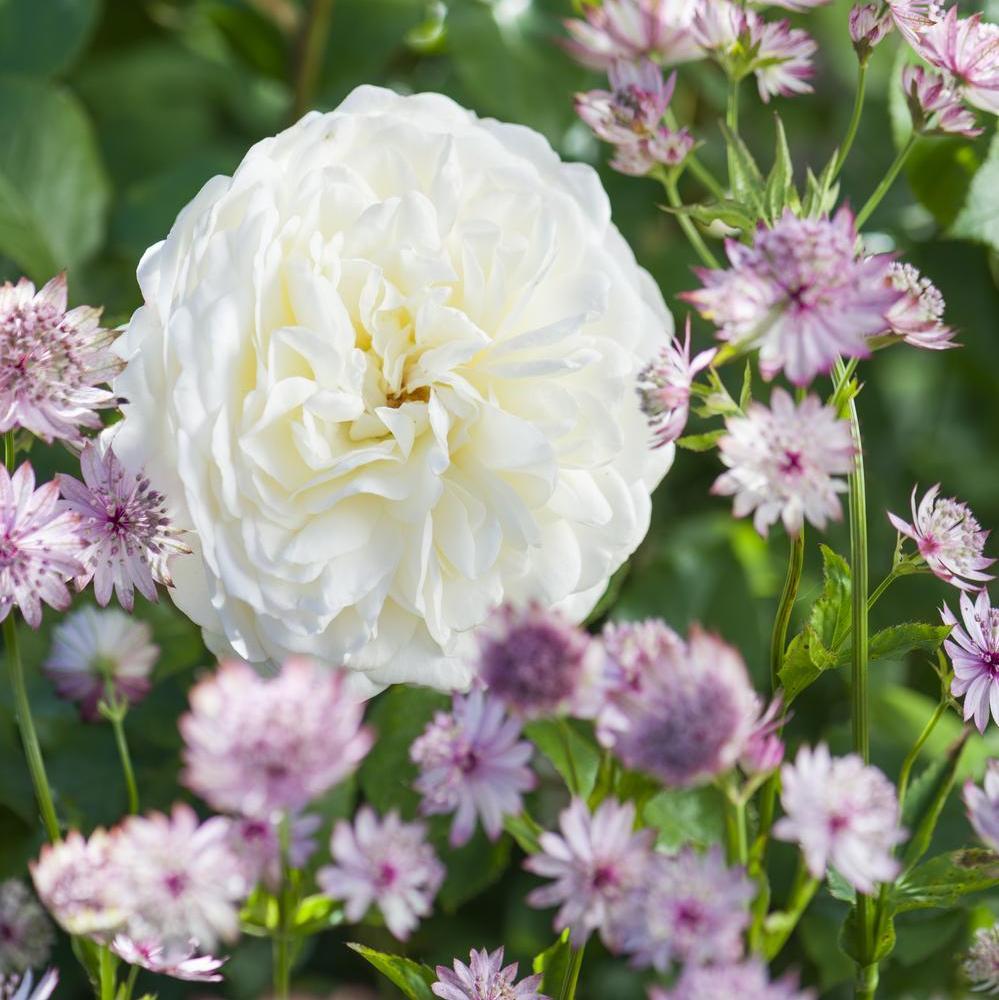 Astrantia (MasterwortFor a more intricate, detailed look, look to Astrantia. Its exquisite, pin-cushion flowers hover precisely above neat clumps of foliage. Blooming steadily through the summer in shades of soft white, blush pink, and deep, moody burgundy, it offers a subtle beauty that rewards anyone who pauses for a closer look.
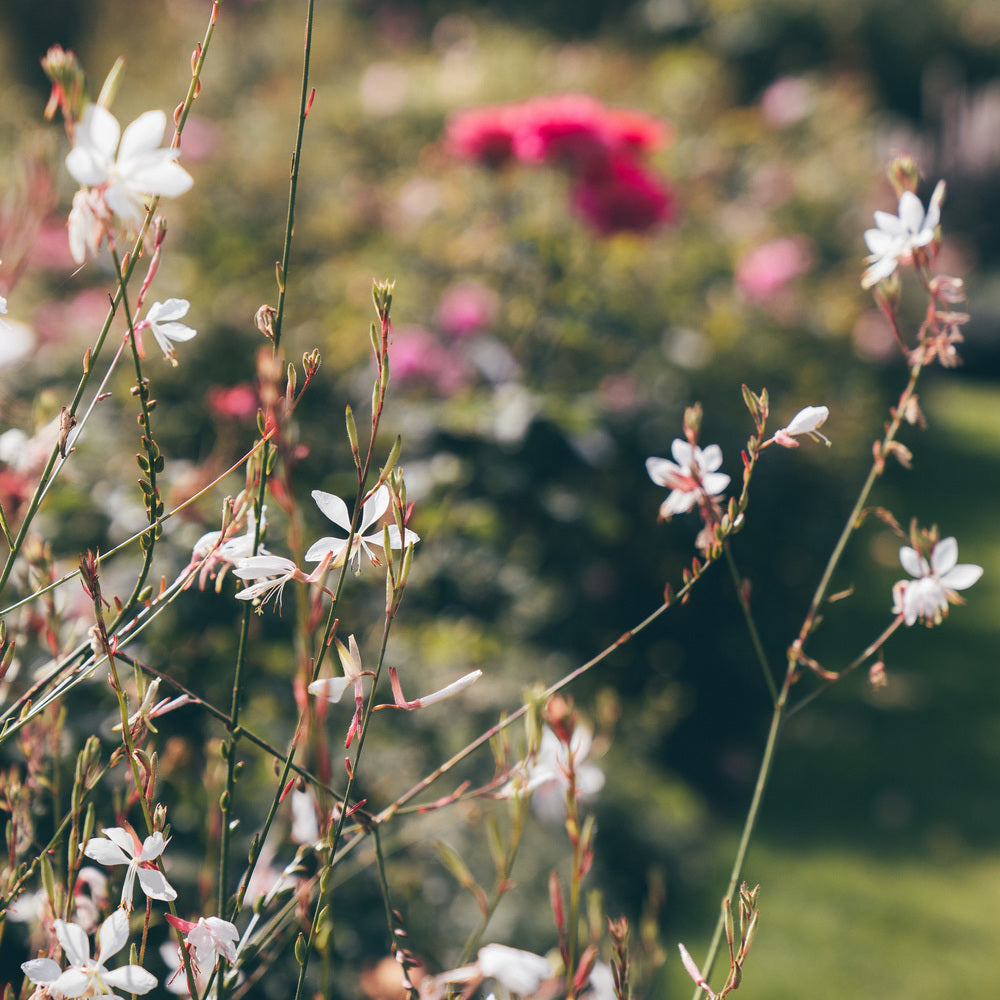 Gaura (Whirling Butterflies)True to its nickname, Gaura brings an effortless sense of movement to the garden. Delicate white or blush-pink flowers dance along slender, flexible stems for months on end. They catch the sunlight and sway with the slightest breeze, keeping the border feeling fresh, breezy, and energetic even during the weeks your roses are taking a break.
Strong Shapes: Adding Lasting Structure
To prevent your garden from looking too wild or blurry, you need to introduce strong geometric shapes. Contrasting flower forms provide visual speed bumps for the eye, creating depth and a sense of rhythm.
- Achilleas (Yarrow): These plants provide broad, flattened flower heads that sit proudly above fine, feathery foliage. They bloom for many weeks, offering warm tones of cream, apricot, buttery yellow, and terracotta. These shades pair beautifully with sunset-toned roses and handle hot, dry spells with absolute ease.
- Campanulas (Bellflowers): Offering graceful, bell-shaped flowers in shades of lavender, white, and sky blue, Campanulas provide a gorgeous vertical contrast to the heavy, rounded blooms of English roses.
- Erysimum 'Bowles's Mauve' (Wallflower): A true endurance champion. This evergreen perennial pumps out upright spikes of understated mauve flowers above silver-grey foliage for months at a time. Its muted tones blend seamlessly with almost any rose colour palette, and it will often keep flowering long after other perennials have gone to sleep for the winter.
Easy Annuals: Tapestries from a Seed Packet
Never underestimate the power of a simple packet of seeds. Sowing annuals directly into your borders in spring is an inexpensive, highly rewarding way to fill temporary gaps and create a lush, cottage-garden abundance.
- Cosmos: Perhaps the most enchanting annual of all. Its fine, fern-like foliage rises up just as the first rose flush begins to wind down. Around the base of climbing roses, Cosmos works beautifully to clothe the lower bare framework with an airy cloud of simple, saucer-shaped flowers that bloom right up until autumn.
- Nigella (Love-in-a-Mist): Effortless to grow, Nigella offers value at every single stage of its life. First comes the delicate, ruff-like foliage, followed by intricate jewel-toned flowers, and finally, highly sculptural seed heads that keep the border looking interesting late into the season.
- Cornflowers & Ammi majus: Pop vivid blue cornflowers next to soft pink or apricot roses to make the colours instantly sing. Meanwhile, weave in the delicate, white, lace-like umbels of Ammi majus to add a touch of high-end, florist-style elegance to the entire display.

If you are growing climbing or rambling roses, the party does not have to stop at eye level. You can double your vertical flower power by partnering your roses with a late-season climber.
Viticella Clematis are the ultimate teammates for climbing roses. Flowering from midsummer into autumn, these clematis varieties naturally weave their slender stems through the existing rose structure. They pack the framework with delicate flowers in shades of purple, violet, and deep lavender without ever smothering or overwhelming the host rose. Together, they create a changing tapestry where one plant quietly supports the other as the season progresses.
A Garden in Constant Motion
Ultimately, a truly successful rose garden is one that embraces evolution. Instead of striving for a static, frozen-in-time look, aim for a garden that flows.
When you design with a thoughtful blend of long-blooming perennials, architectural structures, dancing annuals, and clever climbers, the quiet weeks between rose flushes are no longer a disappointment. Instead, they become moments of subtle, shifting beauty, ensuring your garden remains rich with texture, colour, and life from the very first buds of June to the final, fleeting flowers of October.
-
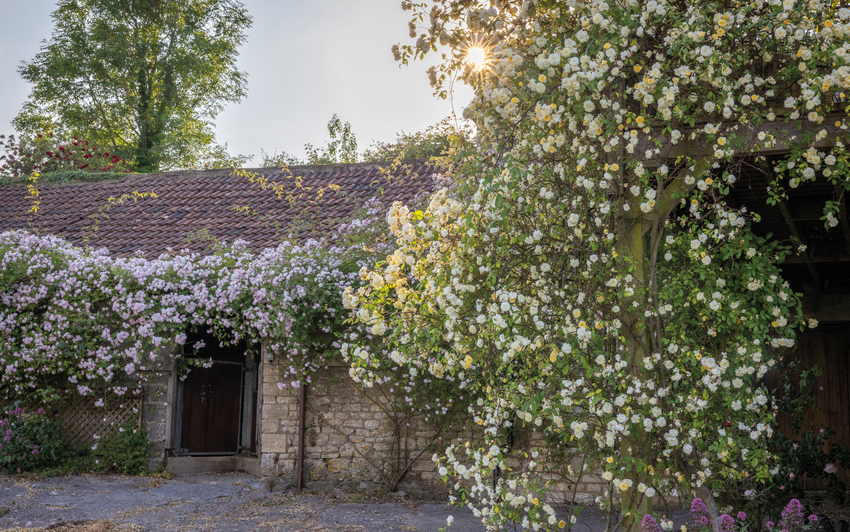
The Untamed Beauty of Climbing and Rambling RosesPicture an old apple tree in early summer. High among its branches, far above where anyone thought to plant a thing, sprays of soft flowers tumble from the canopy and scent the air below. It looks as though it simply happened. In truth, it began with a single rambling rose planted at the foot of the tree a few winters before, given just enough guidance to find its way up.
-
What Is a Bare Root Rose? A Beginner's Guide to Every PartOpening the box on your first bare root rose is an exciting moment. Inside, you'll find a neat bundle of roots and sturdy stems, carefully packed and resting for winter. There are no leaves or flowers yet, and that is exactly as it should be. Everything your rose needs to grow, flourish and flower for years to come is already there, ready and waiting for spring. Getting to know each part of your rose, and what it does, makes planting simple and helps you give it the very best start.

-
Rose Spotlight - Lady of Shalott®Lady of Shalott is the kind of rose that draws you across the garden. It arrives as a tight, salmon-red bud, then slowly loosens into a chalice of apricot and gold, as if someone had lit a small lamp inside it. When the evening sun is low, it seems to glow from within, a sight that stays with you long after the light has gone.

-
The Comfort of Autumn in the Rose GardenAutumn brings a particular kind of morning. You pull on a favourite jumper, step outside and feel the cooler air on your face, and somehow the day feels a little clearer. Leaves gather beneath your feet, the soil smells rich and damp, and the low sun turns everything a soft shade of gold.

-
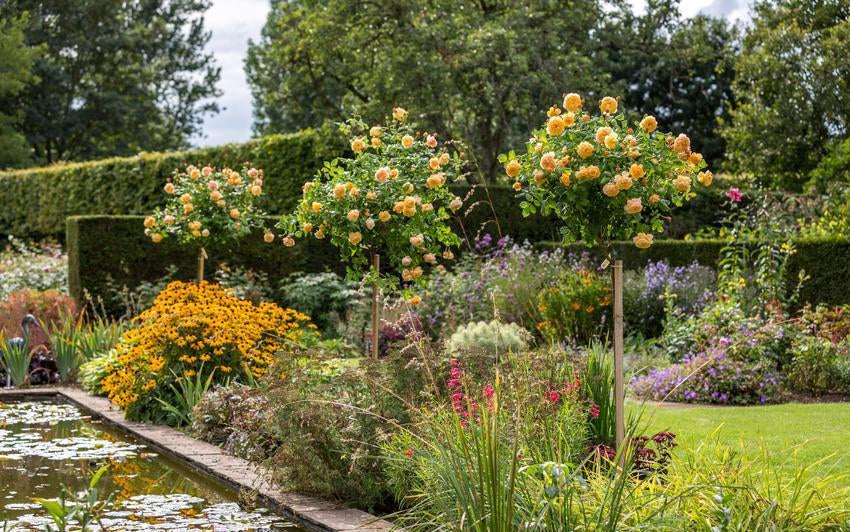
Designing with Standard Roses: Creative Ways to Style Your GardenStandard roses possess an inherent charm that immediately refines any outdoor space. Often referred to as tree roses, these beautiful plants lift your favourite blooms off the ground, presenting them at eye level on clean, structural stems. While they are a staple of formal landscapes, their unique height makes them incredibly versatile for relaxed, modern, and informal spaces too.
-
The Rose Year BeginsAutumn brings a distinct richness that invites us to slow down and notice the changes. Leaves turn shades of amber and gold, while the lower, softer light catches the borders in the late afternoon. As cooler mornings bring heavy dew and that unmistakable, earthy scent of damp soil, the garden gradually settles down for the season.


