


Finding the Right Rose for Your Garden: Choosing the Shape and Size of Your Rose Blooms
(Part Four)
In our previous guide, “Choosing Your Rose Colour,” we explored how colour is often the first thing that draws us to a rose. Once colour has caught the eye, the next detail many gardeners begin to notice is the shape and size of the flower itself.
A rose reveals much of its character through its blooms. Some flowers form neat cups, others open wide to the light, while some arrange themselves into rich rosettes of many petals. Their size varies too, from small and delicate blossoms carried in generous clusters to large, luxurious blooms that command attention.
As you choose a rose for your garden, it is worth pausing to consider which shapes and sizes you find most appealing.
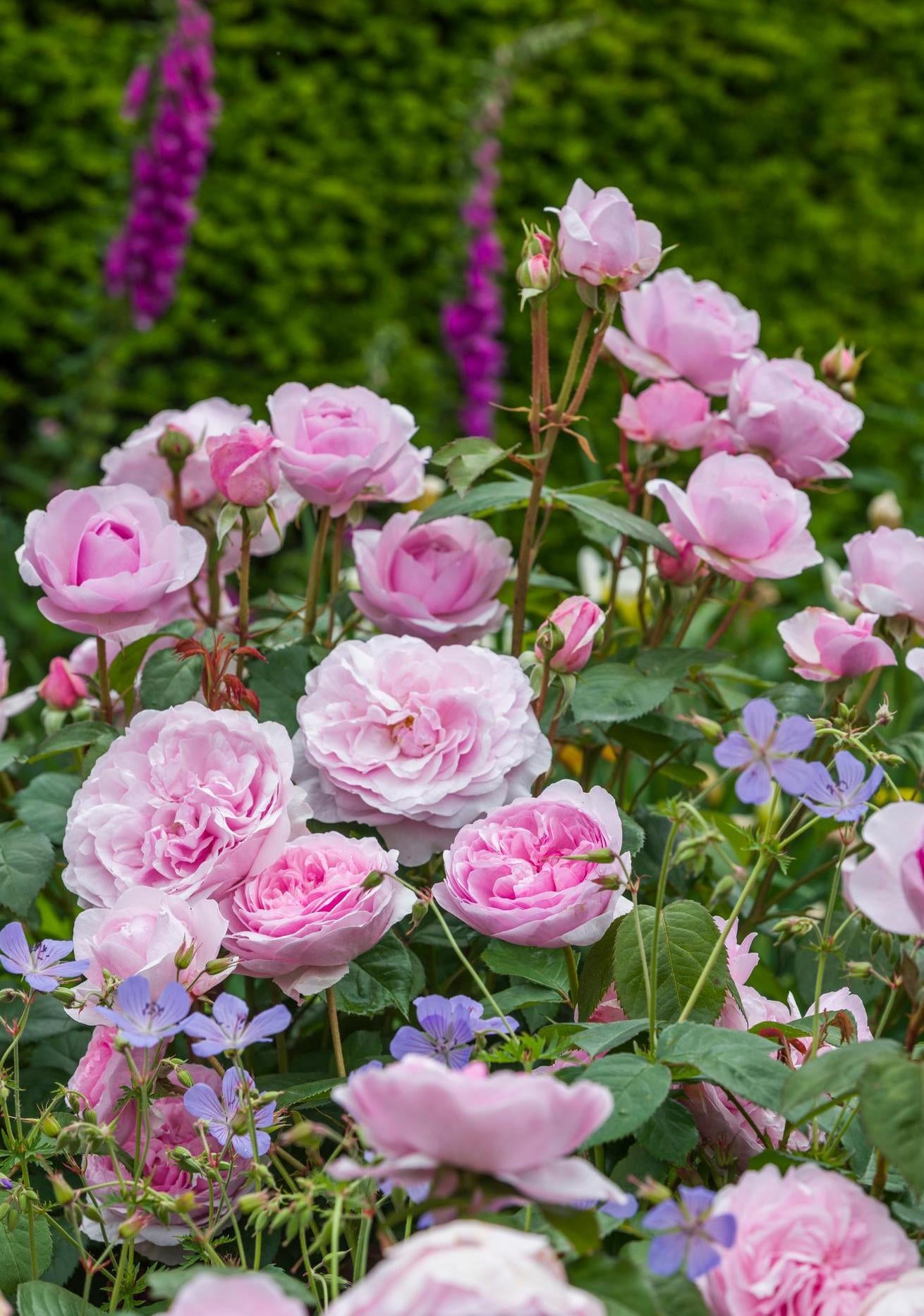
Deeply Cupped Flowers
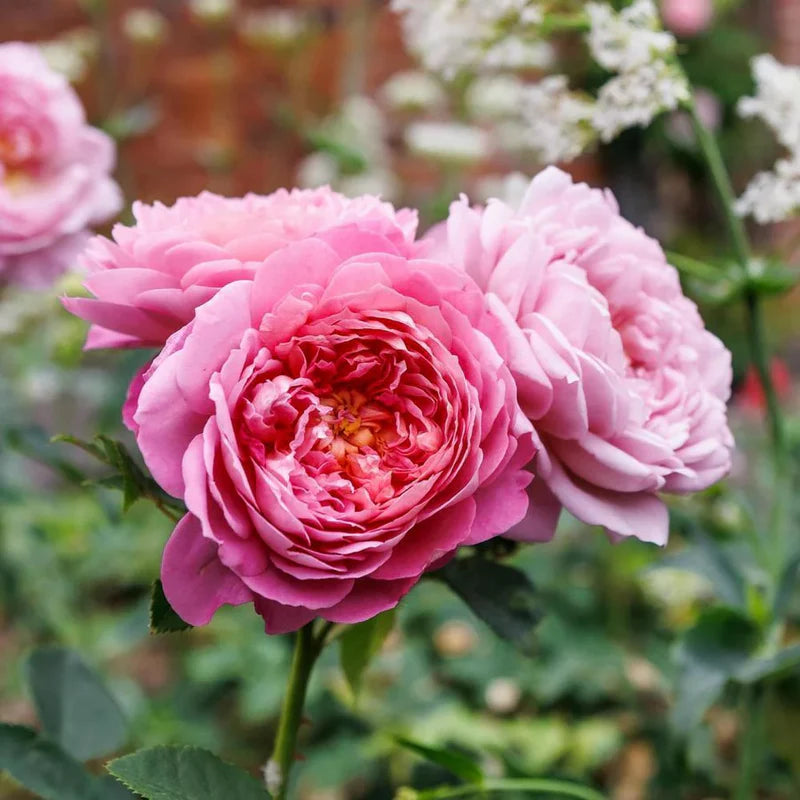
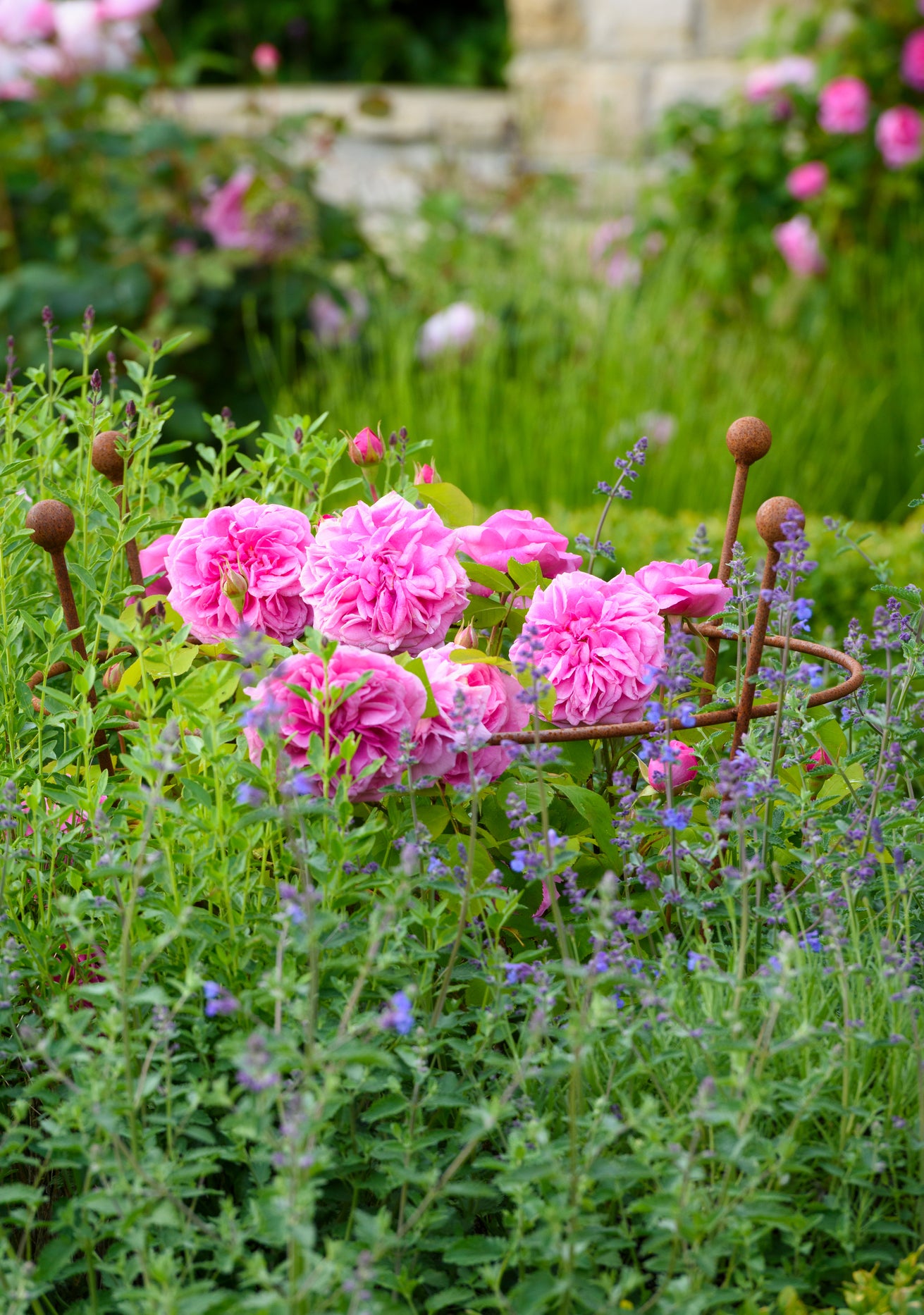
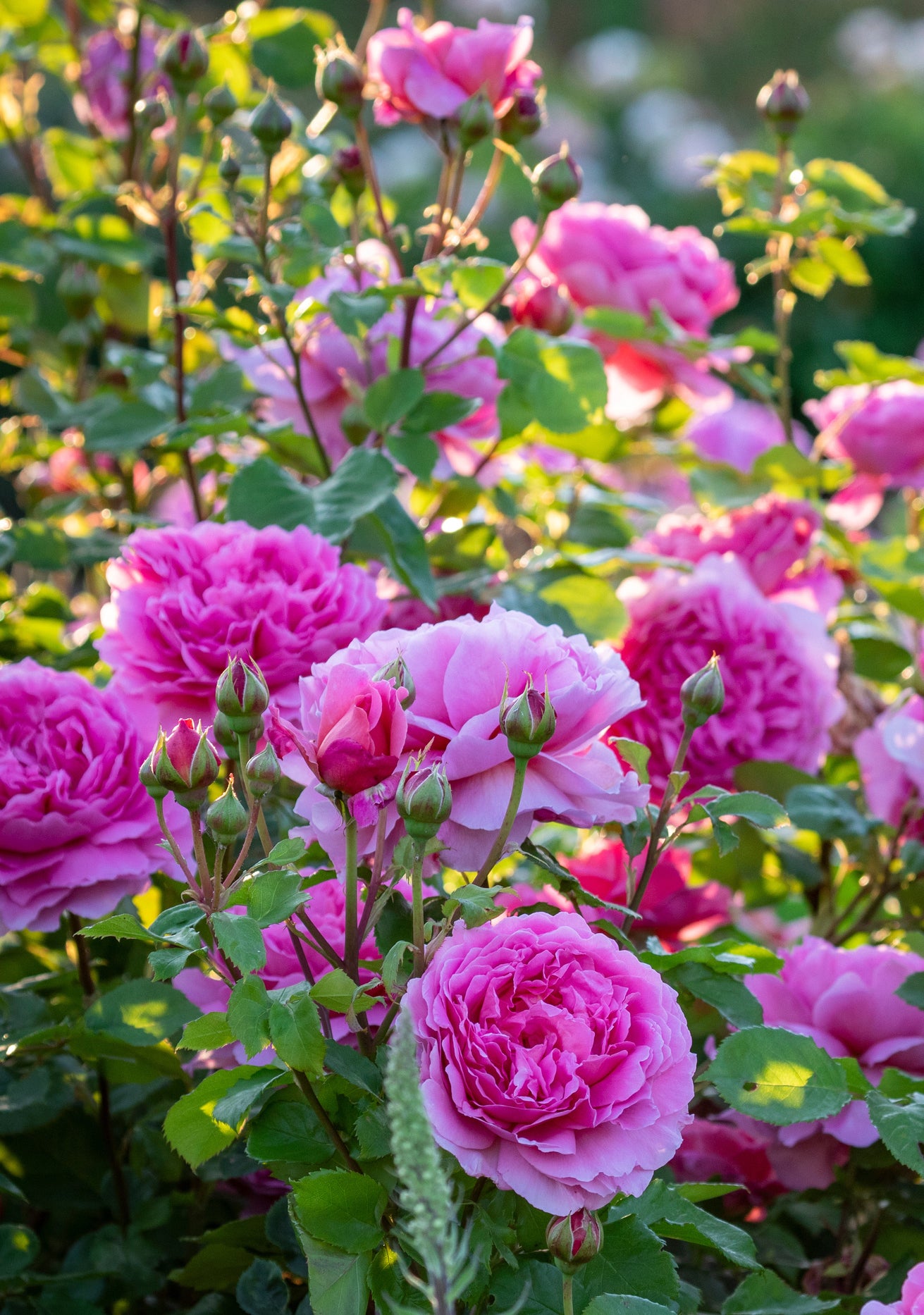
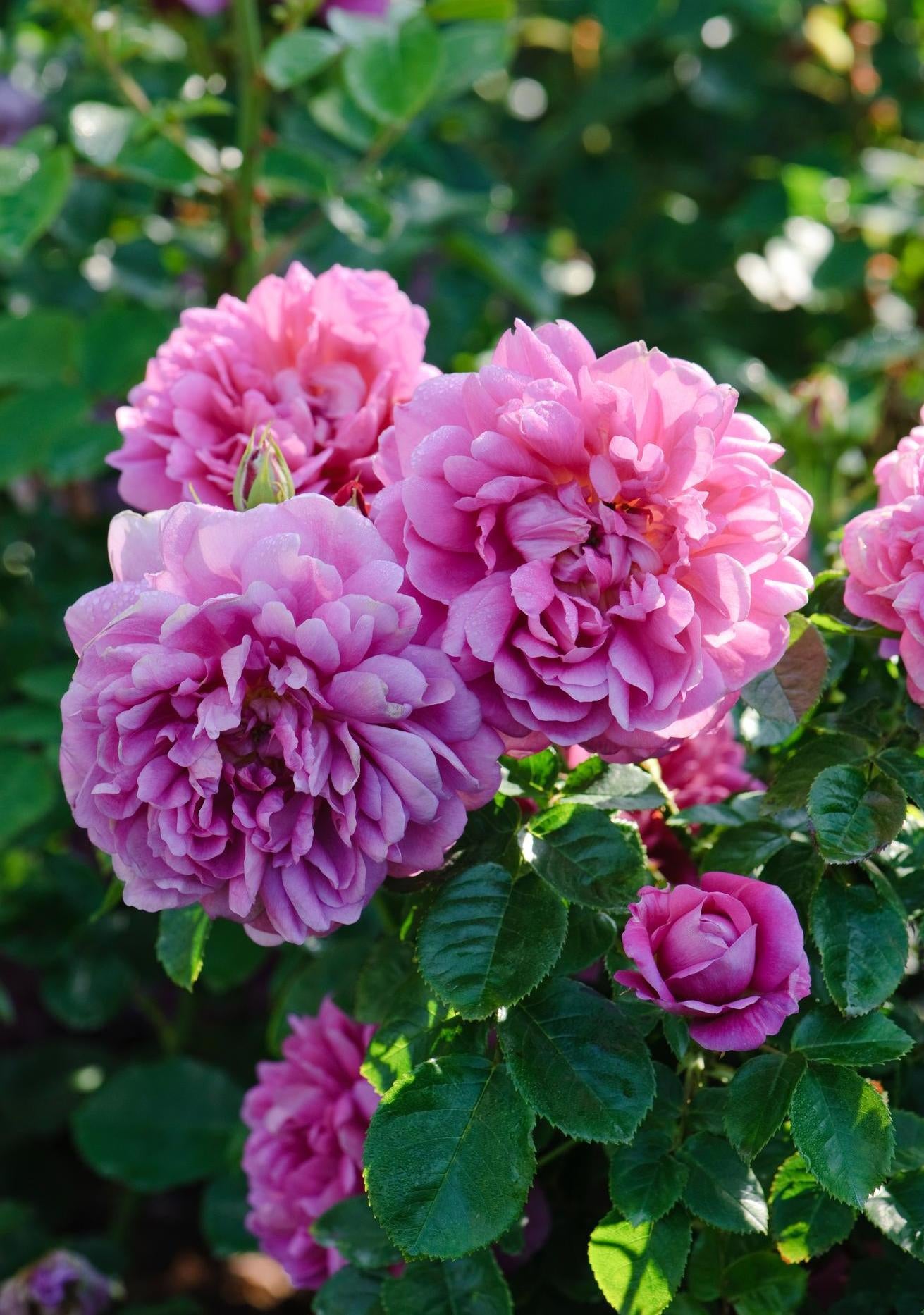
Deeply cupped roses have a rounded, bowl-like form, with many petals gathered closely together. The result is a flower that feels full and traditional, with a sense of depth and richness.
The blooms of Gertrude Jekyll® open into generous cups of deep pink, each flower filled with petals and accompanied by a powerful, classic fragrance. Similarly, Princess Alexandra of Kent® produces large, glowing pink flowers whose petals curve inward to form impressive, deeply cupped blooms.
These roses bring a feeling of timeless romance to the garden and are particularly lovely when planted where their flowers can be admired closely.
Shallow Cups and Open Flowers
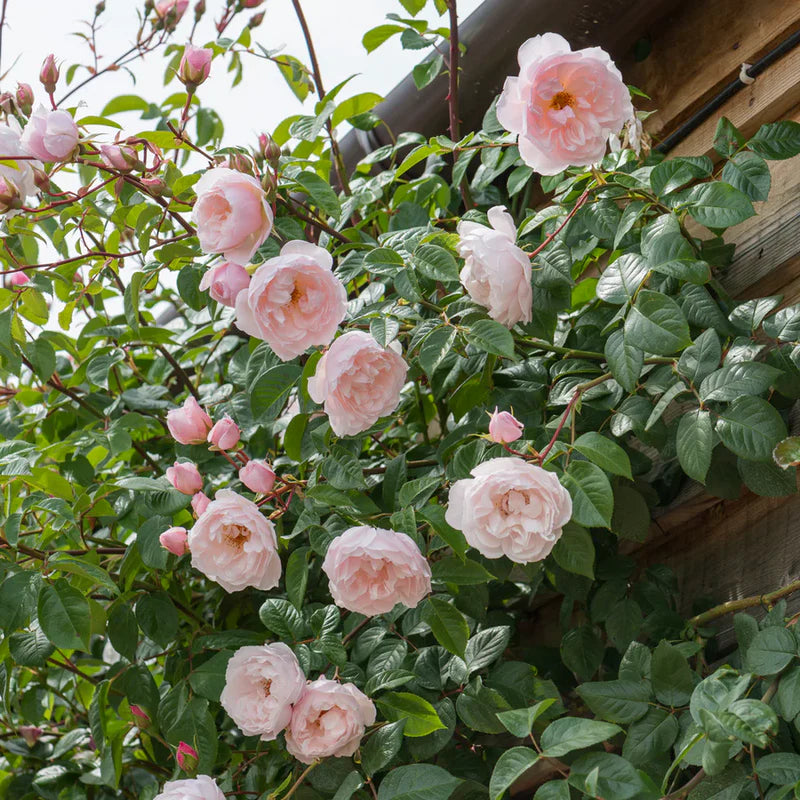
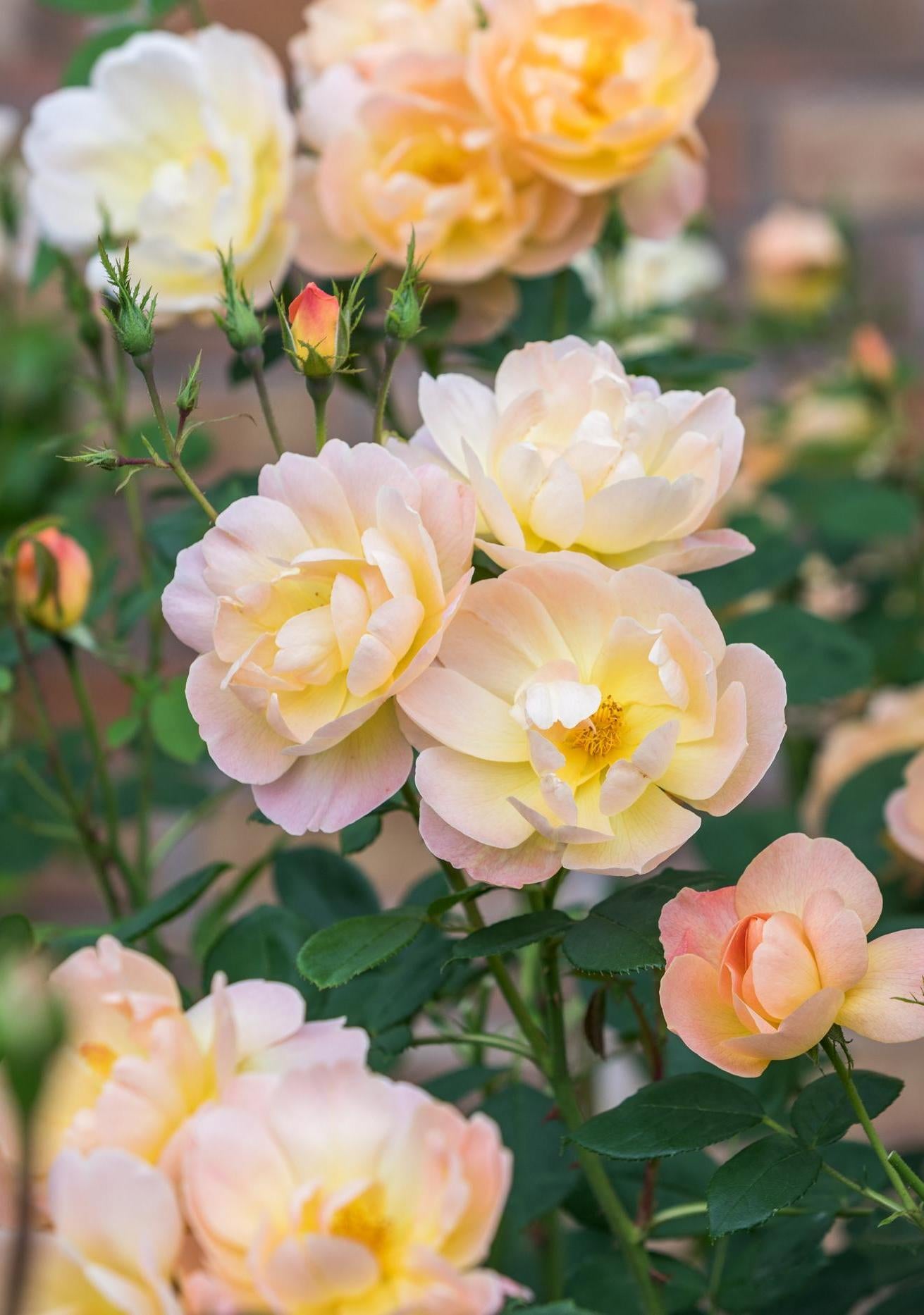
Some roses open more widely as they bloom, forming gentle saucer-like flowers. As the petals unfold, the golden stamens at the centre often become visible, giving the bloom a lighter and more natural appearance.
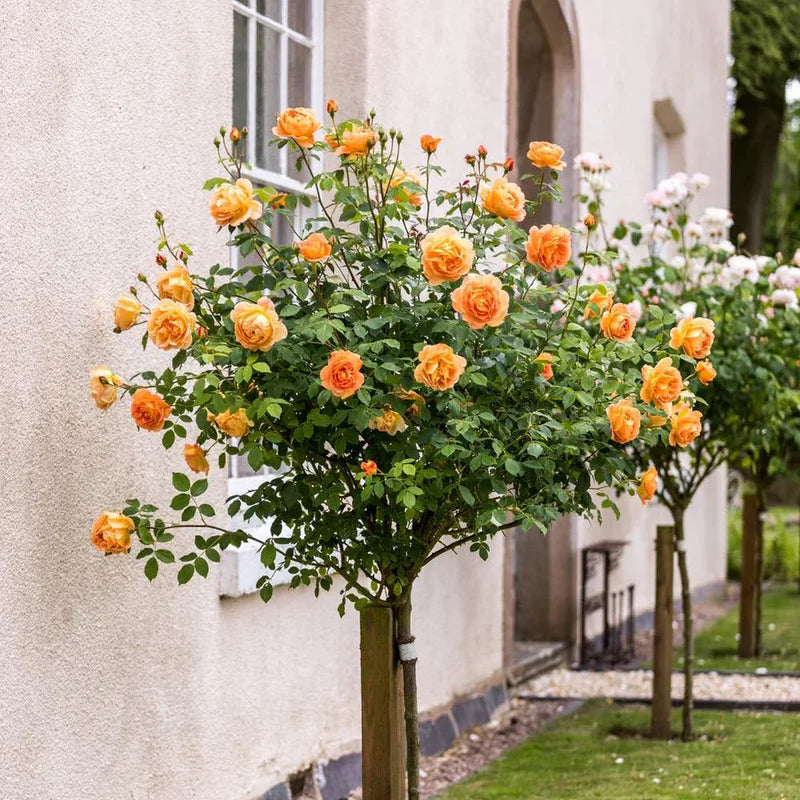
The warm apricot flowers of The Lark Ascending® open gracefully, bringing an airy softness to the border. Penelope Lively® carries soft pink blooms that gradually open to reveal their centres, adding a delicate charm.
These more open flowers create a relaxed and natural feeling, particularly suited to informal or wildlife-friendly gardens.




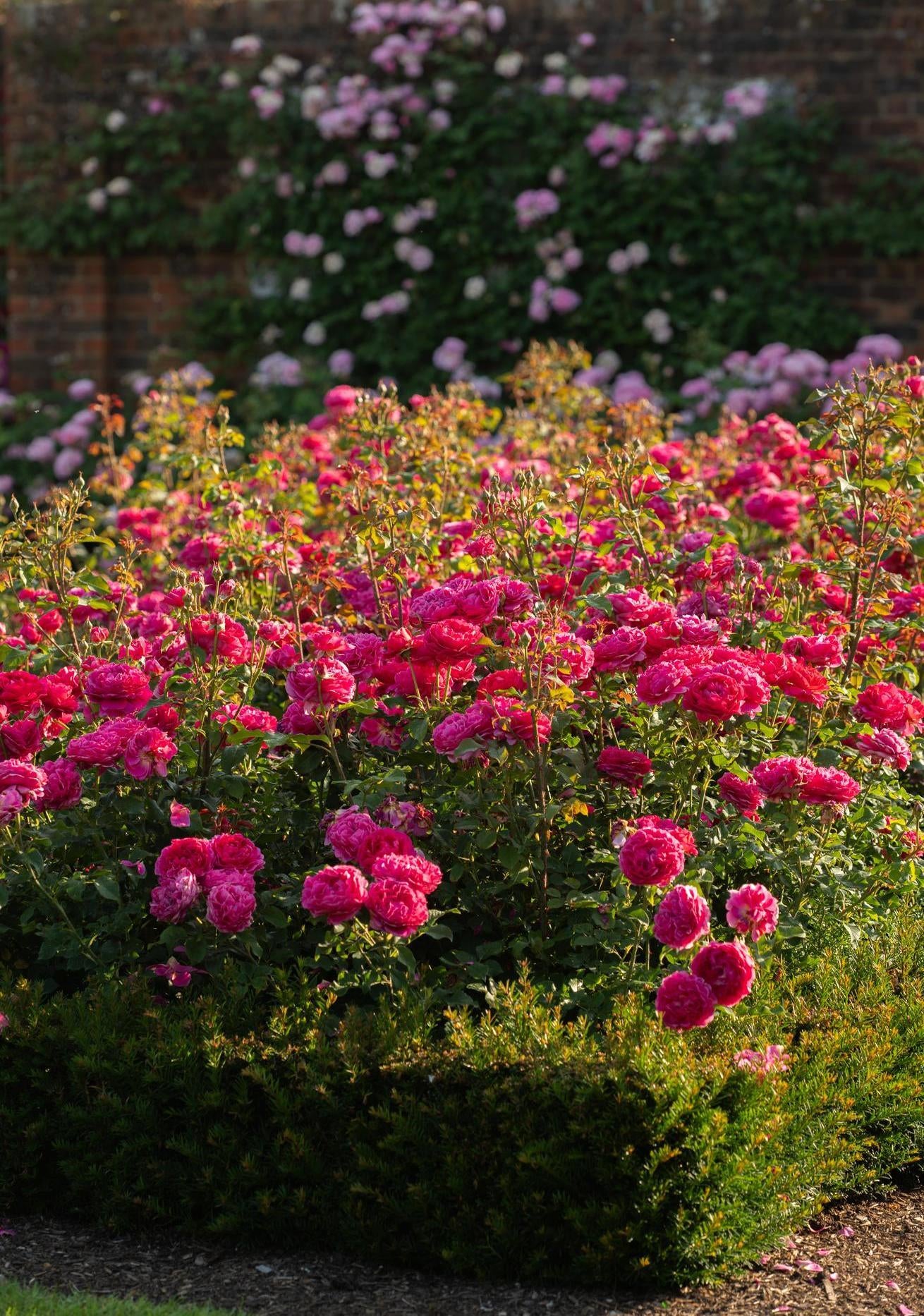
Rosette-Shaped Blooms
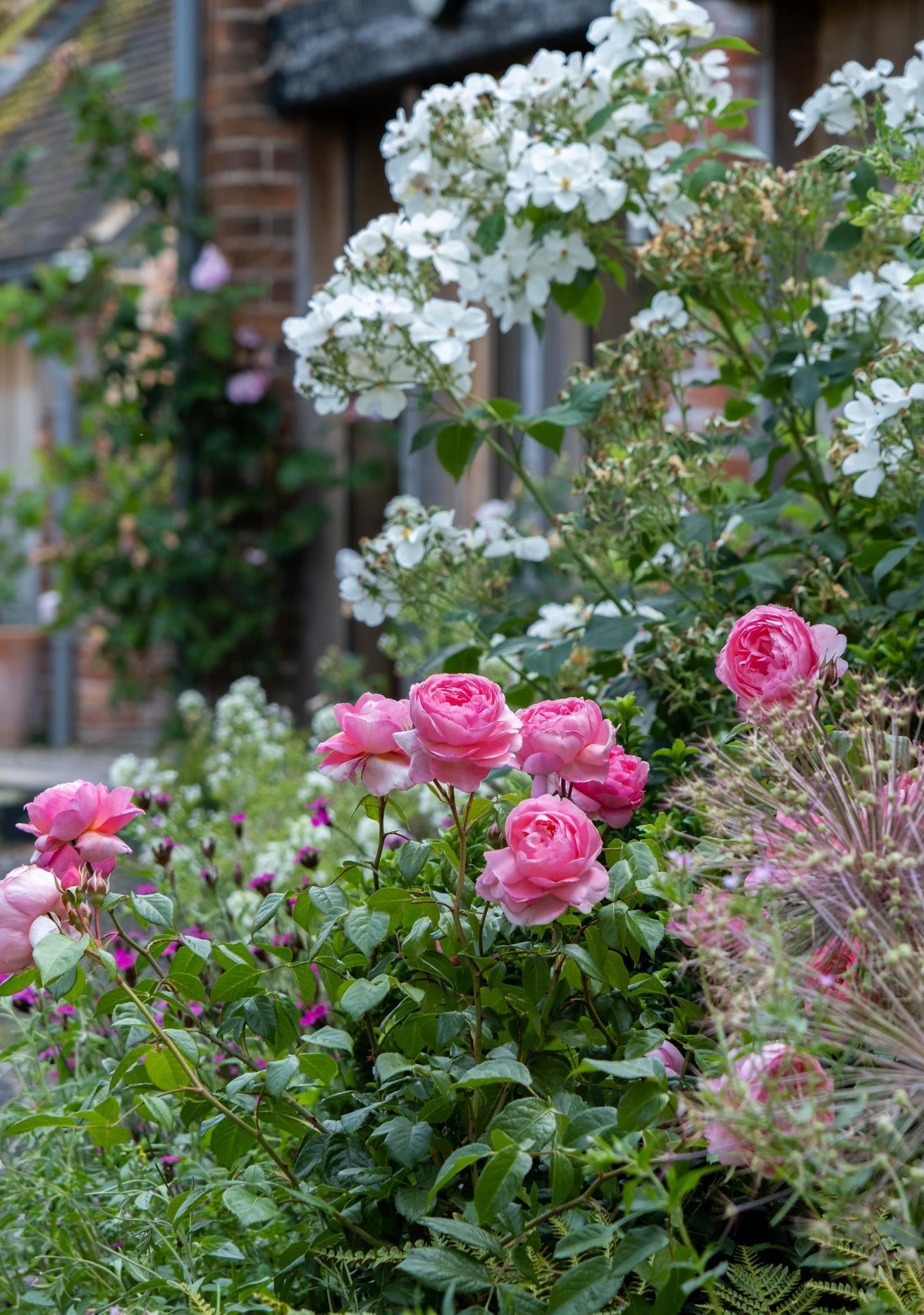
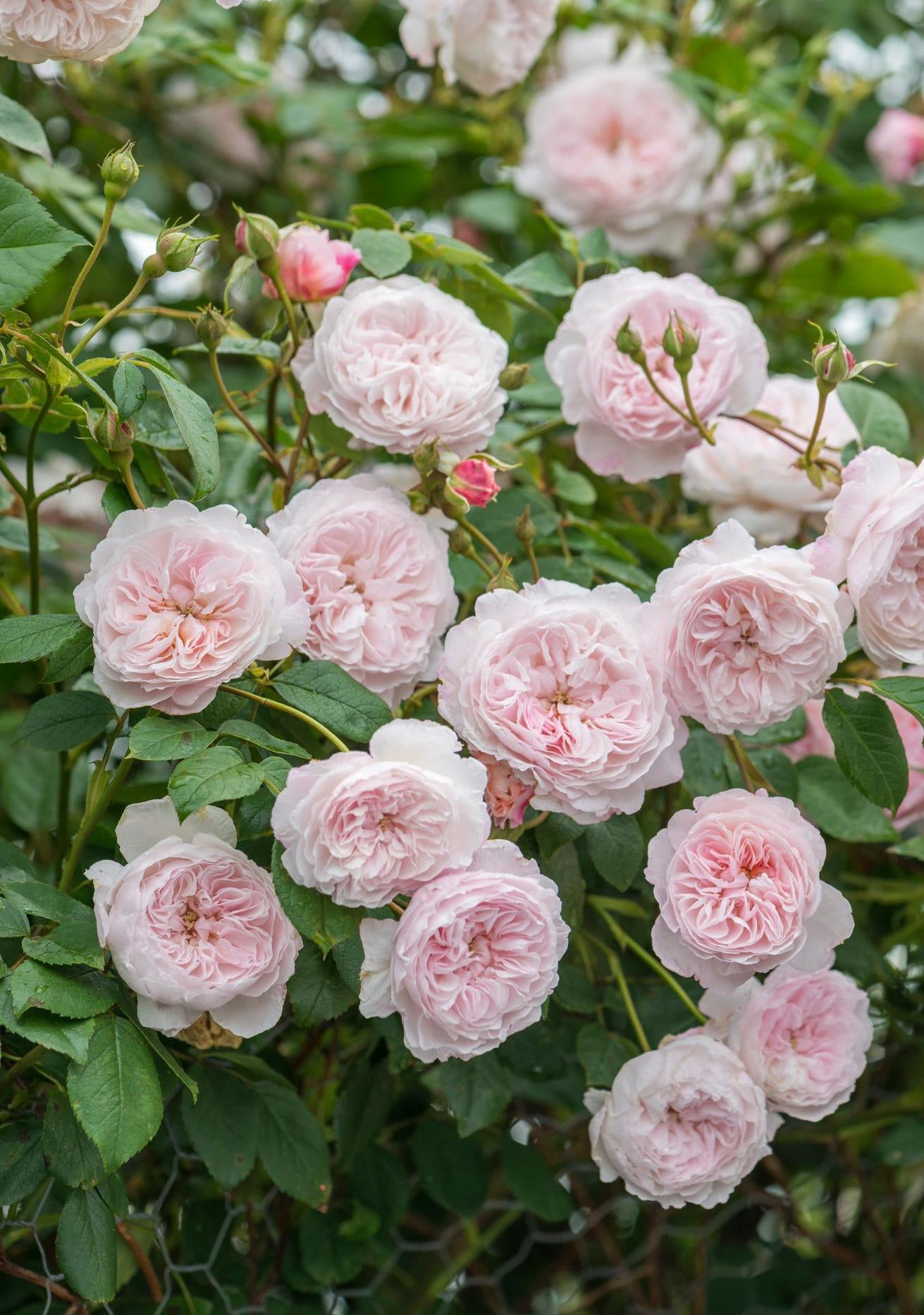
Rosette roses are known for their beautifully arranged petals. Layer upon layer unfolds in soft spirals or quarters, creating flowers that feel richly textured and wonderfully intricate.
The blooms of Olivia Rose Austin® form neat, many-petalled rosettes in a soft shade of pink. Another rose with this elegant form is Gabriel Oak®, whose richly coloured flowers open into full, intricate rosettes.
These roses combine fullness with refinement and bring a sense of richness to the planting without appearing heavy.
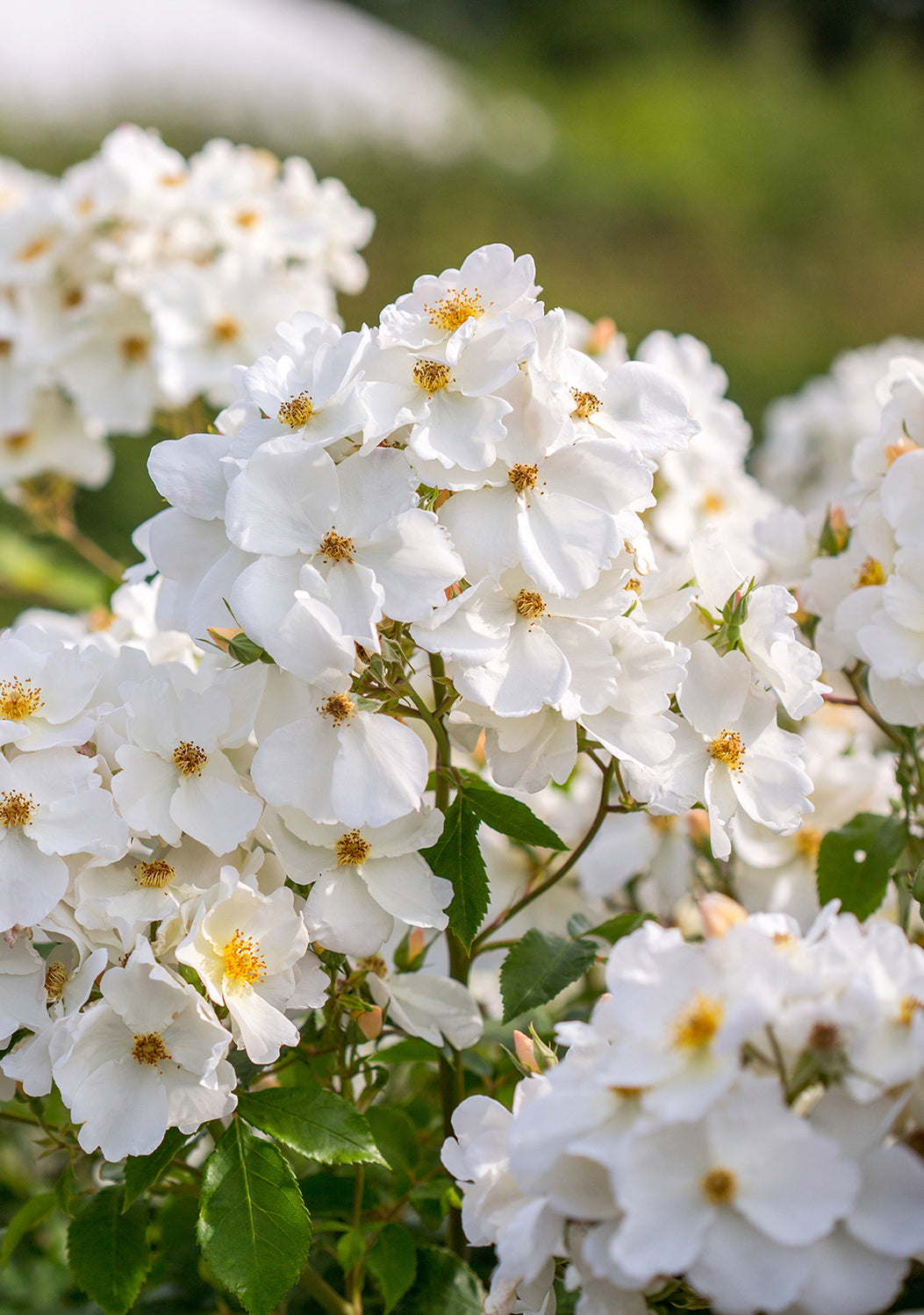
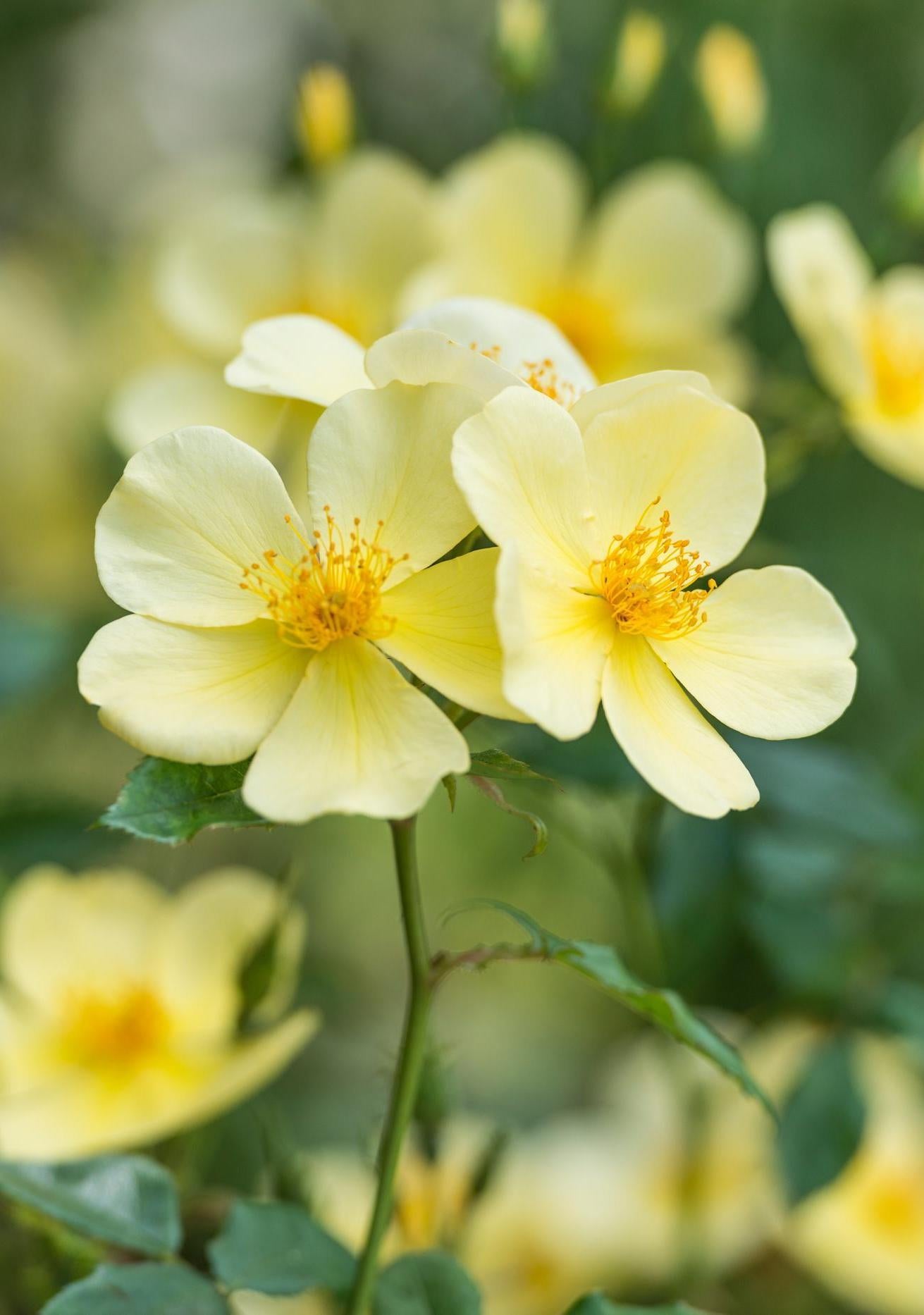
Single and Semi-Double Roses
At the simpler end of the spectrum are roses with fewer petals. Their open blooms reveal golden stamens at the centre, giving them a light and natural character.
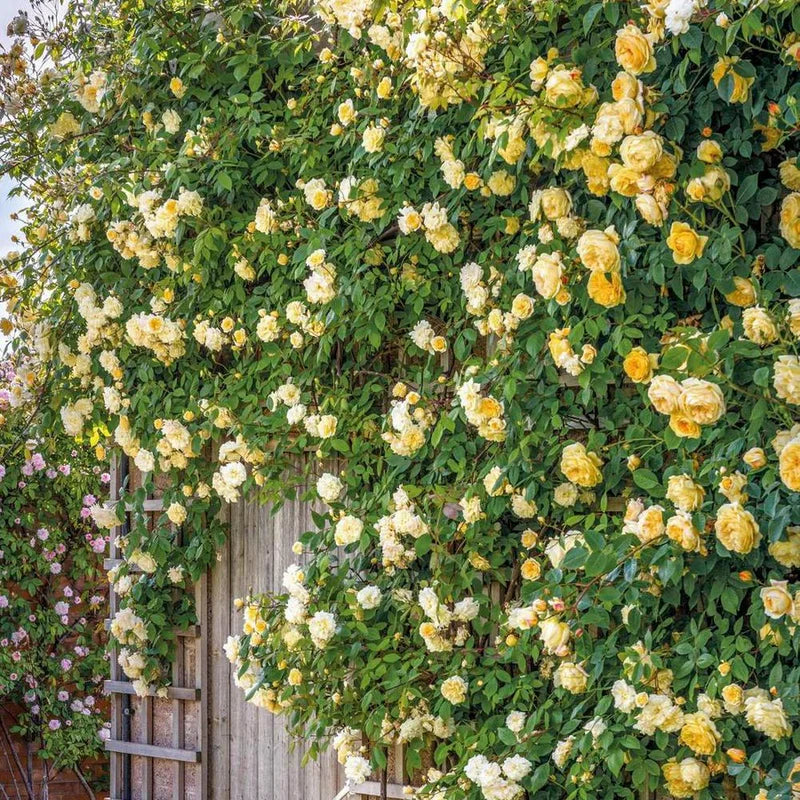
Kew Gardens® carries clusters of small, creamy white flowers that resemble tiny wild roses. Similarly, Tottering-by-Gently® produces graceful sprays of pale yellow blooms that hover lightly above the foliage.
These roses are much loved by bees and other pollinators and bring a gentle, informal beauty to the garden.




Considering the Size of the Bloom
The size of the flower also shapes the overall character of the rose.
Some varieties produce large blooms that appear singly or in small groups, allowing each flower to be admired in its own right.
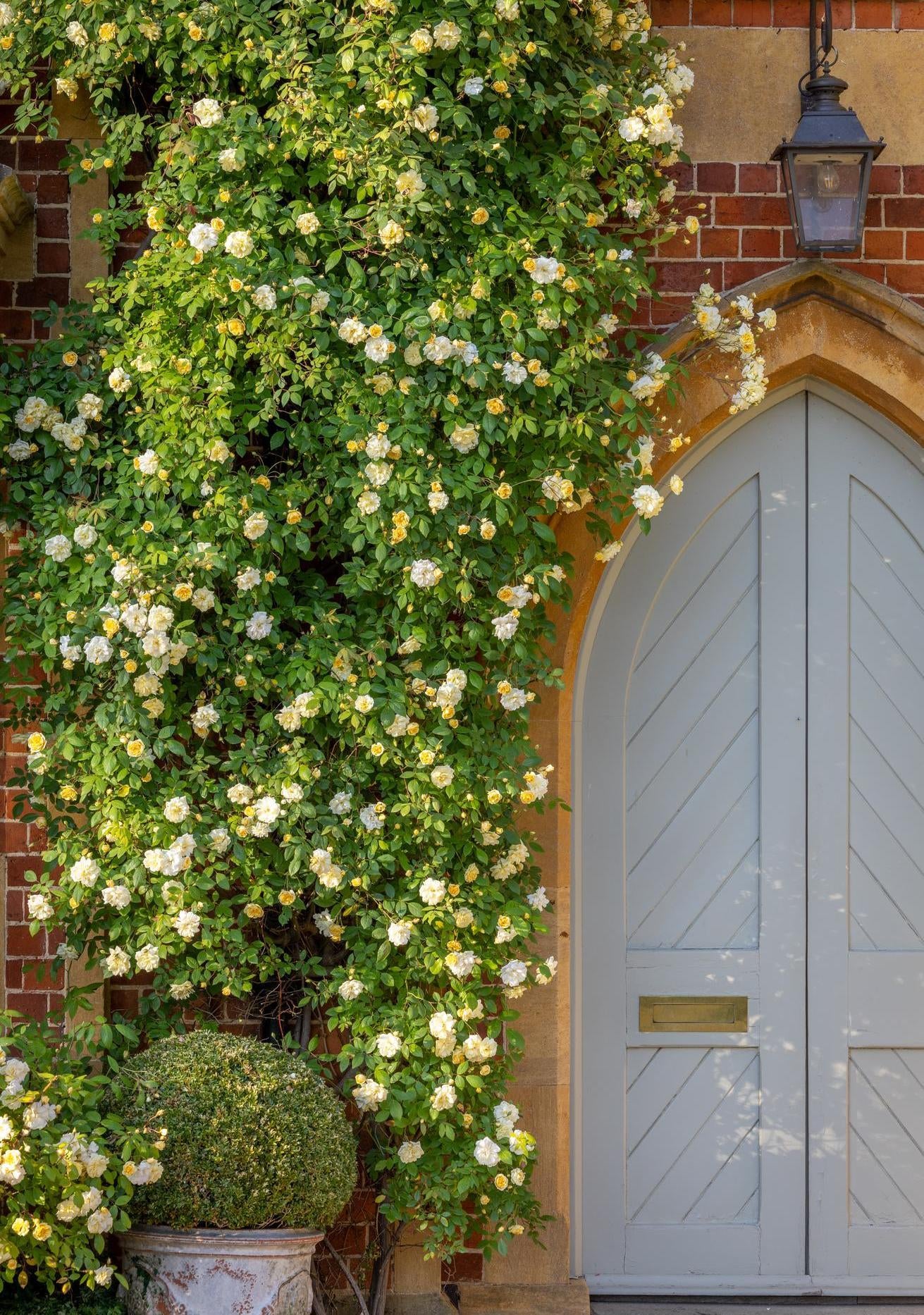
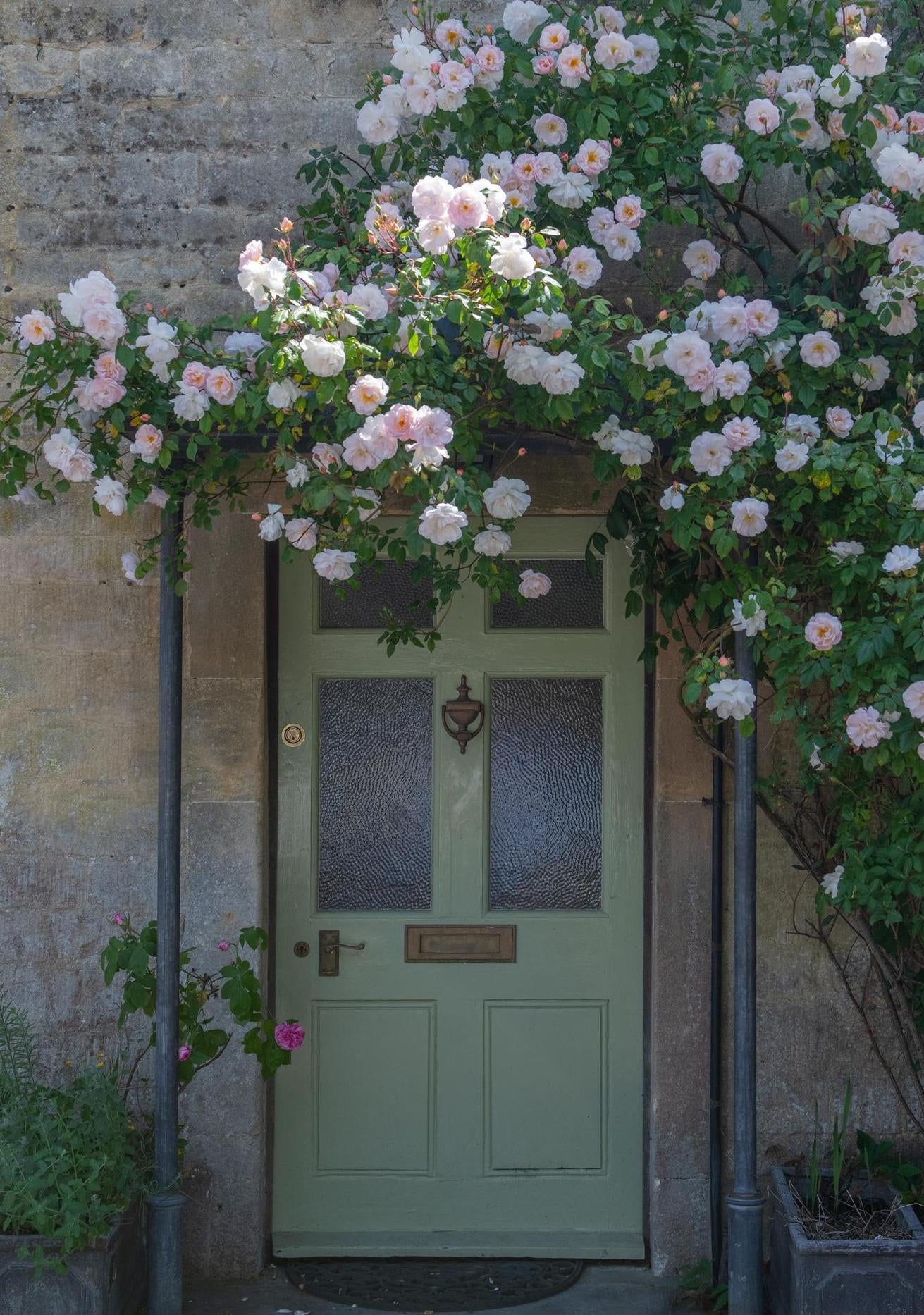
Other roses bear smaller flowers in generous clusters, creating a softer and more abundant display such as rambling roses. Varieties such as Malvern Hills® and The Albrighton Rambler® produce masses of small flowers held in large sprays, creating clouds of bloom that can transform a wall, arch or tree in early summer.
Considering Your Garden Conditions
The shape of the flower can also influence how well a rose performs in certain conditions.
In wet or exposed gardens, roses with open flowers, shallow cups, or single and semi-double blooms often cope best, as their petals shed rainwater easily and dry quickly.
Large, deeply cupped blooms, though quite exquisite, may be more easily affected by strong wind or heavy rain. In a sheltered garden, however, they can be truly breathtaking.




Finding the Flowers That Speak to You
Every rose expresses its personality through the shape and size of its blooms. Some gardeners are drawn to the abundance of small clustered flowers, while others delight in the drama of large, individual blooms. Some love the simplicity of open petals, while others are captivated by the intricate beauty of a full rosette.
There is no right answer. The best choice is simply the one that makes you pause and imagine the rose flowering in your own garden.
In our previous blog, “Choosing Your Rose Colour,” we explored how colour shapes the mood of a planting. In our next guide in this series, we will turn to another much-loved quality of roses as we explore “Choosing Your Rose Fragrance.”


-
Finding the Right Rose for Your Garden: Choosing the Perfect SpotChoosing a rose is one of the quiet pleasures of gardening. Over the coming weeks, we will be sharing a series of articles looking at some of the simple things that can help when choosing the right rose for your garden.

-
Finding the Right Rose for Your Garden: Choosing the Right VarietyIn our previous article, we began with a simple but important question: where will your rose live? Once you have considered the space available, whether a border, a container, or a wall, the next step is just as helpful.

-
Finding the Right Rose for Your Garden: Choosing Your Rose ColourWhen choosing a rose, colour is often the first thing that captures our attention. Long before we notice fragrance or the form of the bloom, it is usually the colour that quietly draws us in.
-
Finding the Right Rose for Your Garden: Choosing the Shape and Size of Your Rose BloomsIn our previous guide, “Choosing Your Rose Colour,” we explored how colour is often the first thing that draws us to a rose. Once colour has caught the eye, the next detail many gardeners begin to notice is the shape and size of the flower itself.

-
Finding the Right Rose for Your Garden: Choosing Roses for FragranceFragrance is one of the most memorable qualities a rose can offer. A single bloom can perfume a whole corner of the garden, while a path edged with scented roses can transform an ordinary walk into something quietly special. Yet not every rose smells the same, and understanding the different types of fragrance can help you choose varieties that bring the experience you are hoping for.

-
Finding the Right Rose for Your Garden: Choosing the Size of Your RoseEach rose has its own natural stature. Some remain compact and neatly shaped, while others reach outward or climb upwards, filling their space with ease. Understanding this from the outset helps you choose a rose that will sit comfortably in your garden, without needing to be held back.

-
Finding the Right Rose for Your Garden: How Often Would You Like Your Rose to Flower?When choosing a rose, colour and form often come first. Yet one of the most defining characteristics is something quieter. How often it flowers, and how that rhythm sits within your garden. Some roses return again and again, offering a steady presence through the season. Others gather their energy for a single, remarkable display. Each has its place, and each creates a different atmosphere.


