

How to Plant and Grow a Rambling Rose Up a Tree
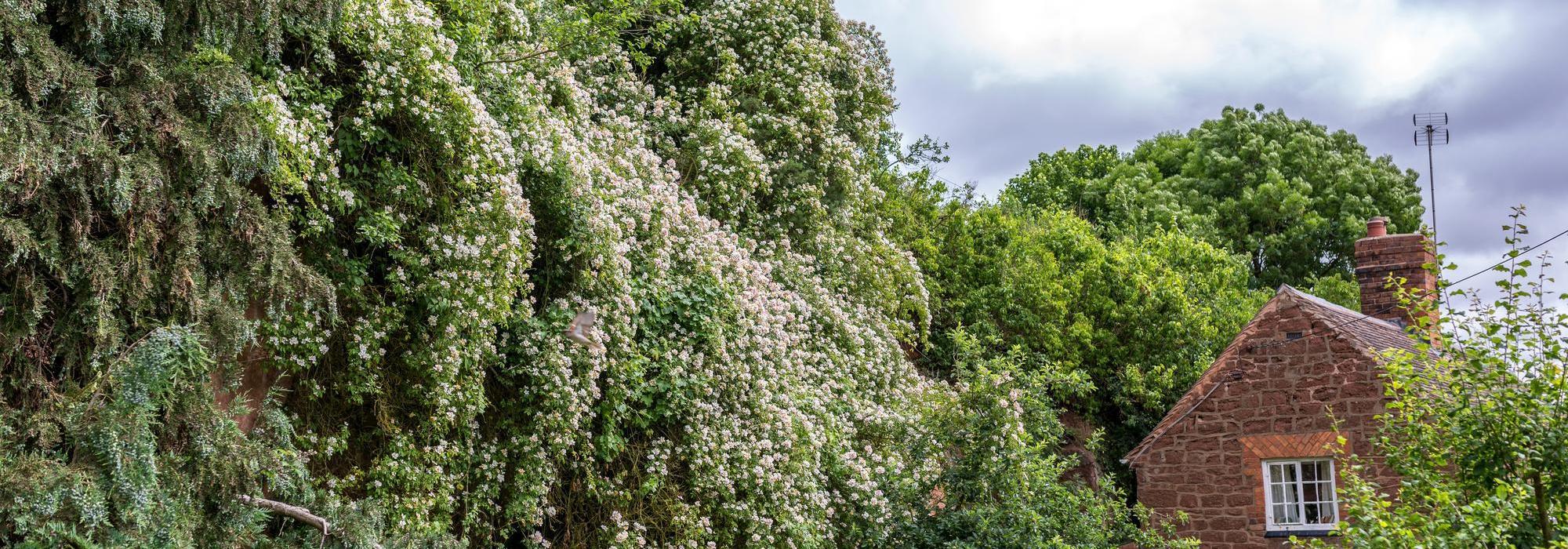
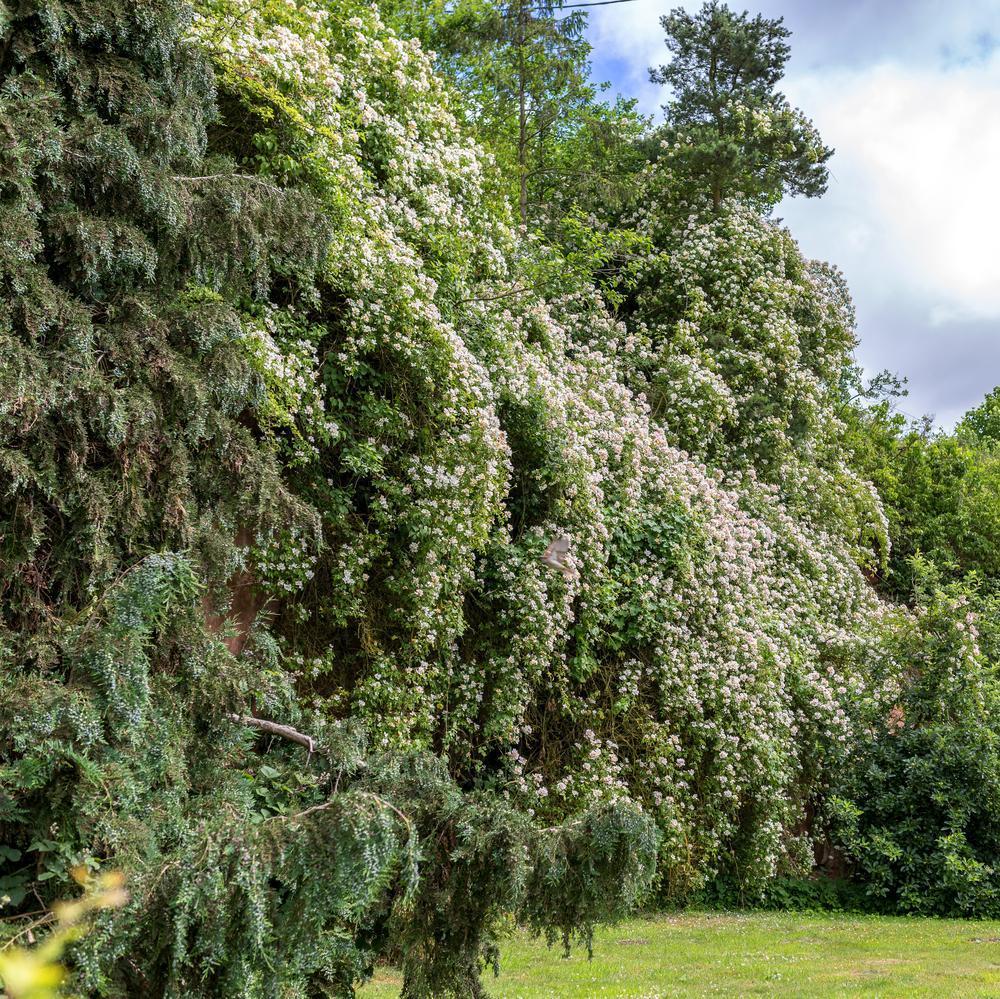
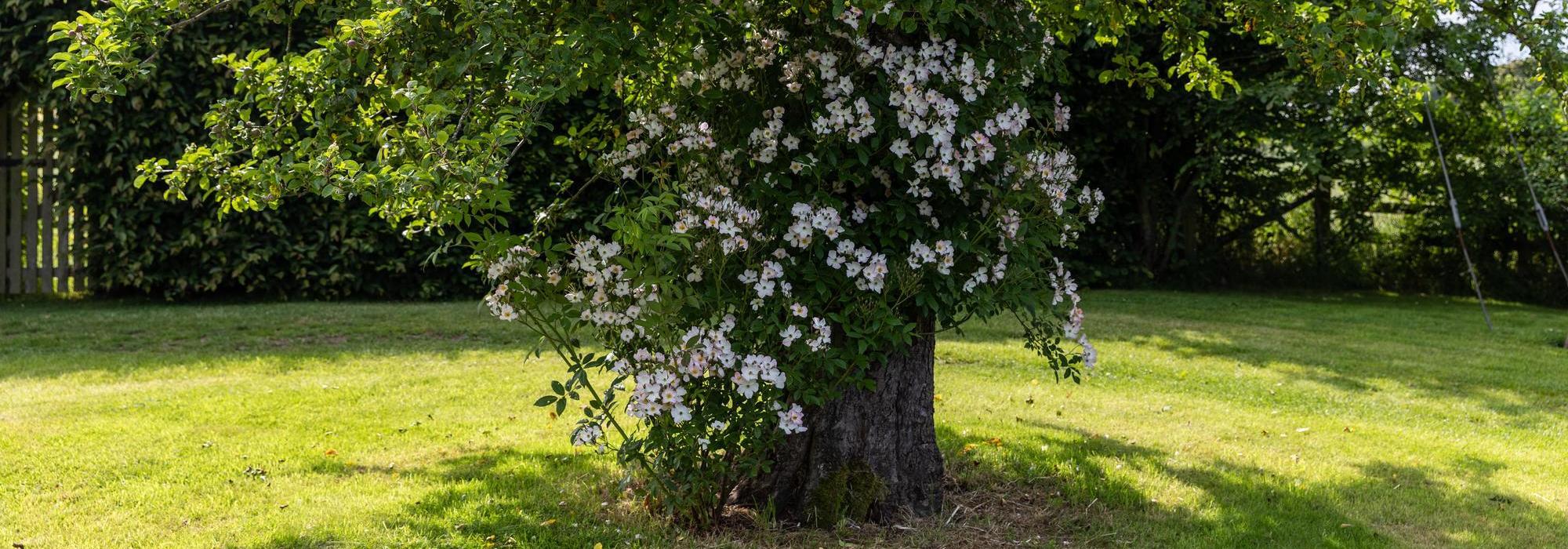
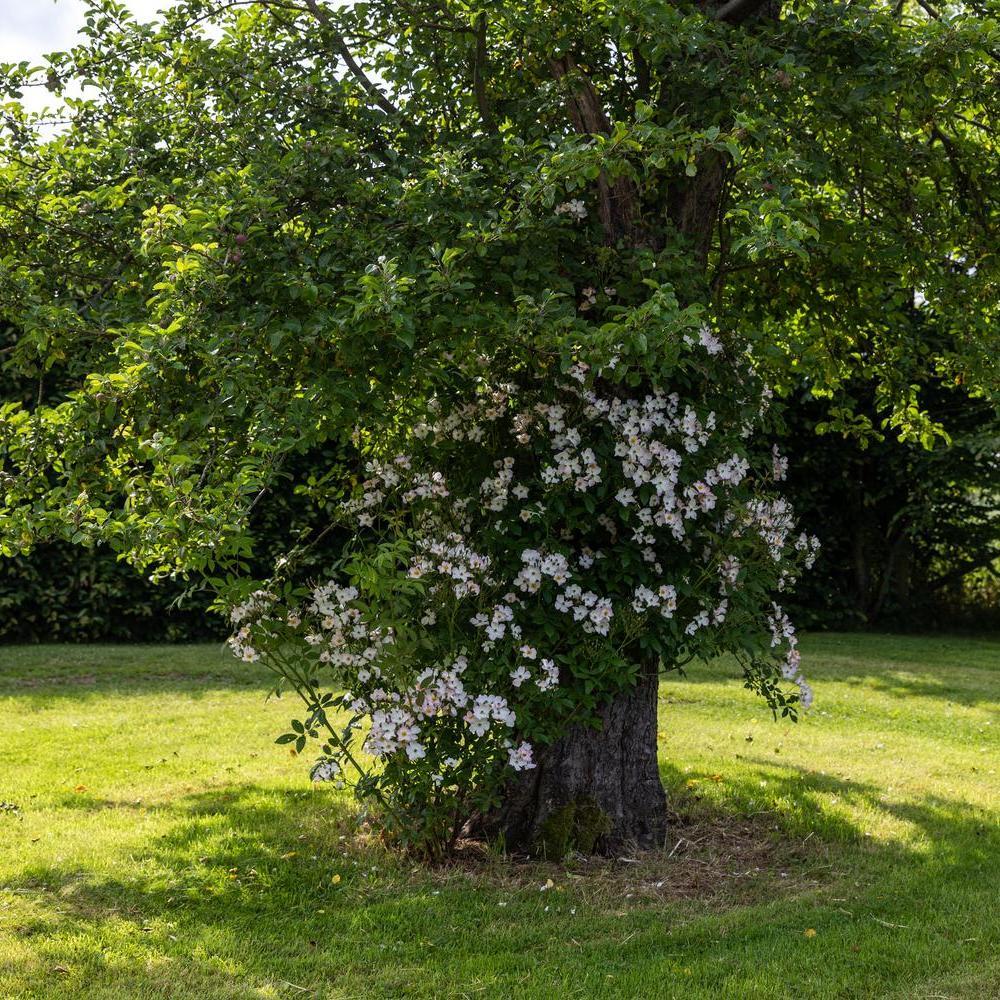
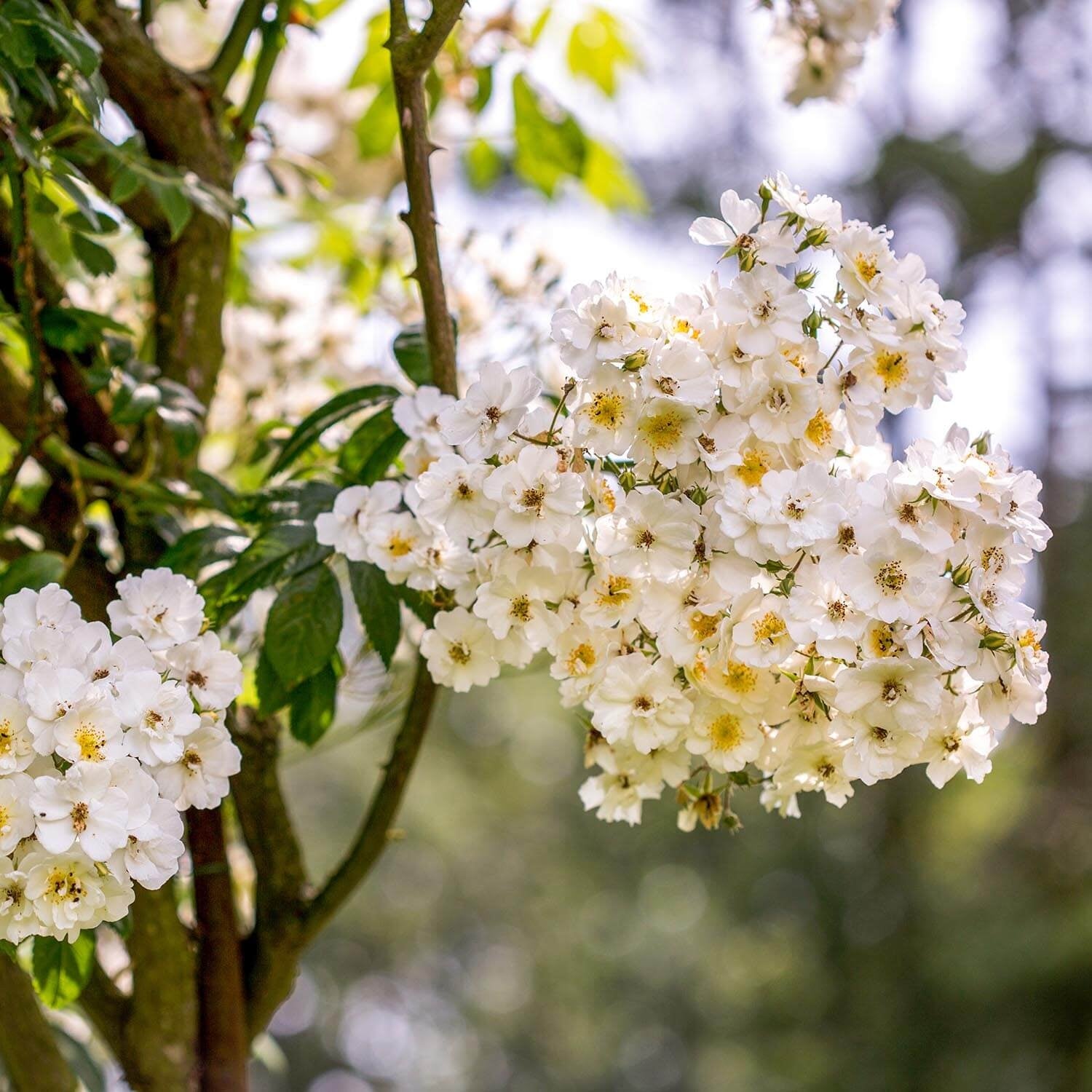
Rambling Roses have a natural affinity with trees. Their long, vigorous stems can be encouraged upwards into the branches, where they gradually weave through the canopy and open their flowers amongst the leaves. As the rose matures, the effect becomes increasingly natural, with great trusses of bloom appearing high above the ground and tumbling softly from the branches.
From old fruit trees to large, established specimens, growing a Rambler in this way can bring another season of colour and interest to a tree. A little care when choosing, planting and training your rose will help it settle in well and, in time, ramble freely.
Choosing the Right Rambling Rose
Begin by choosing a suitably vigorous Rambling Rose for the tree you have in mind. Our website filters can help you find varieties according to their eventual height and growing conditions.
Consider the mature size of both the rose and the tree. A particularly vigorous Rambler may overwhelm a modest fruit tree, while a smaller variety can become lost amongst the branches of a large, mature tree.
As a useful guide, the larger the tree, the more vigorous your Rambler can be.
Rambling Roses for Small and Fruit Trees
Fruit trees make particularly charming companions for Rambling Roses. As their spring blossom fades, the rose follows, carrying flowers into the branches and bringing another season of interest to the tree.
Choose a variety with enough vigour to reach comfortably into the canopy, without becoming too large for its host.


Rambling Roses for Large Trees
A large, established tree offers the space for some of our most vigorous Rambling Roses to come into their own.
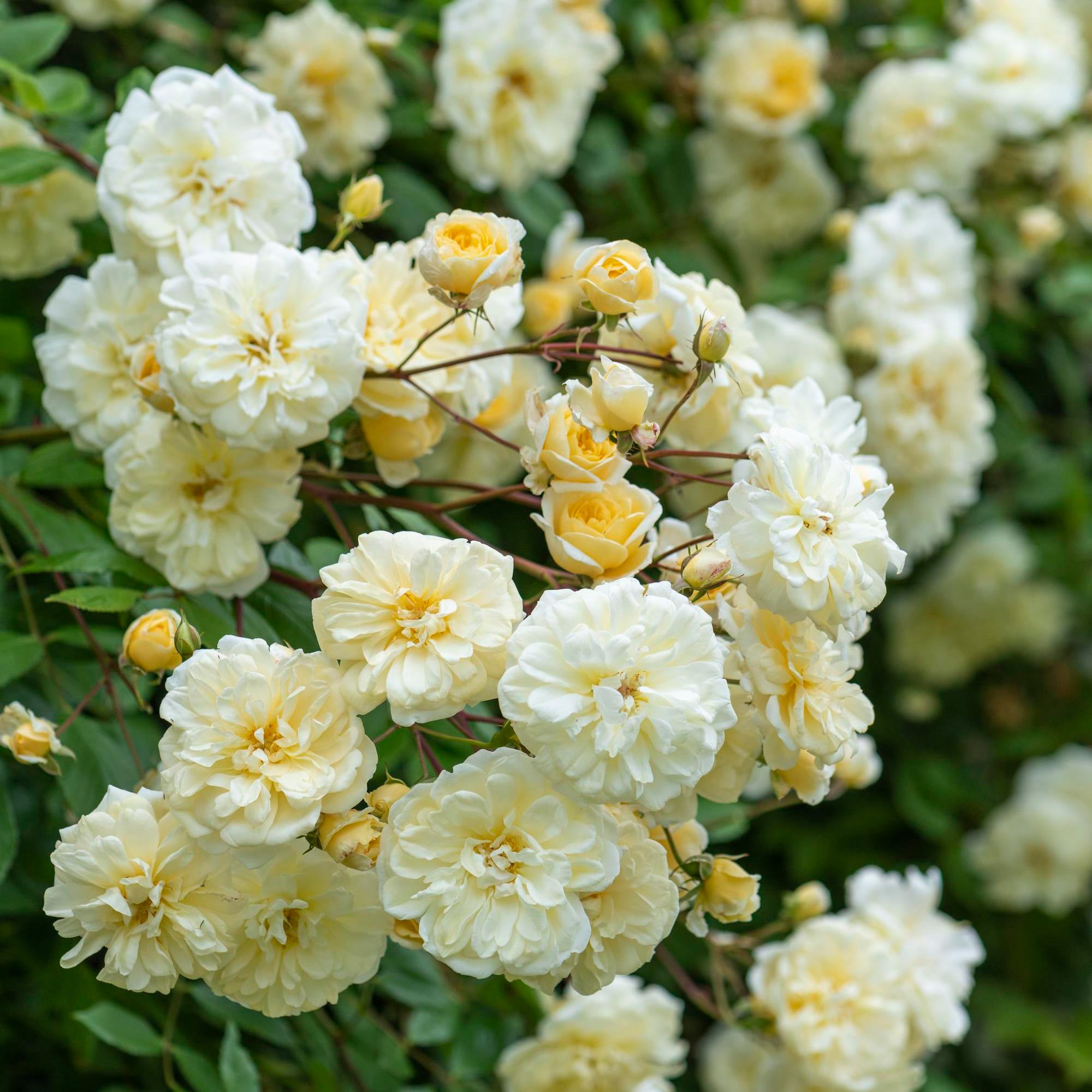
Varieties such as Paul’s Himalayan Musk and Rambling Rector can travel considerable distances once established, eventually flowering high amongst the branches and creating a wonderfully informal summer display.


Choosing the Right Tree
A Rambling Rose and its host tree may grow together for many years, so it is worth considering the partnership carefully.
Choose a healthy, well-established tree that is strong enough to support the eventual growth of the rose. Light is equally important. An open, airy canopy will allow more sunlight to reach the rose, helping it to grow and flower well.
When deciding where to plant, look for the sunniest side of the tree. Very dense canopies and deeply shaded positions can make establishing a young rose considerably more difficult.
Where to Plant Your Rambling Rose
It may seem natural to plant your rose immediately beside the trunk, but this is rarely the best position. Here, the ground is often crowded with established tree roots, leaving little good soil, moisture or readily available nutrients for a young rose.
Instead, move away from the trunk until you find a position where the soil is deeper and more accommodating. Plant your rose here and angle it towards the tree, ready for its stems to be guided upwards as they grow.
Where competition from tree roots is particularly strong, consider sinking a large pot with its base removed into the planting hole. Fill this with good soil before planting your rose. This gives the young roots their own pocket of soil and nutrients while still allowing them to grow down into the ground beneath.
Be generous with well-rotted manure or soil improver when preparing the planting area.
Helping Your Rose Reach the Branches
At first, your Rambling Rose will need a little help to make the journey from the ground into the tree.
Angle a garden cane, stout rope or length of chicken wire from the planting position towards the upper part of the trunk. As the rose produces new stems, gently guide and secure the strongest of these to the support.
There is no need to train every stem precisely. The aim is simply to provide a route into the tree.
Once the rose reaches the lower branches, its stems can be guided in the direction you would like them to travel and then allowed to ramble more freely. Thorny varieties are particularly well suited to this, as their prickles help them catch and hold amongst the branches.
Once the rose is securely established within the canopy, the original support can be removed if you wish.

Watering and Feeding
Growing beneath an established tree can be demanding for a young rose, as both plants are drawing upon the available water and nutrients. A little additional care while your rose establishes will help it develop the strong growth it needs to reach the canopy.
Water generously, particularly during dry spells, and feed regularly with a slow-release feed and liquid seaweed during the growing season.
You may also find it helpful to install a watering pipe when planting. This allows water to be directed deeper into the soil and towards the rose’s roots, where it is needed most.
Let Your Rose Ramble
Once the stems have found their way into the branches, much of the hard work is done. Continue to guide any wayward growth where needed, but otherwise allow the rose to find its own path through the tree.
Over the years, stems will weave amongst the branches and reach towards the light. Then, as summer arrives, flowers begin to open amongst the leaves, perhaps first in the lower branches and, in time, high within the canopy.
It is an effect that becomes lovelier as it matures, with the rose and tree growing together with just enough guidance from the gardener.
Related Articles
Read more-
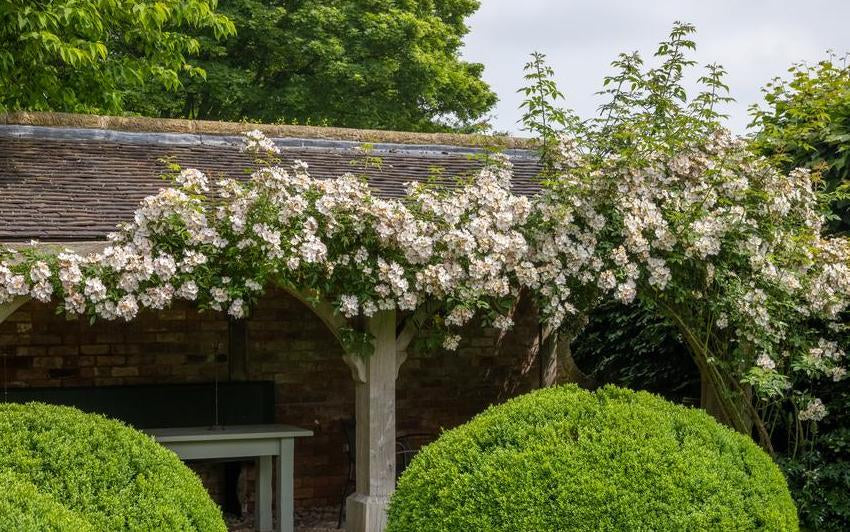
How to Grow Climbing and Rambling Roses Over a PergolaBy early summer, a pergola clothed in roses can bear little resemblance to the structure beneath. Strong posts disappear behind leafy stems, flowers gather at eye level and, overhead, long canes wander from beam to beam, carrying loose clusters of bloom with them. On warm days, fragrance lingers beneath the canopy and fallen petals scatter the path below.
-
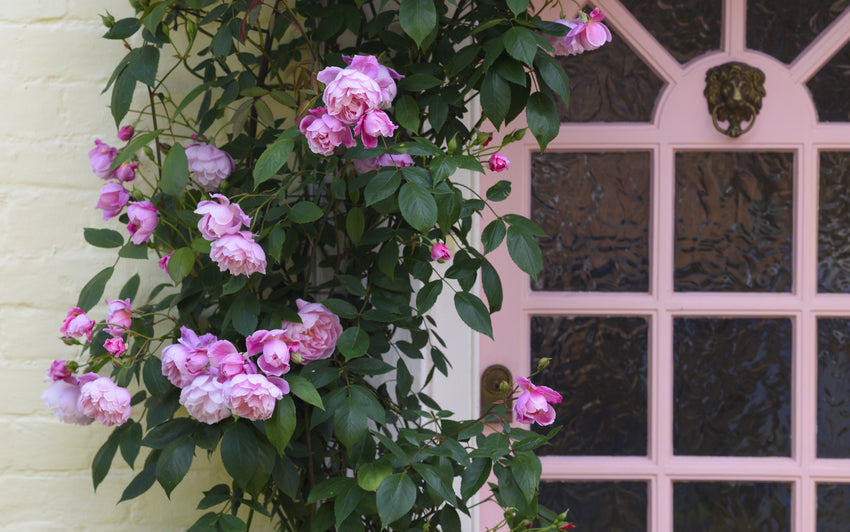
Climbing and Rambling Roses for Doorways and the Front of Your HouseThe entrance to your home is the first thing visitors see and the first view you enjoy each time you return. A climbing rose can completely transform a front door, soften the façade of a house or bring colour and fragrance to an otherwise ordinary wall. Whether you're looking to frame a doorway, brighten the front of your house or make the most of a small front garden, climbing and rambling roses offer a beautiful way to add height, character and seasonal interest.
-
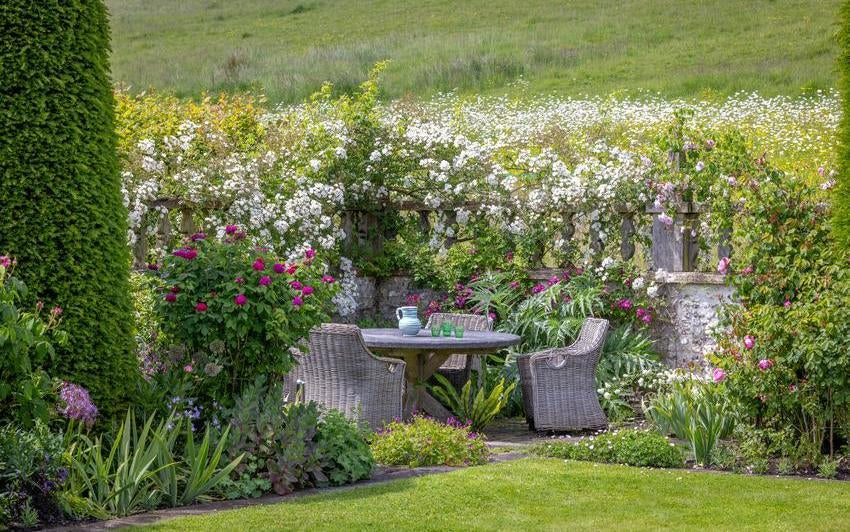
Climbing Roses and Rambling Roses: Understanding the DifferenceClimbing roses and rambling roses each bring height, fragrance and beauty to the garden, but they do so in different ways. While both can transform walls, arches and pergolas, understanding their unique growing habits will help you choose the right rose for your space and enjoy its full potential for years to come.
-
Creating Living Walls with Climbing and Rambling RosesA living wall has a way of transforming a space, turning a simple surface into a quiet theatre of petals, scent and shifting light. When English Roses form the foundation, the display becomes generous and enduring. Their repeat blooms, soft colours and naturally graceful habit bring depth and character to any vertical space, whether it is a boundary fence, a warm house wall or a tucked-away corner that needs a little life.
-
Climbing Roses and Rambling Roses: Understanding the DifferenceClimbing roses and rambling roses each bring height, fragrance and beauty to the garden, but they do so in different ways. While both can transform walls, arches and pergolas, understanding their unique growing habits will help you choose the right rose for your space and enjoy its full potential for years to come.
-
Think Beyond the Border: Growing Shrub Roses as Short ClimbersWhen choosing a rose for a garden wall, arch, or obelisk, most gardeners naturally turn to the traditional climbing section of the catalogue. Yet, the perfect vertical accent for your garden might not be a conventional climber at all.