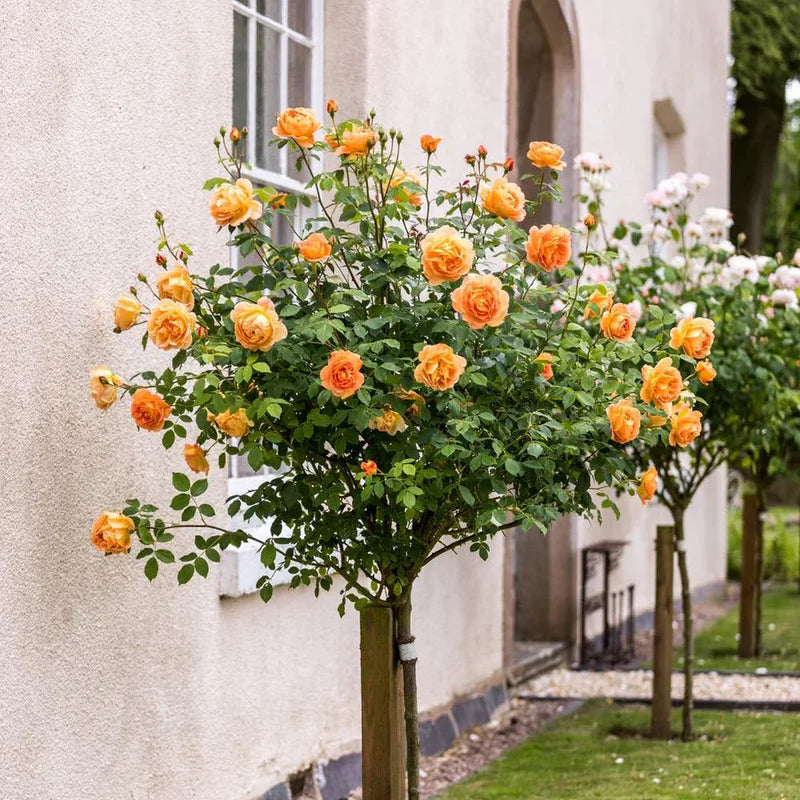

What to Plant with English Roses for Autumn Colour
By the end of September, the rose garden is changing. The exuberance of summer is giving way to a slower rhythm, and many English Roses are setting hips, their once-constant flowers replaced by clusters of glowing fruit. Yet the borders need not feel diminished. With the right companions, roses can be framed and supported so that the garden still sings with colour, texture and grace well into October and beyond.
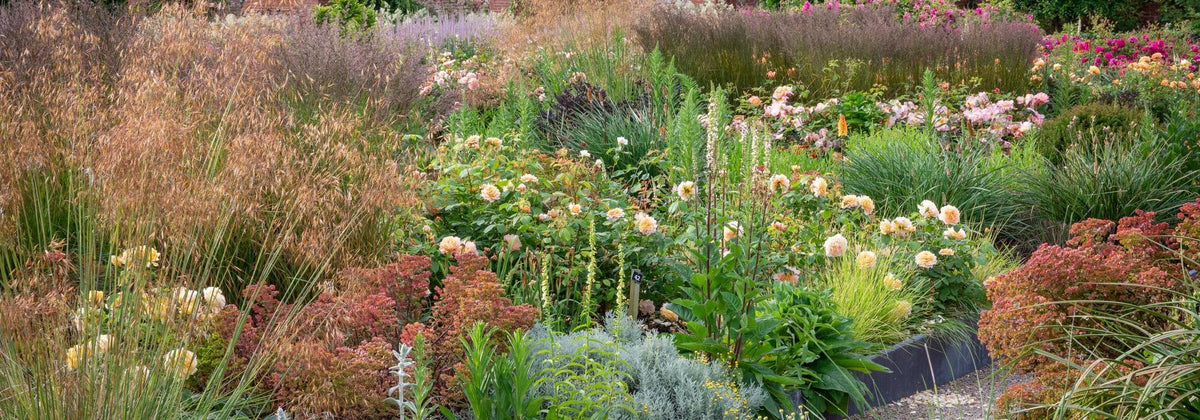

Early autumn is also one of the best times to plant perennials. The soil is still warm, and autumn rain helps roots settle before winter. Everything below can go in now, ready to flower next year alongside your roses.
Give roses room. Leave around 45cm (18in) between a rose and its neighbours so they don't compete for water and nutrients and keep vigorous spreaders slightly further away.
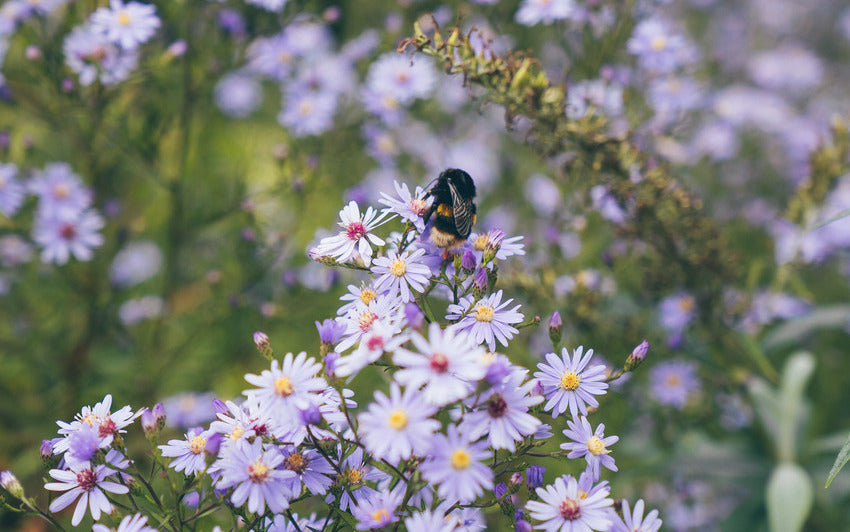
Few plants light up this season quite like asters. Their daisy-like flowers, in shades of violet, lilac, blue and white, scatter starlight across the garden just as the roses begin to wane. A haze of pale lavender asters beside the last dusky-pink blooms, or glowing behind stems tipped with orange hips, creates a picture of quiet abundance.
Look for Symphyotrichum 'Little Carlow' (most garden asters now sit under this name), which carries clouds of lavender-blue flowers on stems around 1m tall. The tiny white stars of 'Monte Cassino' are just as good. Both are reliable, good for bees, and much less prone to mildew than some older varieties. Grow them in sun, in the middle of the border.
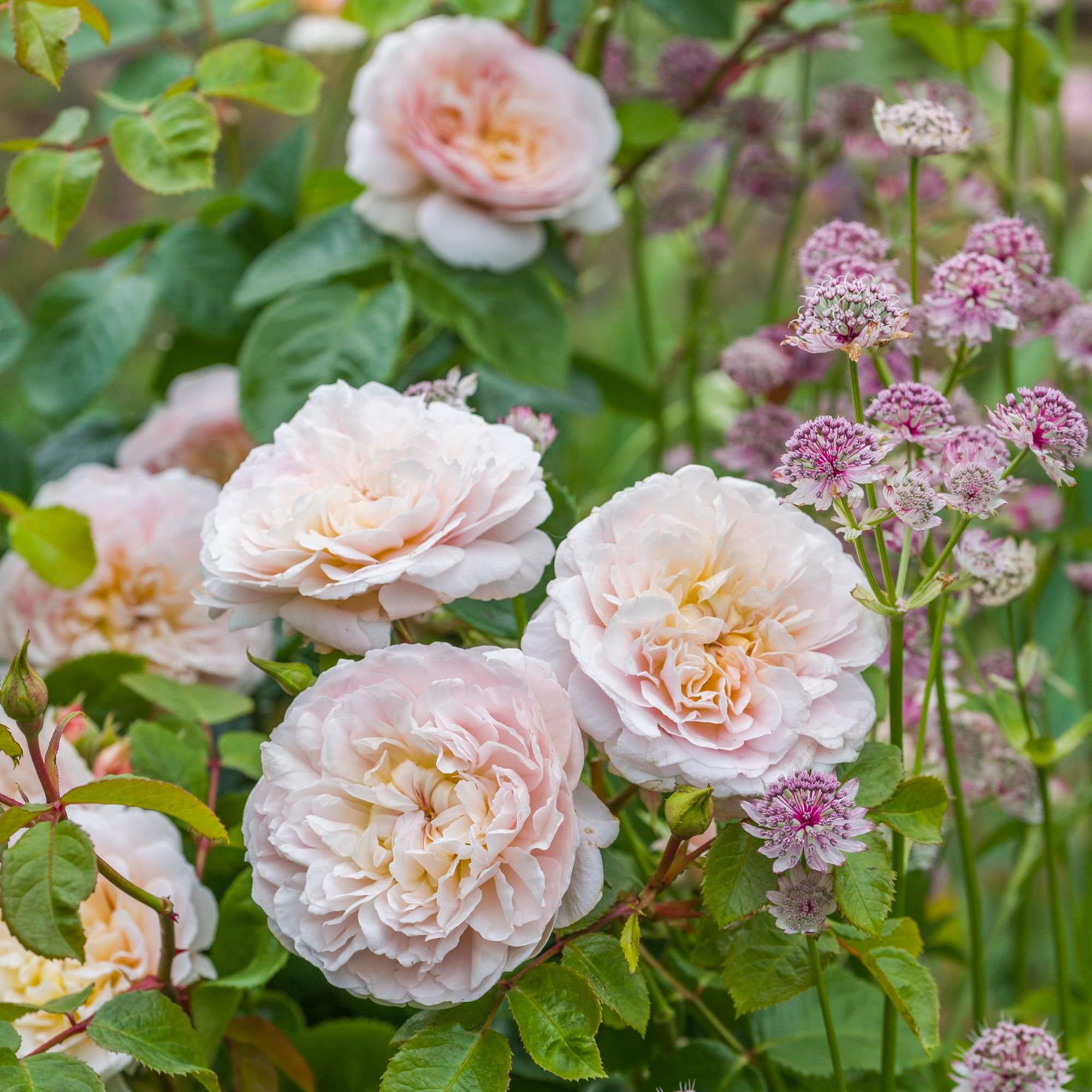
Try with: Wisley 2008®, whose soft pink cups look lovely against lavender-blue.
Sedums: Rich Notes of the Season
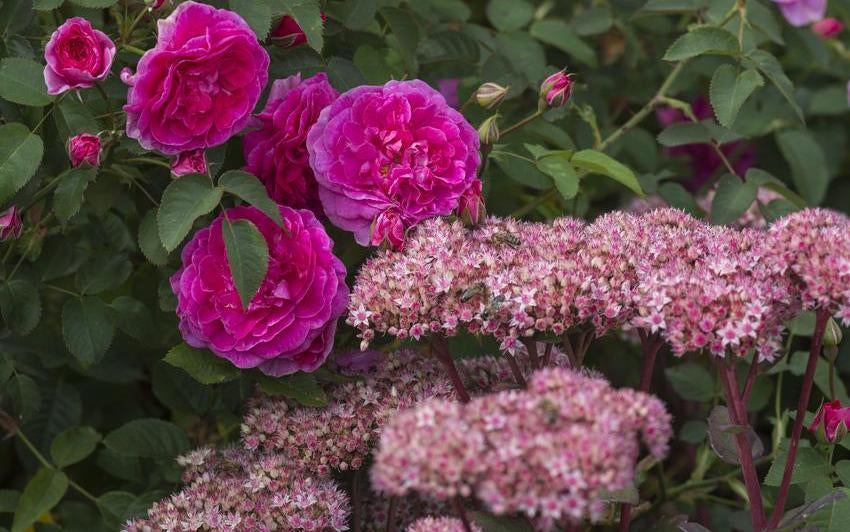
Sedums provide the deep, mellow tones that make autumn so memorable. Their domed flower heads open soft pink and deepen to russet, wine and plum as the weeks pass. Their sturdy stems and succulent foliage give weight beside the airy habit of roses. Even after flowering, their seedheads hold on through frost, adding shape when most other plants have collapsed.
Now classified as Hylotelephium, border sedums are ideal for the front of the border at around 40cm. 'Brilliant' has bright pink heads, while 'Purple Emperor' adds dark, smoky foliage. They like full sun and well-drained soil, and they tend to flop in rich, moist ground, so resist feeding them alongside your roses.
Try with: England's Rose, whose rich pink blooms are picked up beautifully by 'Brilliant'.
Japanese Anemones: Graceful Height
The tall, swaying stems of Japanese anemones are perfect for weaving among roses. Their silk-like petals, in white or rose-pink, catch the light from late summer well into October. They provide a clear counterpoint to the ripening hips and final blooms of English Roses.
'Loreley' has pale pink flowers on stems around 80cm tall, while 'Whirlwind' has semi-double white flowers and reaches over 1m. They're tolerant of part shade, but they can spread steadily once established. Give them a little extra space from your roses, and lift any wandering shoots in spring.
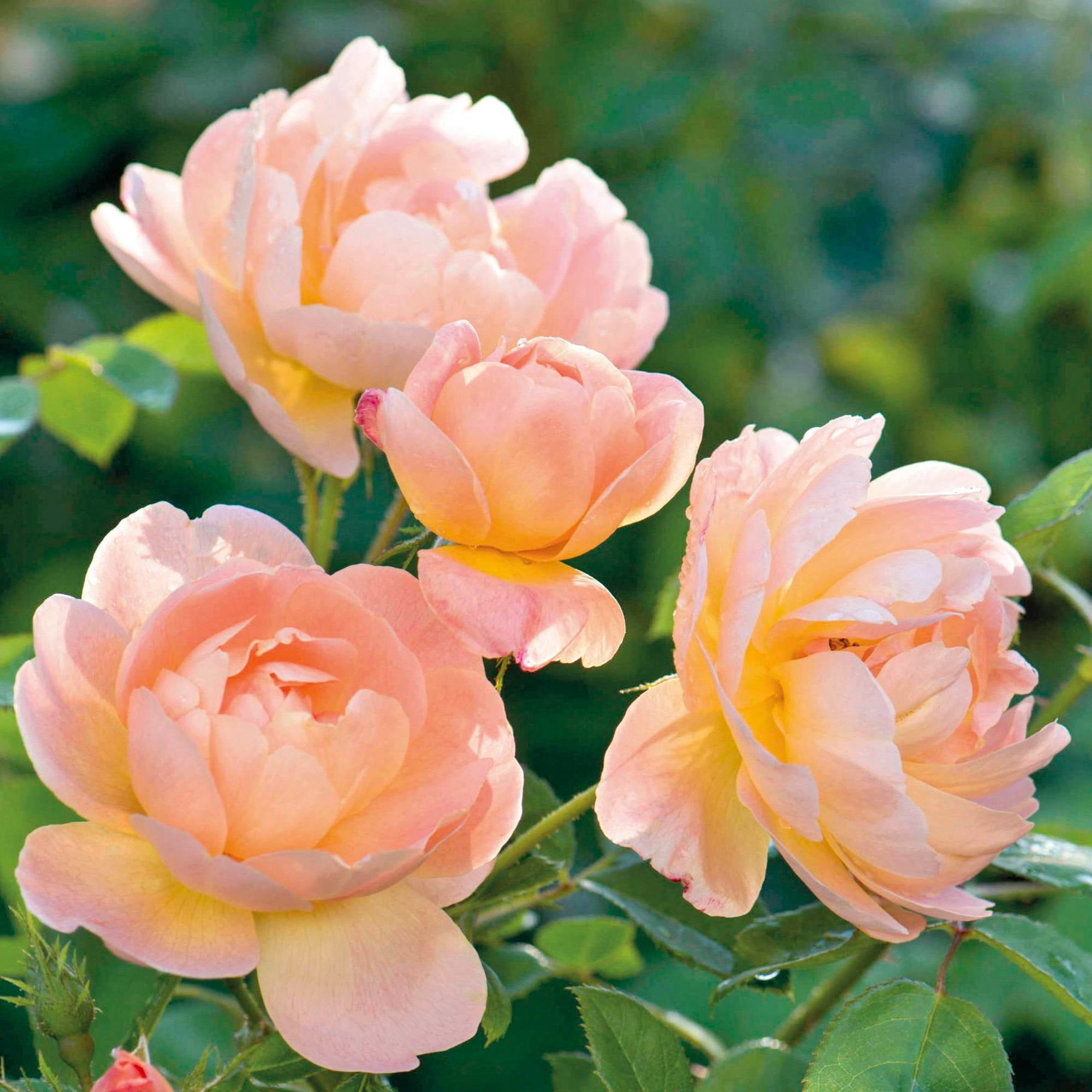
Try with: The Lark Ascending®, whose light apricot-pink flowers share the same open, relaxed character.
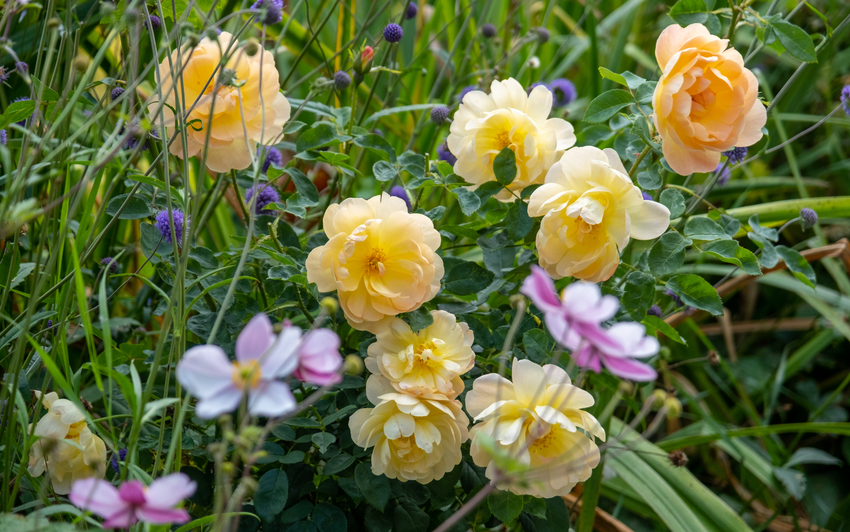
Salvias: Spires of Colour
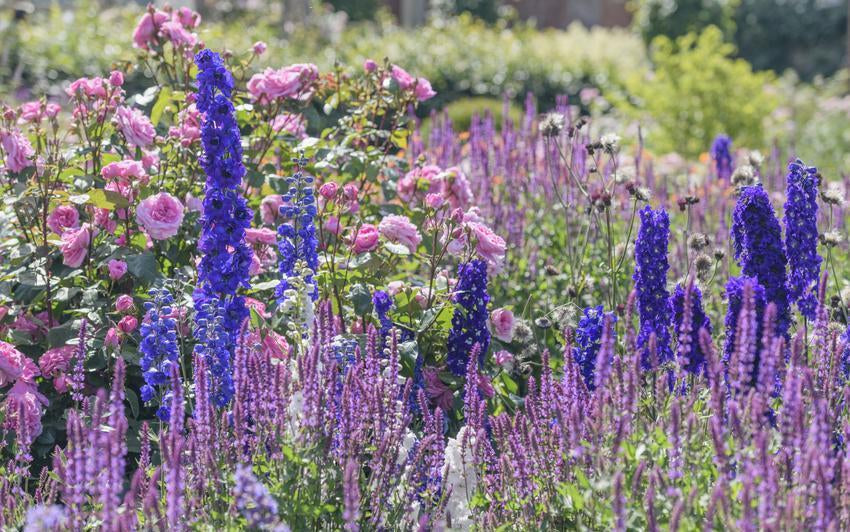
Salvias give valuable vertical spires in violet, indigo or magenta, contrasting with the rounded forms of roses. Their aromatic foliage adds an extra layer of sensory interest, and they knit planting schemes together, lifting the eye upwards.
Salvia nemorosa 'Amethyst' flowers from early summer. If it's cut back after the first flush, it will often bloom again into autumn. For flowers right up to the first frosts, try Salvia 'Amistad', whose deep purple flowers reach around 1.2m. It benefits from a winter mulch in colder gardens.
Try with: Gertrude Jekyll® or Harlow Carr, whose rich pinks are lifted by deep purple spires.
Ornamental Grasses: Movement and Light
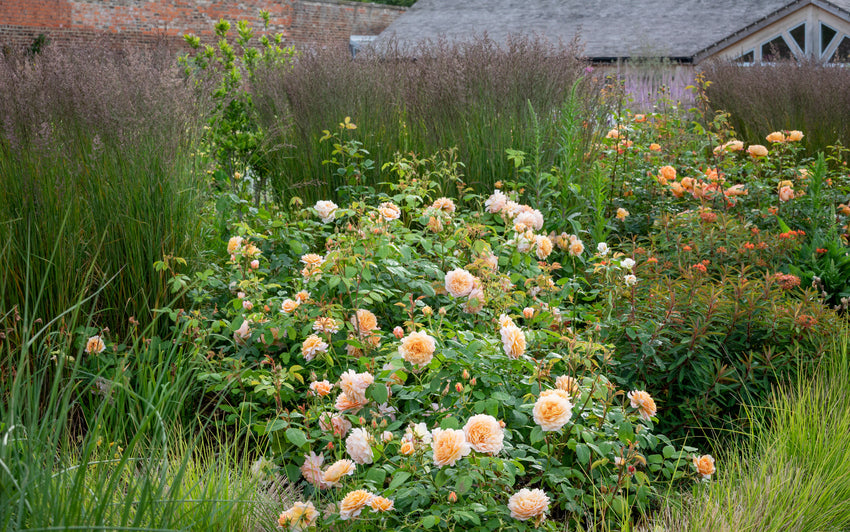
Grasses bring texture and atmosphere. Their plumes catch the low autumn sun and move with every breeze. Planted among roses, they soften the scheme, frame the last flowers and harmonise with the warm tones of hips and sedums.
Miscanthus sinensis 'Morning Light' forms a graceful fountain of fine, silver-edged leaves at around 1.2–1.5m. Calamagrostis 'Karl Foerster' gives strong upright lines. At the front, the soft, hair-like Stipa tenuissima is lovely but self-seeds freely, so thin the seedlings as needed. Leave grasses standing over winter and cut them back in late winter.
Try with: Gentle Hermione® or Grace®. The soft pink and warm apricot flowers look especially lovely through a veil of grasses.
Warm Tones: Heleniums and Persicaria
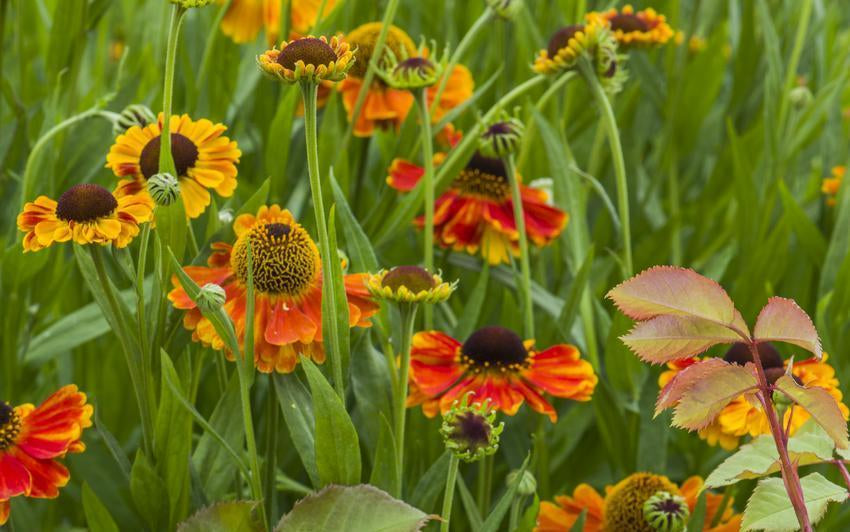
For a border that echoes the colours of turning leaves, add plants in copper, rust and crimson. Heleniums bring daisy flowers in burnt orange and red from late summer. Persicaria amplexicaulis sends up slender crimson spikes from midsummer until the frosts. Both suit the middle of the border and are loved by pollinators.
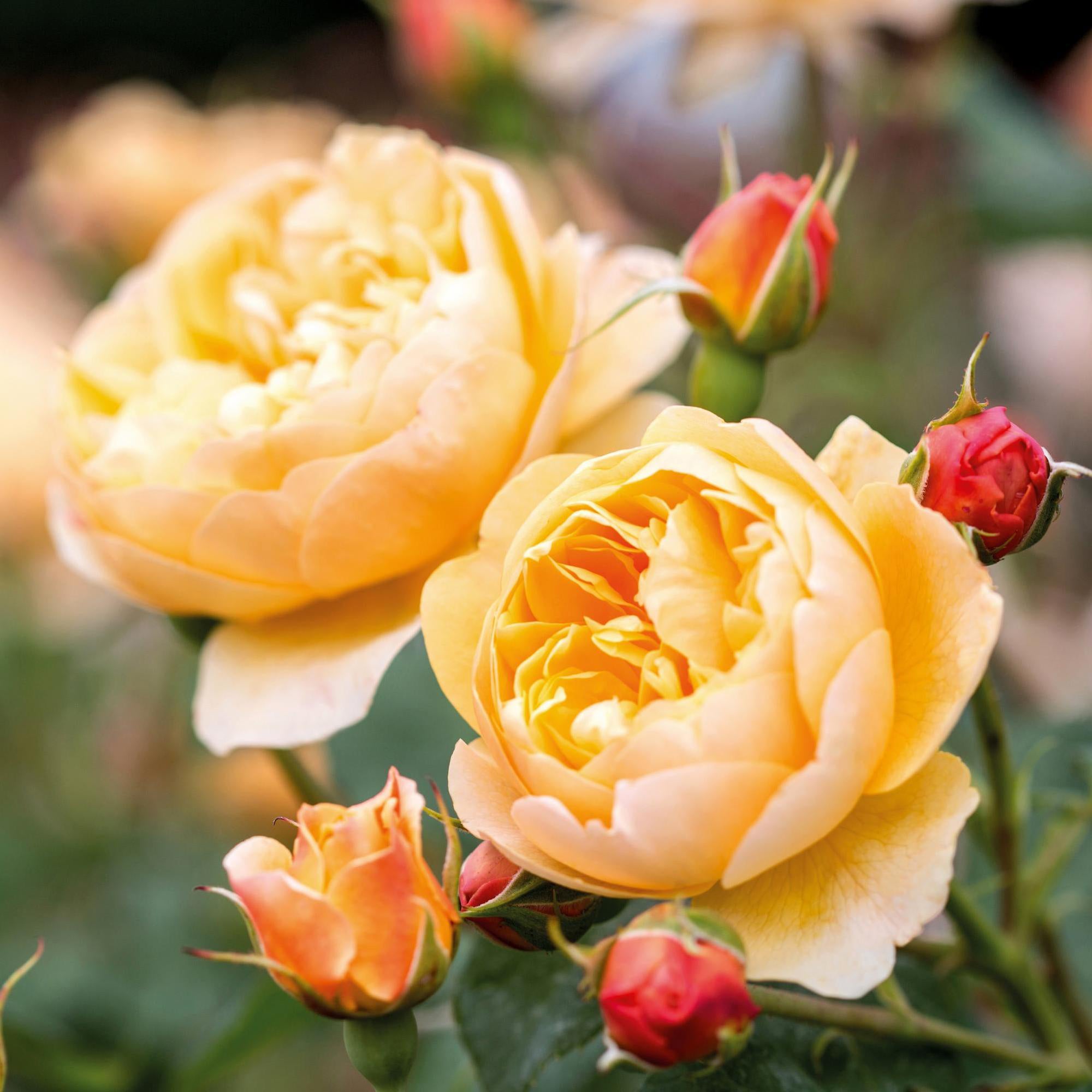
Try with: Roald Dahl® or Lady of Shalott®, whose apricot and orange tones glow alongside them.
Autumn colour doesn't only come from flowers. Amsonia hubrichtii has feathery foliage that turns a clear butter-yellow in October. At the front of the border, Ceratostigma plumbaginoides combines vivid blue flowers with leaves that turn fiery red. Both provide a vivid backdrop to the hips and final blooms of roses.
Clematis: A Final Flourish
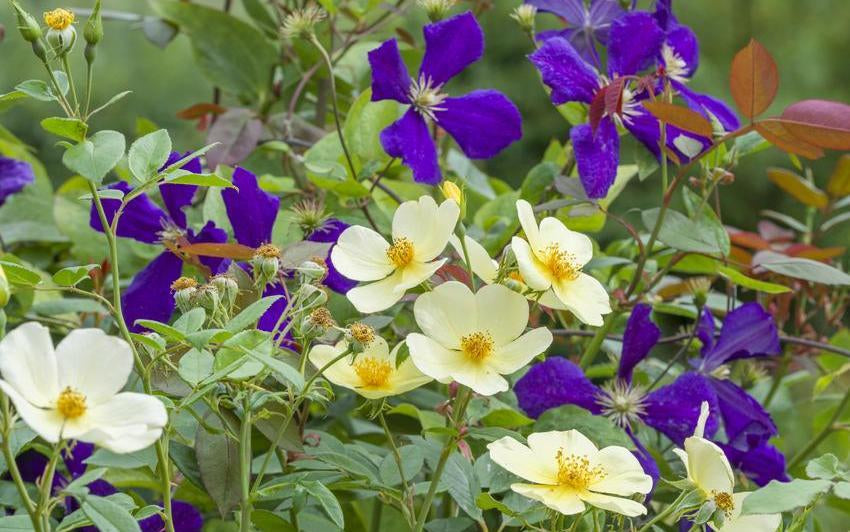
Late-flowering clematis can be trained through roses or grown on nearby supports. Good choices include the small-flowered viticella types, such as the deep purple 'Étoile Violette', and later large-flowered hybrids like the velvety crimson 'Rouge Cardinal'. Their colours mingle with the rose stems and keep the planting lively into the last weeks of the season.
Plant clematis around 45cm from the base of the rose and lean it towards the stems, so the two aren't competing directly at the roots. These later-flowering clematis are cut back hard in late winter, which conveniently fits in with rose pruning.
Try with: The Generous Gardener®, A Shropshire Lass or Tottering-by-Gently®.
Letting Your Roses Form Hips
To enjoy hips alongside your companions, stop deadheading from late summer so the faded flowers can develop into fruit. Some roses are especially generous. Tottering-by-Gently®, for example, follows its single yellow flowers with bright orange hips. Many repeat-flowering English Roses produce fewer, as they put their energy into more blooms. If hips are a priority, browse our roses for hips.
An Autumn Tapestry
For a simple, reliable scheme, try a soft pink rose such as Wisley at the heart of the planting. Place 'Little Carlow' asters behind it, sedum 'Brilliant' at its feet, and a drift of Stipa tenuissima to catch the light. Together they will carry the border well into autumn, with every flower, fruit and seedhead playing its part in the year's final, golden weeks.
Bare root roses are available from November, so it's a perfect time to plan. Start your autumn border now with companions, then add the roses once the bare root season begins.
Asters, sedums, Japanese anemones, late salvias, heleniums and late clematis all flower in autumn and complement roses well. Ornamental grasses add texture and movement.
Yes. Leave around 45cm between a rose and its neighbours, and avoid planting aggressive spreaders right beside them.
Stop deadheading from late summer so the faded flowers can form hips. Some varieties produce far more than others.
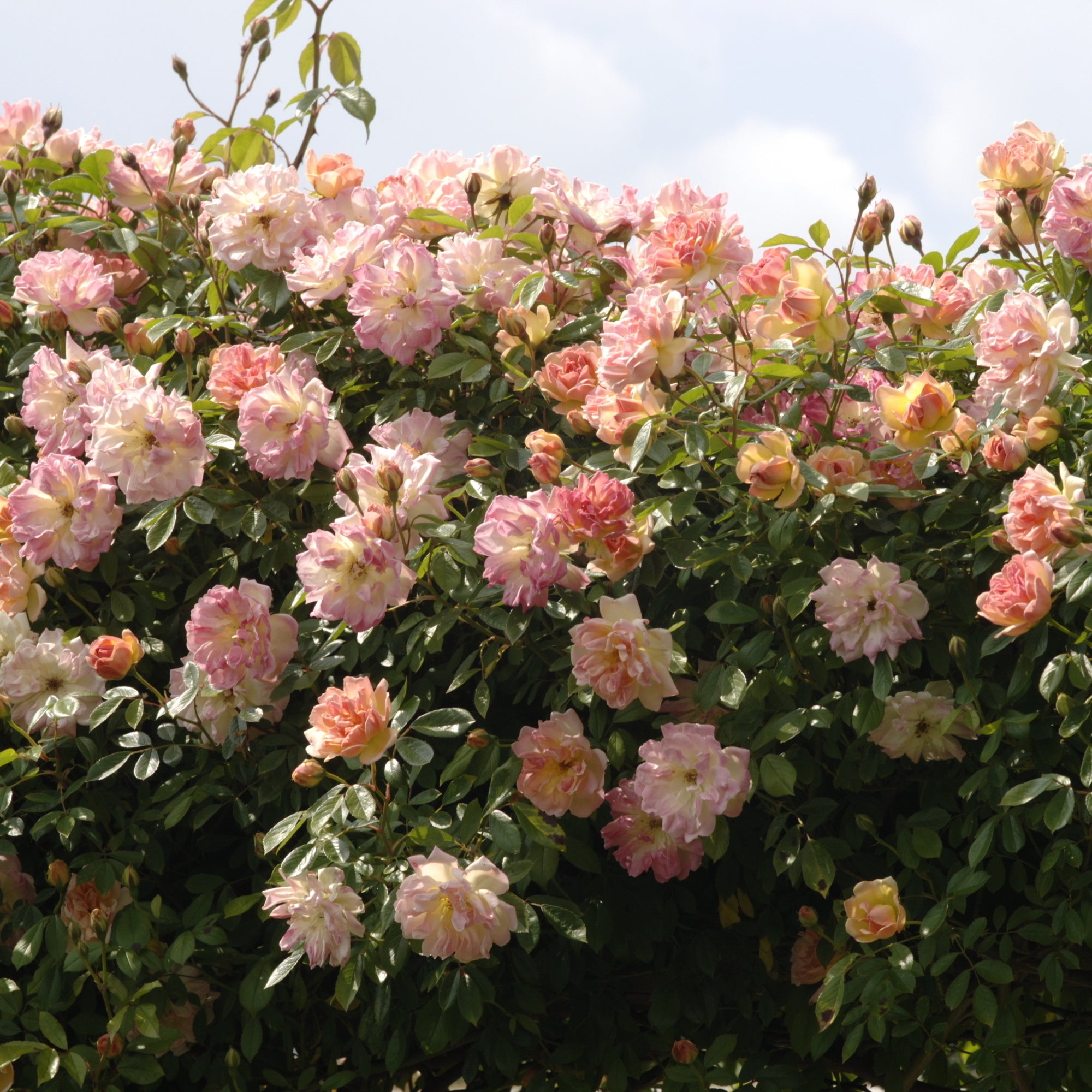
-
What to Plant with English Roses for Autumn ColourBy the end of September, the rose garden is changing. The exuberance of summer is giving way to a slower rhythm, and many English Roses are setting hips, their once-constant flowers replaced by clusters of glowing fruit. Yet the borders need not feel diminished. With the right companions, roses can be framed and supported so that the garden still sings with colour, texture and grace well into October and beyond.
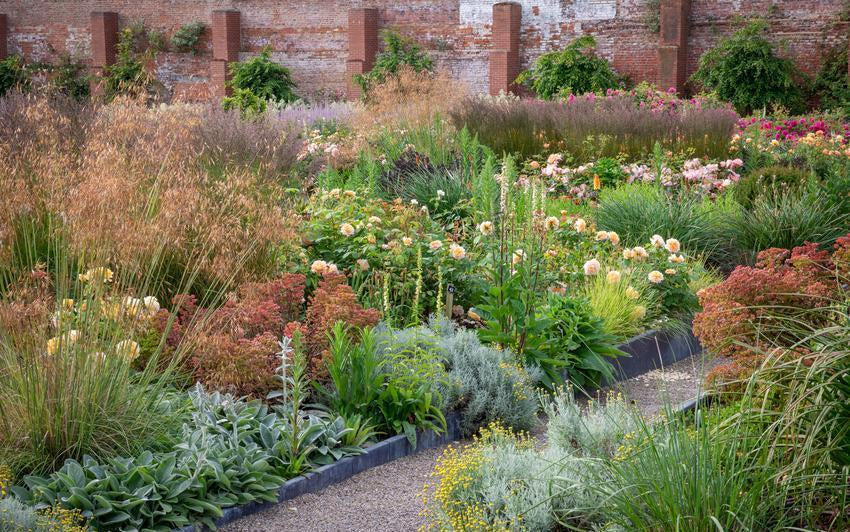
-
Roses with Large Blooms: Varieties for Garden ImpactA rose in full flower can transform a garden. Large, many-petalled blooms draw the eye through a border, bring colour to a quiet corner or create a beautiful focal point when grown in a pot.
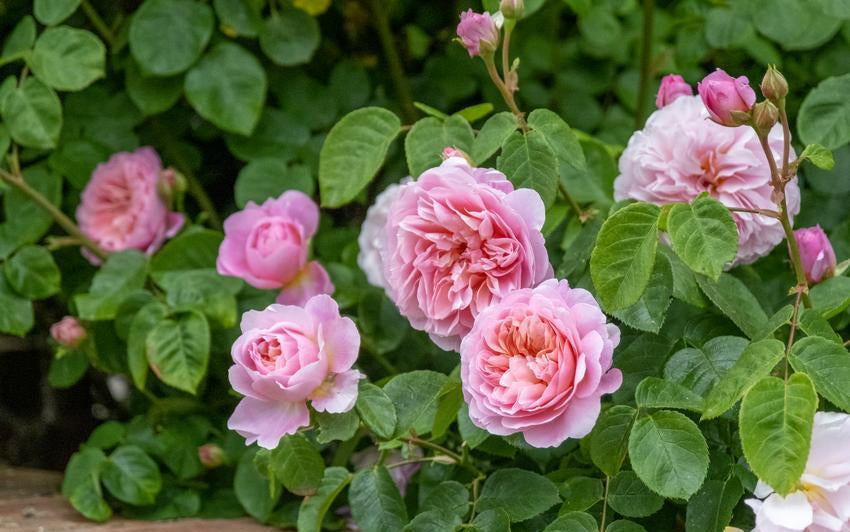
-
Best Fragrant Roses for Autumn: Scent and Colour Beyond SummerThe fragrance of a rose is never quite fixed. Temperature, humidity, time of day and even the stage of the flower can all influence how its scent is released and experienced. As the warmth of summer begins to soften into autumn, cooler mornings and greater moisture in the air create different conditions for fragrance, and a familiar rose can reveal itself in a rather different way.
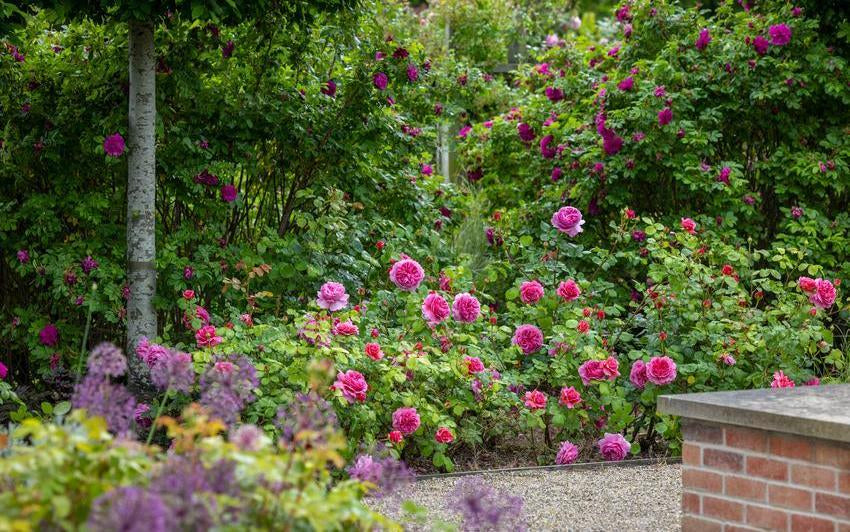
-
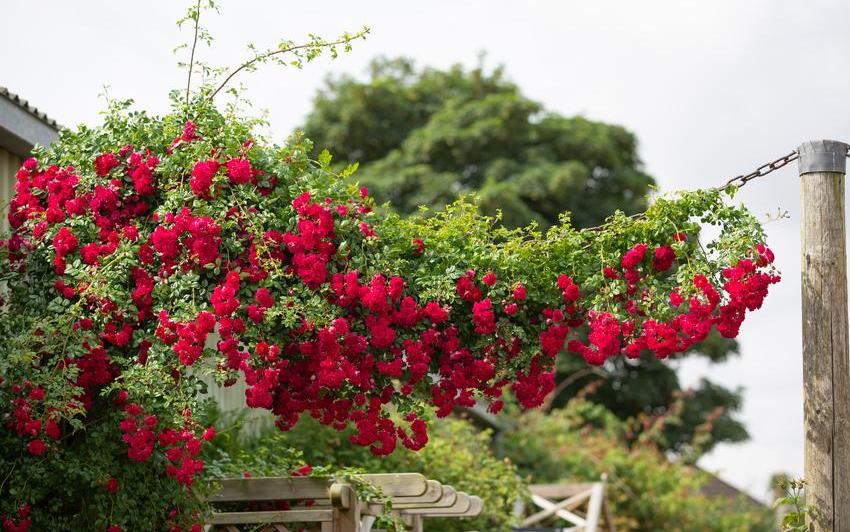
Using Red Roses to Bring Richness and Depth to the GardenA red rose has a wonderfully compelling presence in the garden. Amongst a sea of green, even a glimpse of crimson catches the eye, drawing you closer for another look. Red can sometimes have a reputation for being difficult to use, particularly alongside softer colours. Yet the palette is far more varied than we might first imagine. From clear crimson to deep, velvety tones, red roses can bring warmth, richness and depth to a garden without overwhelming it.
-
Roses for the Last Night of the PromsThere are few evenings quite like the Last Night of the Proms. Familiar melodies fill the Royal Albert Hall, the audience joins in and music heard and loved for generations is given fresh life once more. This year’s programme got us thinking about the curious connections between music, stories and the names of some of our roses. From Elgar and the Malvern Hills to Britain’s long relationship with the sea, each offers a thread to follow from the concert hall into the garden.
-
Climbing Roses for Arches, Obelisks and PillarsThere is always room for another rose. When borders are full, the answer is often simply to look upwards. Climbing roses can transform arches, obelisks and pillars into wonderfully abundant garden features, bringing flowers and fragrance to eye level and above. They can tumble over an entrance, rise from the middle of a border or soften a simple post with foliage and bloom. And, with the right rose and a little thoughtful training, they need surprisingly little ground space to make quite an impression.