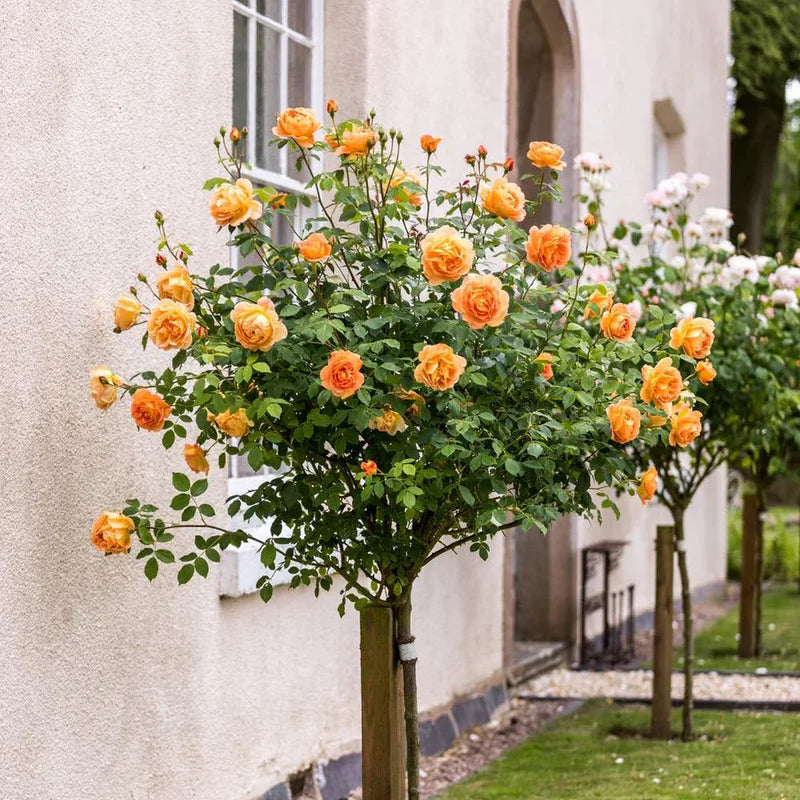

Bloom Shapes Explained
The shape of a rose bloom gives each variety much of its distinctive character. From simple, open flowers to the richly layered forms of English Roses, bloom shape is defined by the number and arrangement of petals. Shaped by both nature and centuries of careful selection, this has created a wonderful spectrum of forms, from single and semi-double blooms to generous cups and intricate rosettes.
Roses rarely fit neatly into one category, however, and their shape can change as the flower opens and matures. A neatly cupped bloom may gradually relax into a broad rosette, with its final, mature form determining how it is classified. Explore the bloom shapes below to discover their defining characteristics, subtle variations and some of the roses that display them most beautifully.

Single
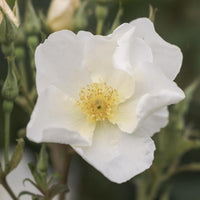
Up to five petals arranged in a single row.
The simplest of all bloom forms, single roses are closest in appearance to their wild ancestors. Their open centres reveal a crown of golden stamens, creating flowers that feel light, natural and full of movement.
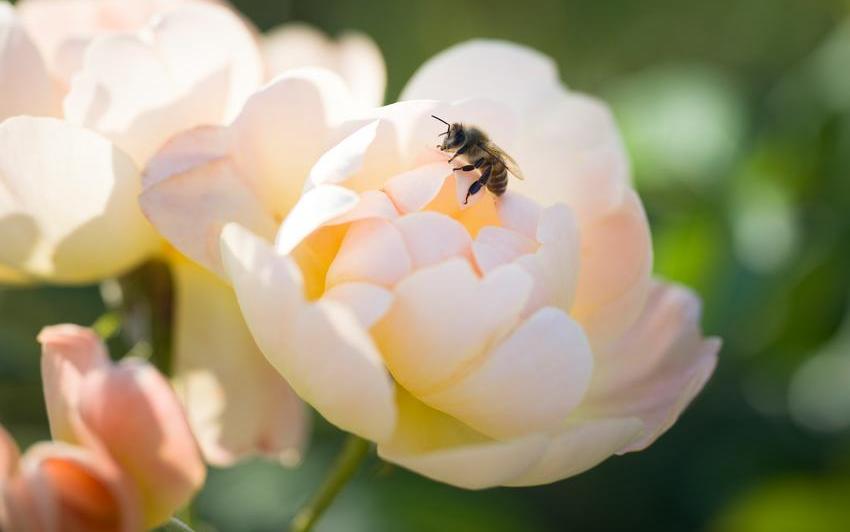
Their accessible pollen makes them especially attractive to bees and other pollinating insects, while their uncomplicated structure allows them to cope particularly well with wet weather.
What it's ideal for
- Bees and butterflies
- Naturalistic planting
- Informal gardens
- Mixing with grasses and perennials
Best suited to
- Wildlife-friendly gardens
- Cottage gardens
- Mixed borders
 Kew Gardens®(Ausfence)Shop here
With its airy clusters of pure white, single flowers and golden stamens, Kew Gardens® brings a wonderfully natural charm to the garden while providing an inviting source of pollen for bees and other pollinators.
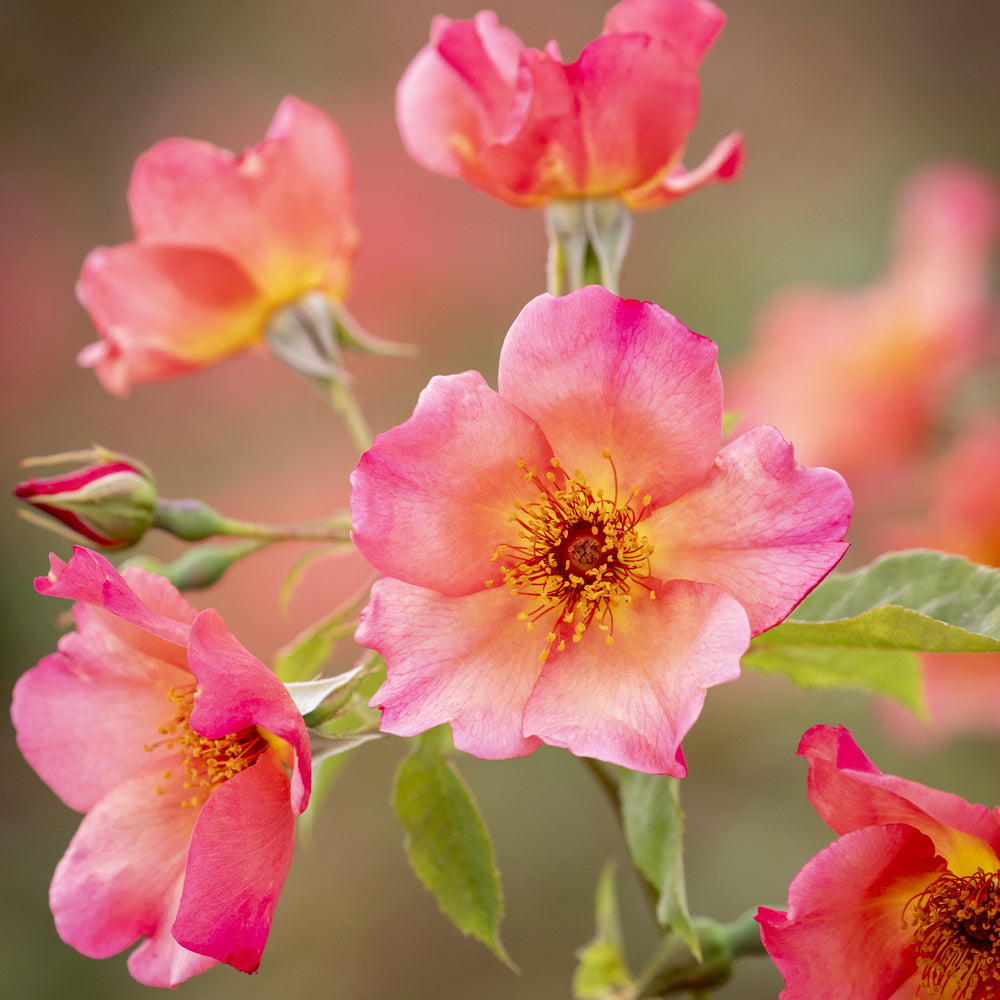 Morning Mist (Ausfire)Shop here
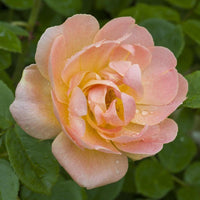
With its large, single blooms in warm shades of pink and apricot, Morning Mist has a wonderfully relaxed, natural character, enhanced by its prominent golden stamens.
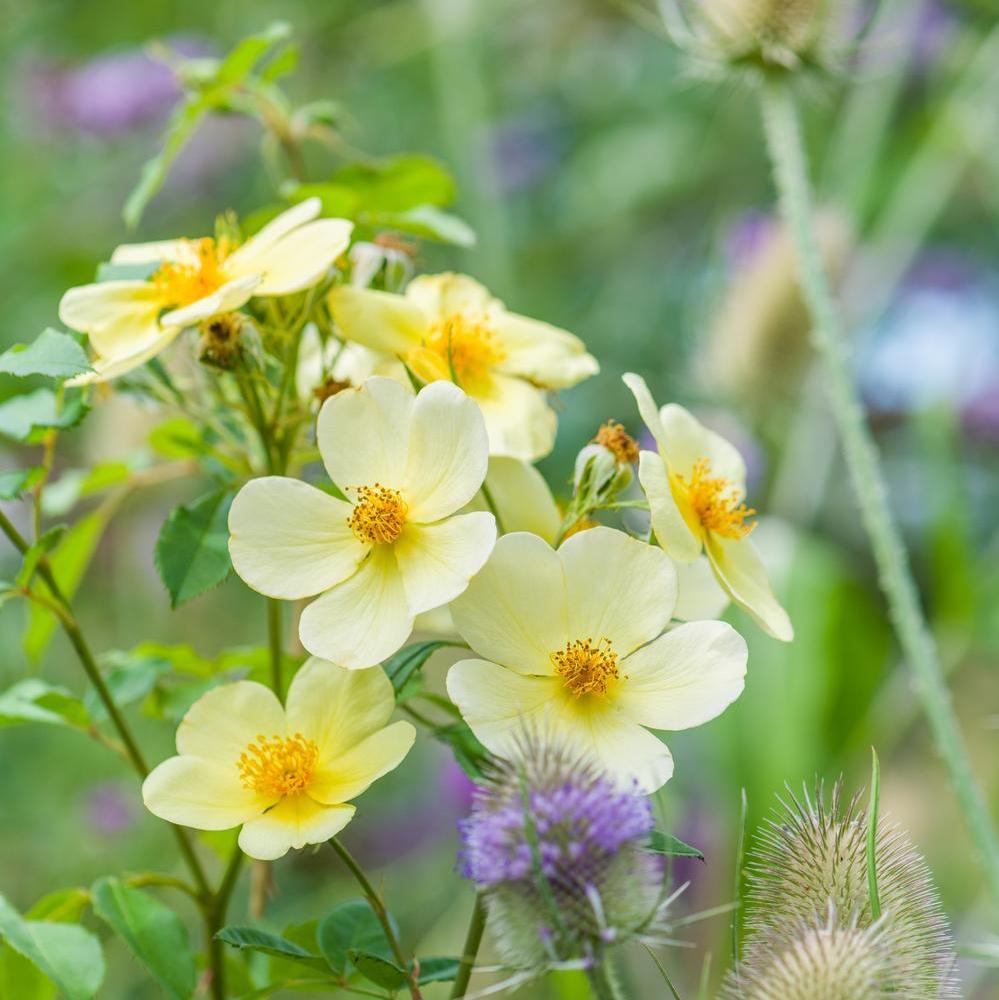 Tottering-by-Gently® (Auscartoon)Shop here
Delicate clusters of soft yellow, single flowers give Tottering-by-Gently® a light, airy charm, with open golden centres that are particularly appealing to pollinators.


Semi-Double
Two or more rows of petals surrounding an open centre.
Semi-double blooms offer a balance between the simplicity of single flowers and the richness of more fully petalled roses. The additional petals create a fuller appearance while leaving the central stamens visible, making them both beautiful and welcoming to pollinators.
These blooms generally withstand wet and windy conditions well and often remain attractive for longer than single flowers.
What it's ideal for
- Pollinator-friendly planting
- Informal borders
- Long-lasting displays
- Companion planting
Best suited to
- Wildlife gardens
- Mixed borders
- Cottage gardens
- Contemporary planting
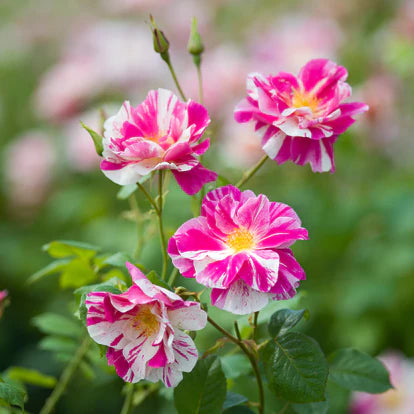 The King's Rose® (Ausa27a16)Shop here
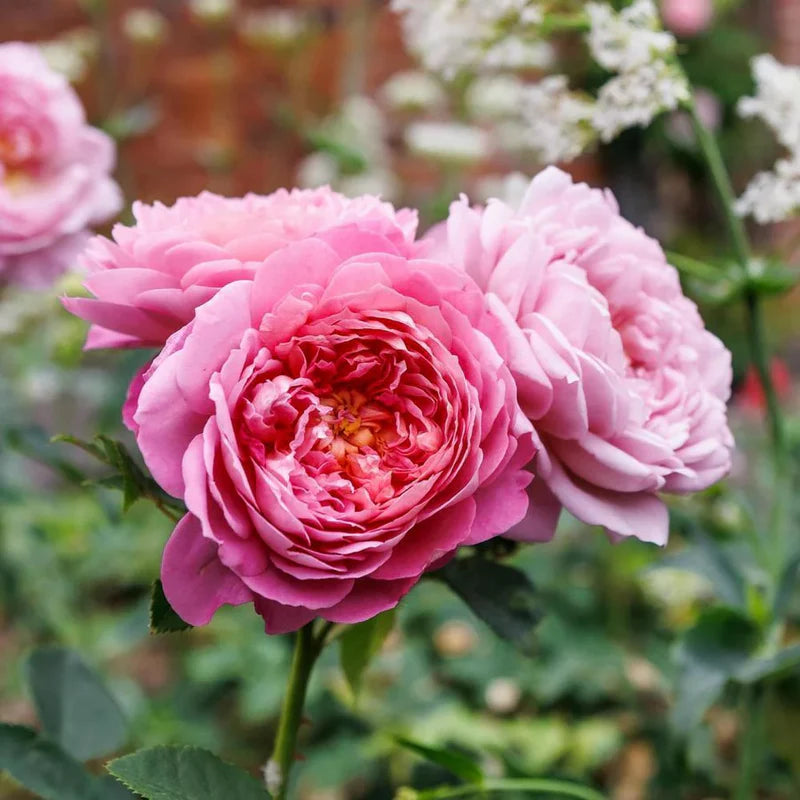
Rich, semi-double flowers in vivid shades of cerise-pink open to reveal golden stamens, giving The King’s Rose® a striking yet wonderfully natural character.
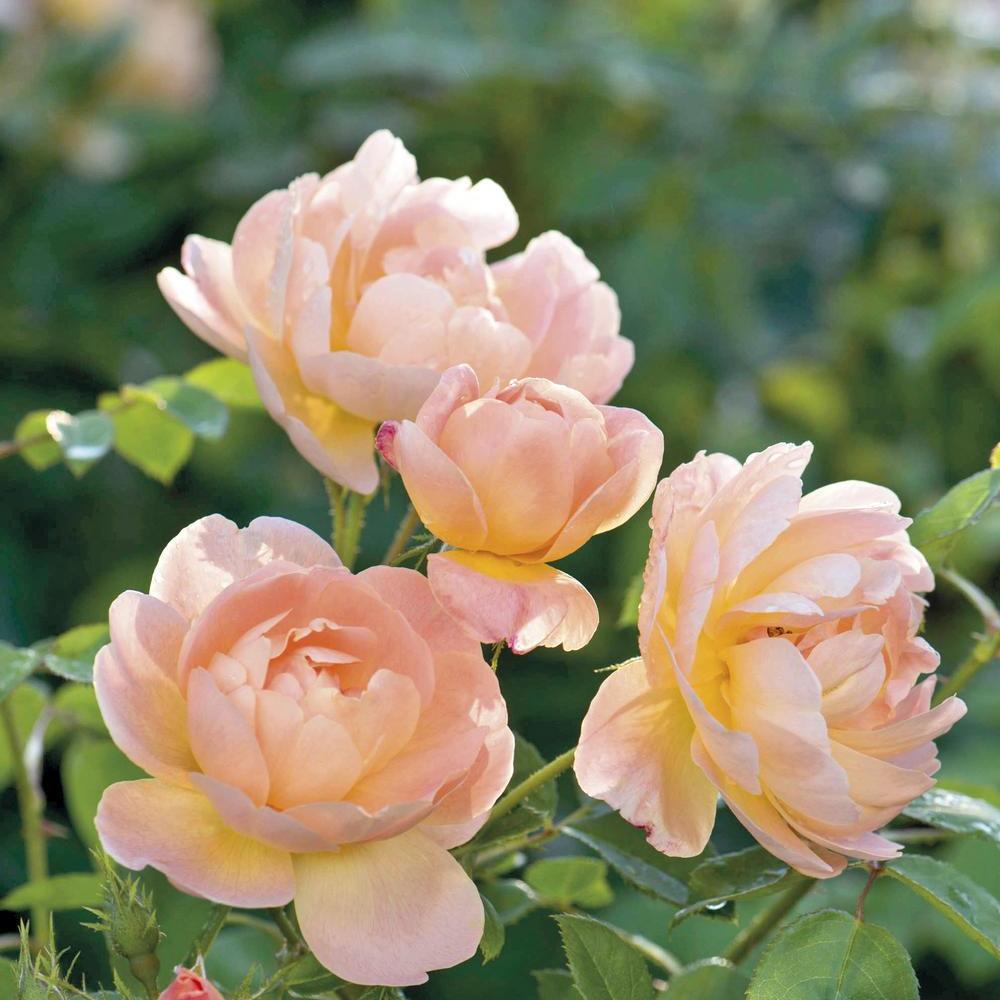 The Lark Ascending® (Ausursula)Shop here
Soft apricot, semi-double blooms are held in graceful clusters, giving The Lark Ascending® a light, airy beauty that sits effortlessly amongst other garden plants.
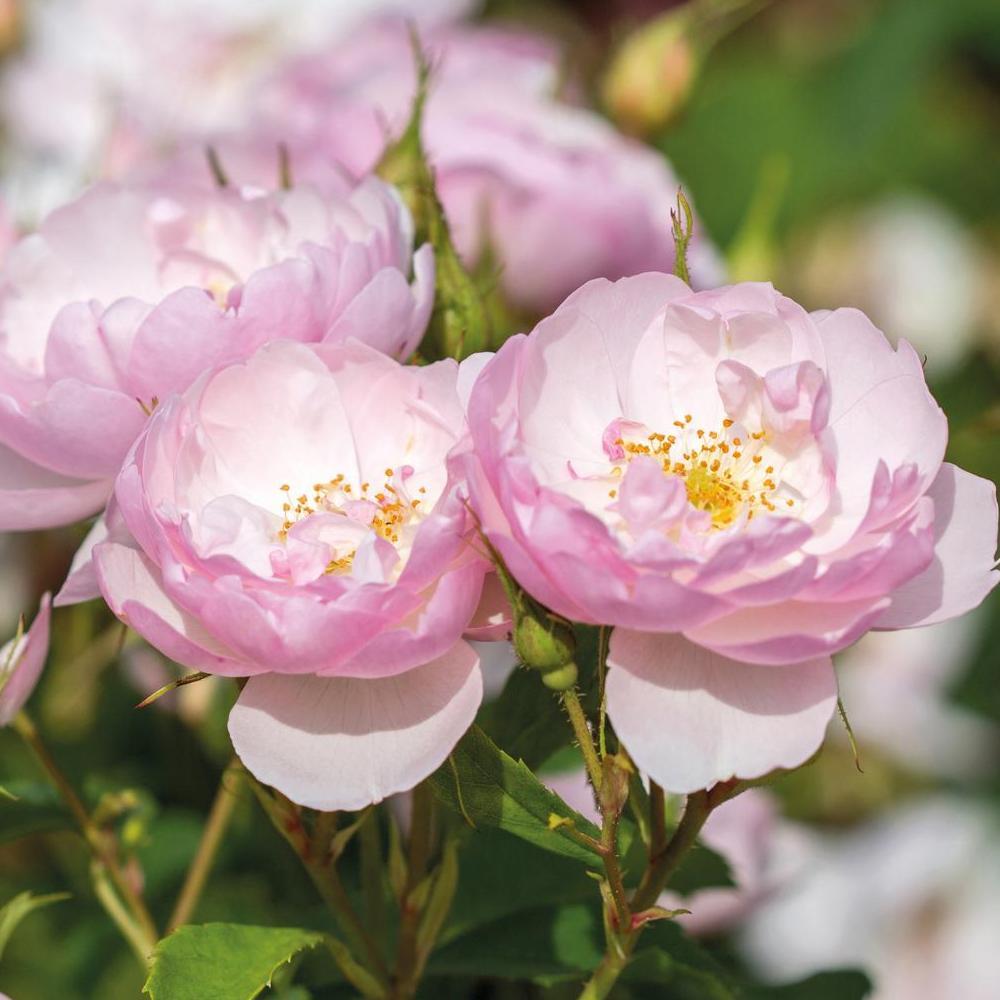 Scarborough Fair® (Ausoran)Shop here
Delicate, semi-double flowers in the softest blush pink open to reveal golden stamens, lending Scarborough Fair® a gentle, informal charm.

Rosette
Many petals arranged in concentric circles to create a flat-topped bloom.
Perhaps the most recognisable of all rose forms, the rosette has become synonymous with English Roses. Its many overlapping petals create a flower that feels richly romantic while retaining remarkable elegance.
Rosettes are inspired by the Old Roses that David C.H. Austin admired so deeply, combining timeless beauty with the repeat flowering and health of modern roses.
What it's ideal for
- Traditional rose gardens
- Cutting gardens
- Romantic planting
- Feature planting
Best suited to
- Rose borders
- Cottage gardens
- Formal planting
- Collectors of English Roses
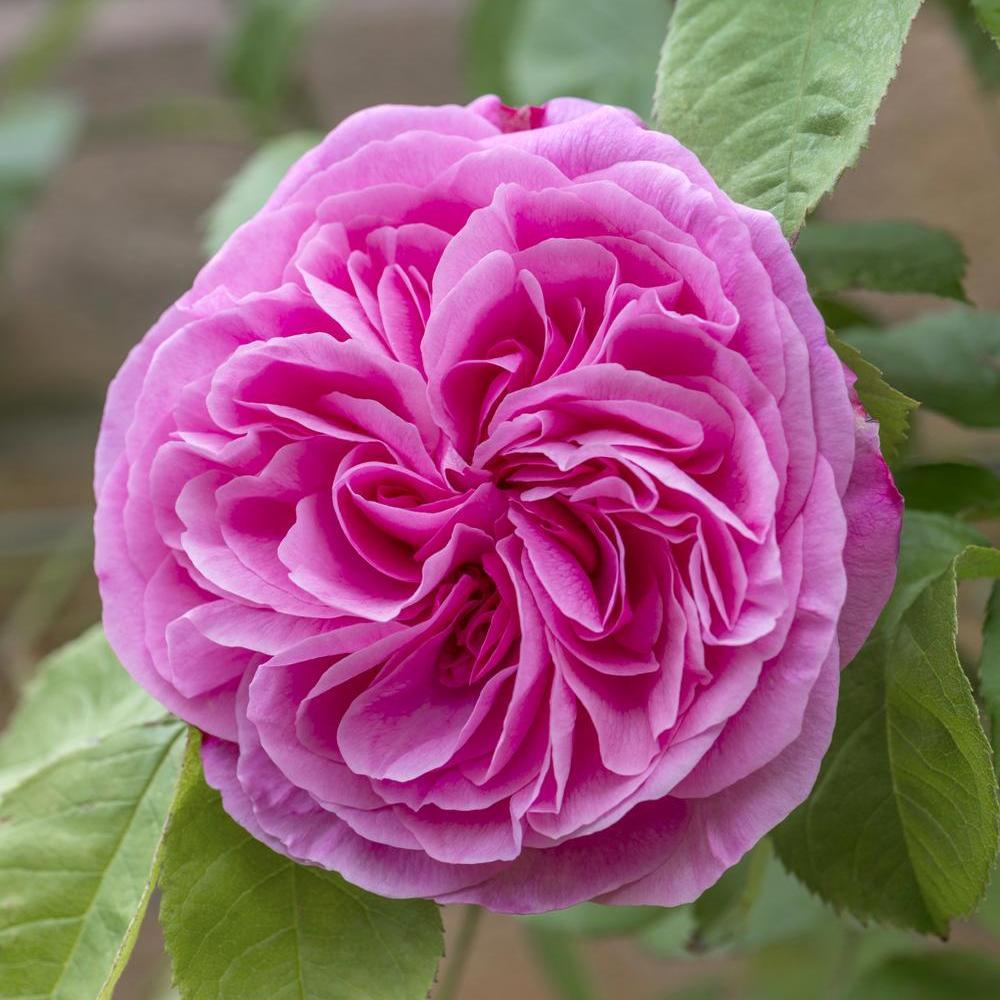 Rosette
The classic form, a flat-topped bloom with many overlapping petals in concentric rings. The basic shape of an English Rose.
Example varieties include: Gertrude Jekyll® and Gabriel Oak®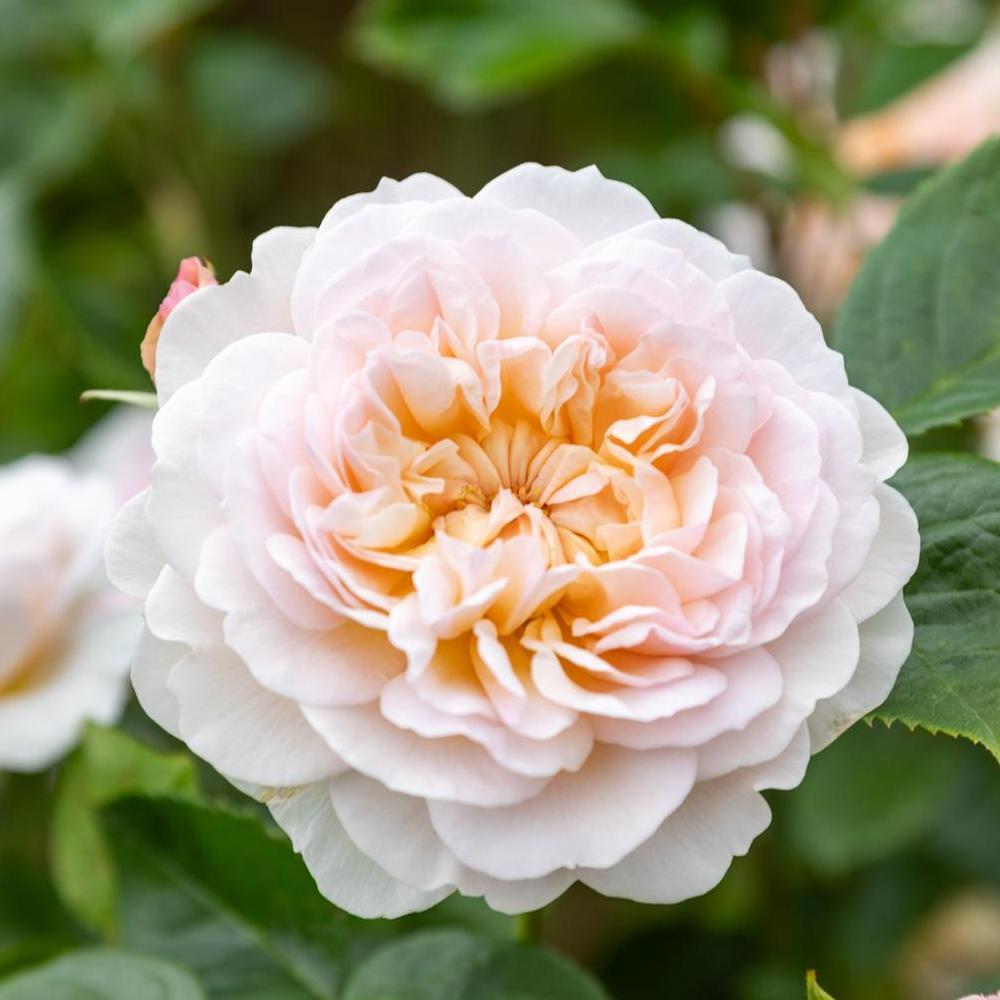 Button-Eye Rosette
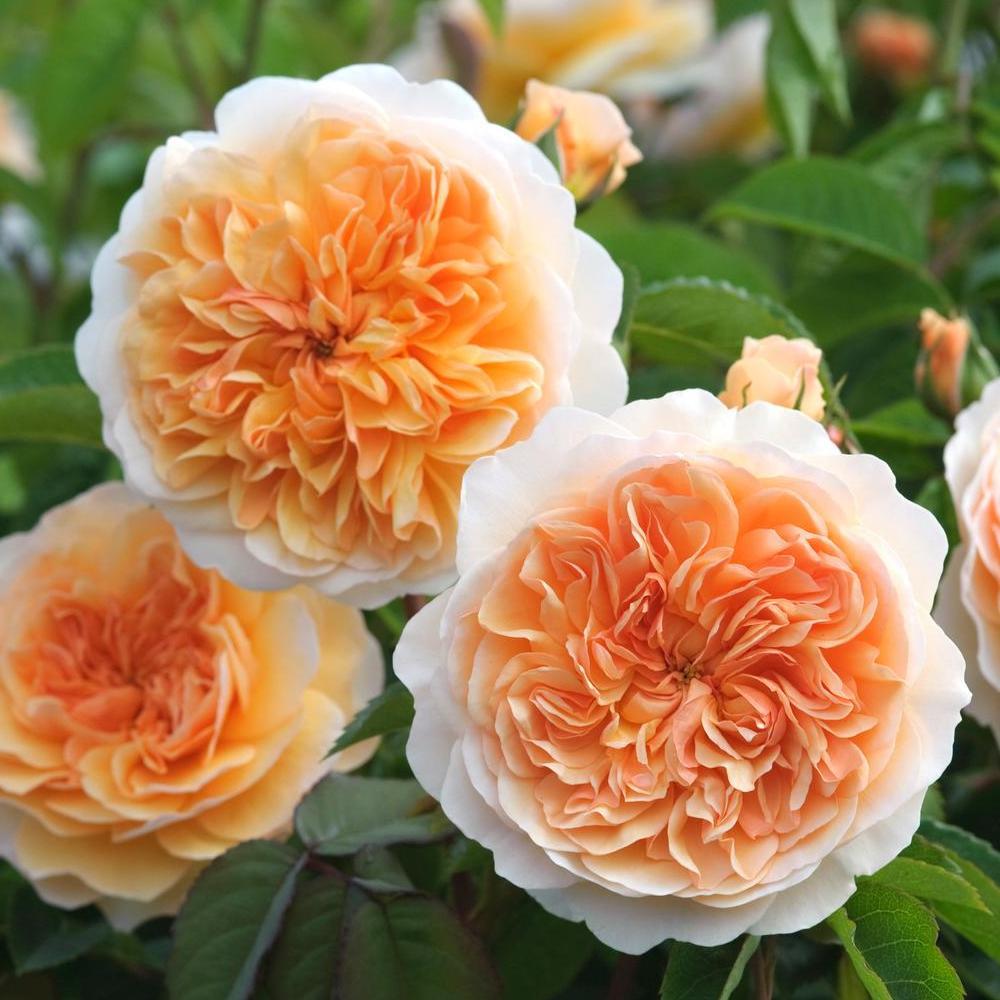
In some varieties, the tightly packed central petals remain folded, creating a small button-like centre that adds another layer of charm and detail.
Example varieties include: Emily Brontë® and James L. Austin®
 Quartered Rosette
Here, the central petals remain divided into four distinct sections, giving the bloom its beautifully symmetrical appearance that has long been admired in historic garden roses.
Example varieties include: Wildeve® and Port Sunlight®

Chalice
Petals curve gently inwards to form a rounded, bowl-shaped bloom.
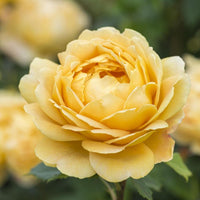
Chalice-shaped flowers have an elegant, sculptural quality. Their softly incurved petals create a generous, rounded bloom that often conceals the stamens, giving the flower a beautifully full appearance.
Graceful yet understated, this form lends itself equally well to formal rose gardens and relaxed mixed planting.
What it's ideal for
- Elegant borders
- Cutting
- Fragrant planting
- Mixed schemes
Best suited to
- Courtyard gardens
- Mixed borders
- Rose beds
- Contemporary gardens
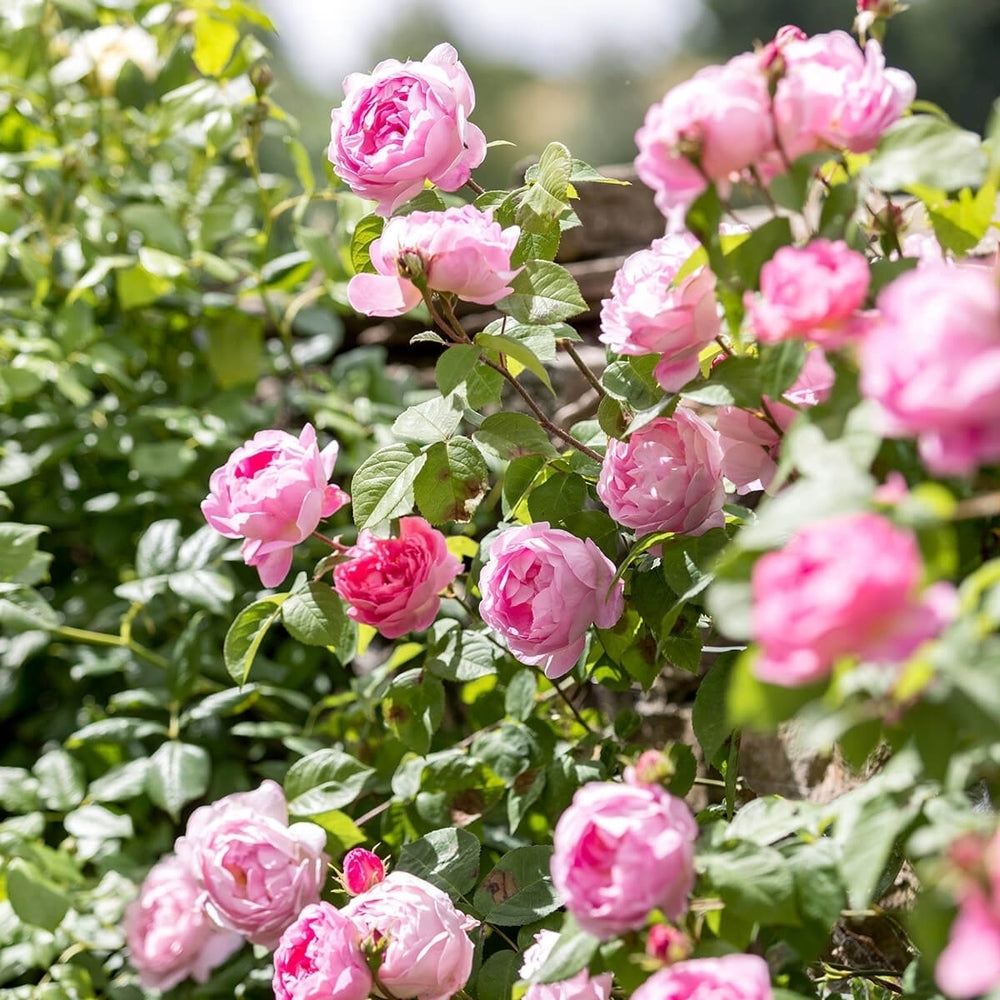 Constance Spry (Ausfirst)Shop here
Large, deeply cupped blooms of soft, glowing pink give Constance Spry a wonderfully romantic character, with an informal beauty reminiscent of the Old Roses.
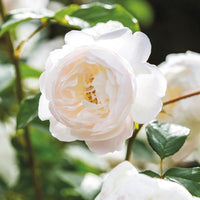
 Desdemona® (Auskindling)Shop here
Beautifully rounded, chalice-shaped blooms open from blush-pink buds to reveal soft white petals, creating an elegant and wonderfully refined flower.
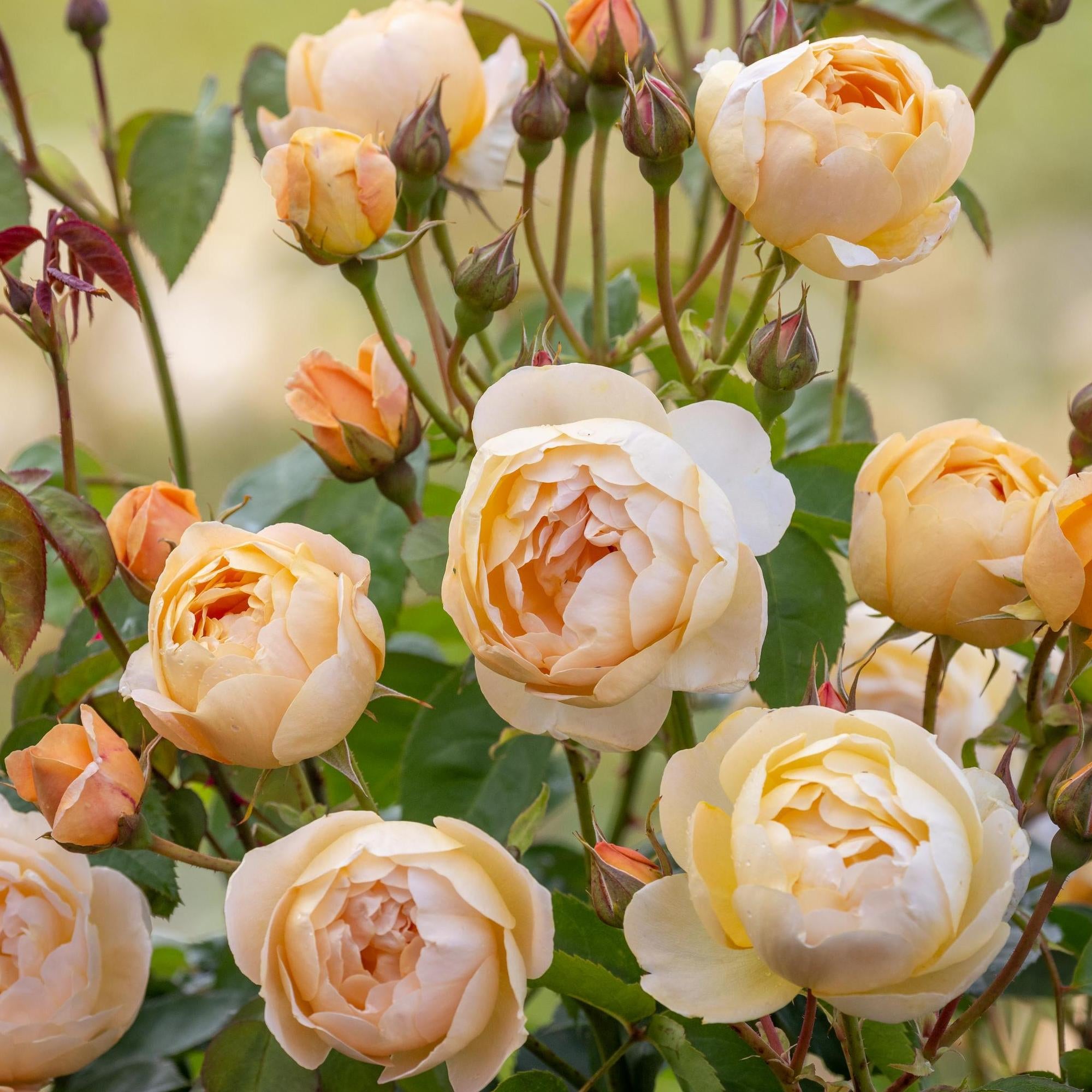 Dannahue® (Ausa6b15)Shop here
Richly petalled, chalice-shaped blooms in warm mid-pink have a graceful, rounded form, bringing softness and gentle colour to the garden.


Cupped
Petals curve upwards to create a bowl-shaped flower.
One of the defining characteristics of many English Roses, cupped blooms surround their central petals with longer outer petals, creating flowers of remarkable depth and softness.
What it's ideal for
- Classic English Rose planting
- Cutting gardens
- Statement planting
- Fragrant borders
Best suited to
- Rose gardens
- Mixed borders
- Containers
- Courtyard planting
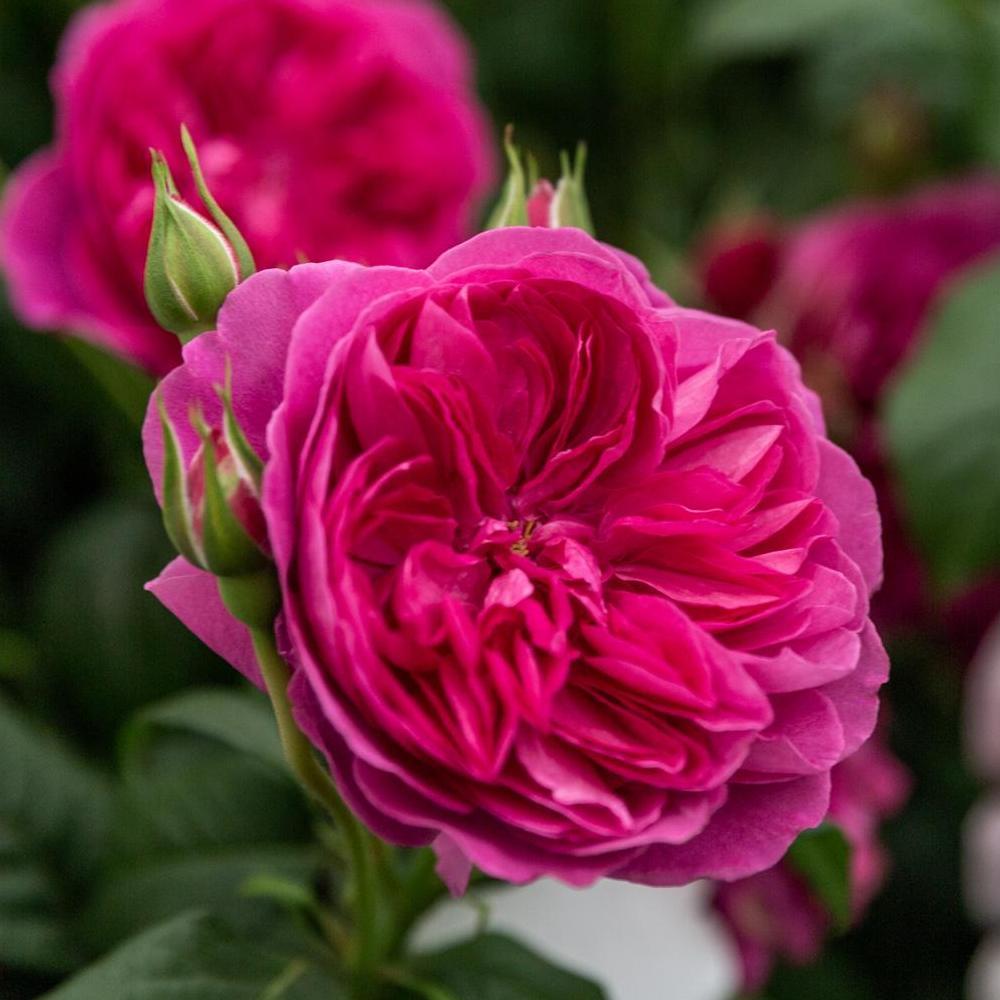
 Deep / Full Cup
A richly filled flower with pronounced depth, creating one of the most impressive and luxurious bloom forms.
In areas with prolonged wet weather, these densely petalled flowers can occasionally be more susceptible to balling, where the outer petals remain closed and prevent the flower from opening fully.
Example varieties include: Princess Alexandra of Kent® and Bring Me Sunshine®
 Shallow Cup
Sitting somewhere between a rosette and a deep cup, these blooms have a broad, gently curved profile with a softer, saucer-like appearance.
Example varieties include: James L. Austin® and Harlow Carr Open Cup
Large outer petals create a graceful cup while the centre remains open, allowing the stamens to be clearly seen. This makes open-cupped roses particularly attractive to bees and other pollinators.
Example variety include: Scepter'd Isle®




-
Roses to Welcome Pollinators into the Garden
-
The Rose Year Begins

-
What to Plant with English Roses for Autumn Colour
-
Roses with Large Blooms: Varieties for Garden Impact
-
Best Fragrant Roses for Autumn: Scent and Colour Beyond Summer
-
Using Red Roses to Bring Richness and Depth to the Garden
-
Roses for the Last Night of the Proms