


Climbing and Rambling Roses for Doorways and the Front of Your House
The entrance to your home is the first thing visitors see and the first view you enjoy each time you return. A climbing rose can completely transform a front door, soften the façade of a house or bring colour and fragrance to an otherwise ordinary wall.
Whether you're looking to frame a doorway, brighten the front of your house or make the most of a small front garden, climbing and rambling roses offer a beautiful way to add height, character and seasonal interest.
Roses for the Front of Your House
A rose growing against the front of your house enjoys a quiet advantage. Brick and stone absorb the warmth of the sun throughout the day and gently release it overnight, creating a slightly warmer microclimate. This often encourages wall-grown roses to flower earlier than elsewhere in the garden, bringing colour to your home at the very start of the season.
Growing a rose on your house also means its beauty and fragrance can be enjoyed at close quarters. Every arrival home becomes a little more special, while even a modest façade can be softened with abundant flowers and elegant foliage.
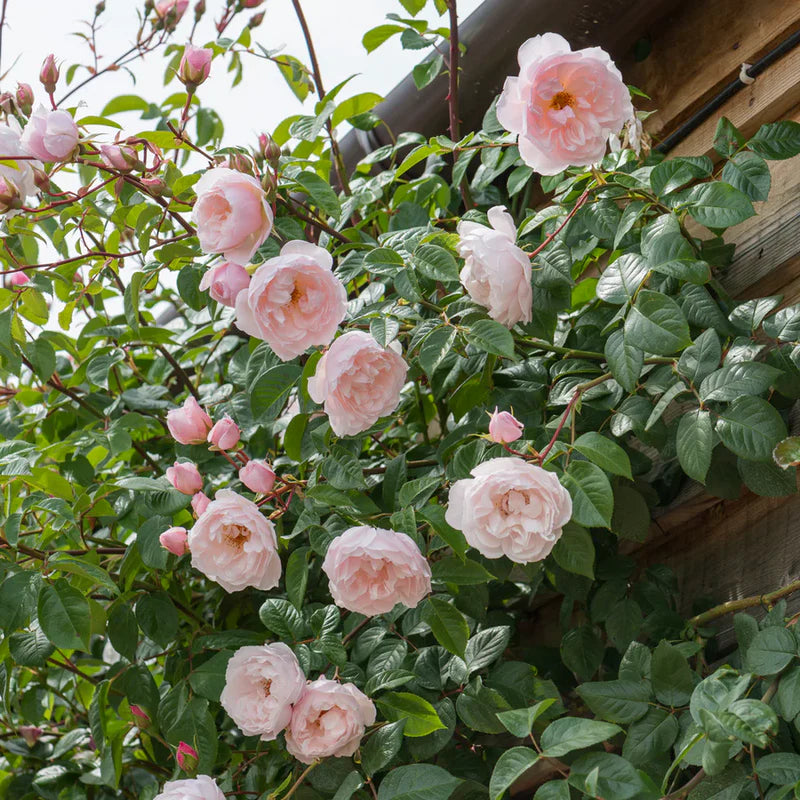
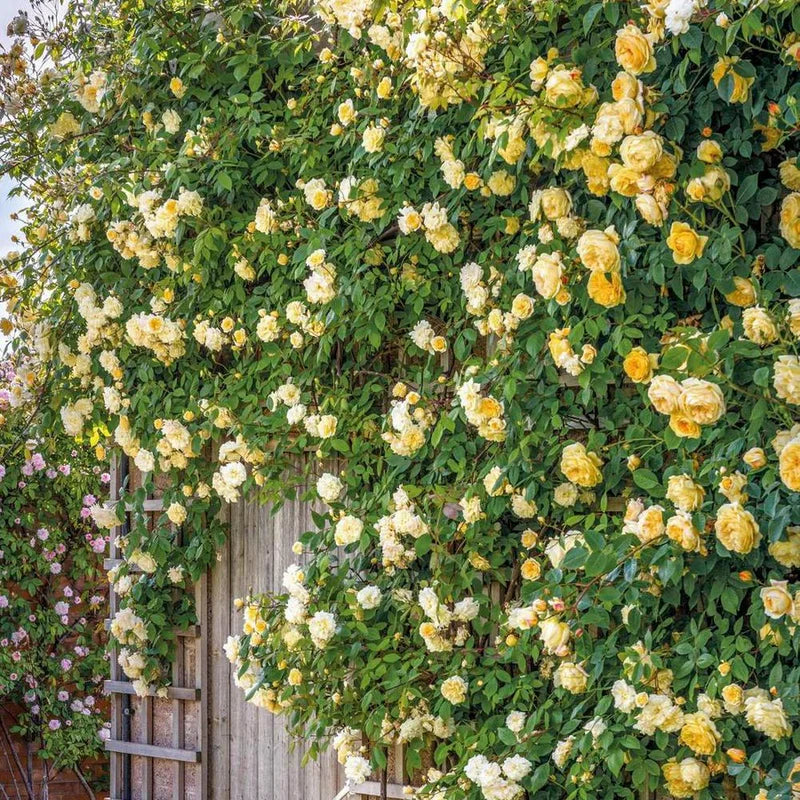
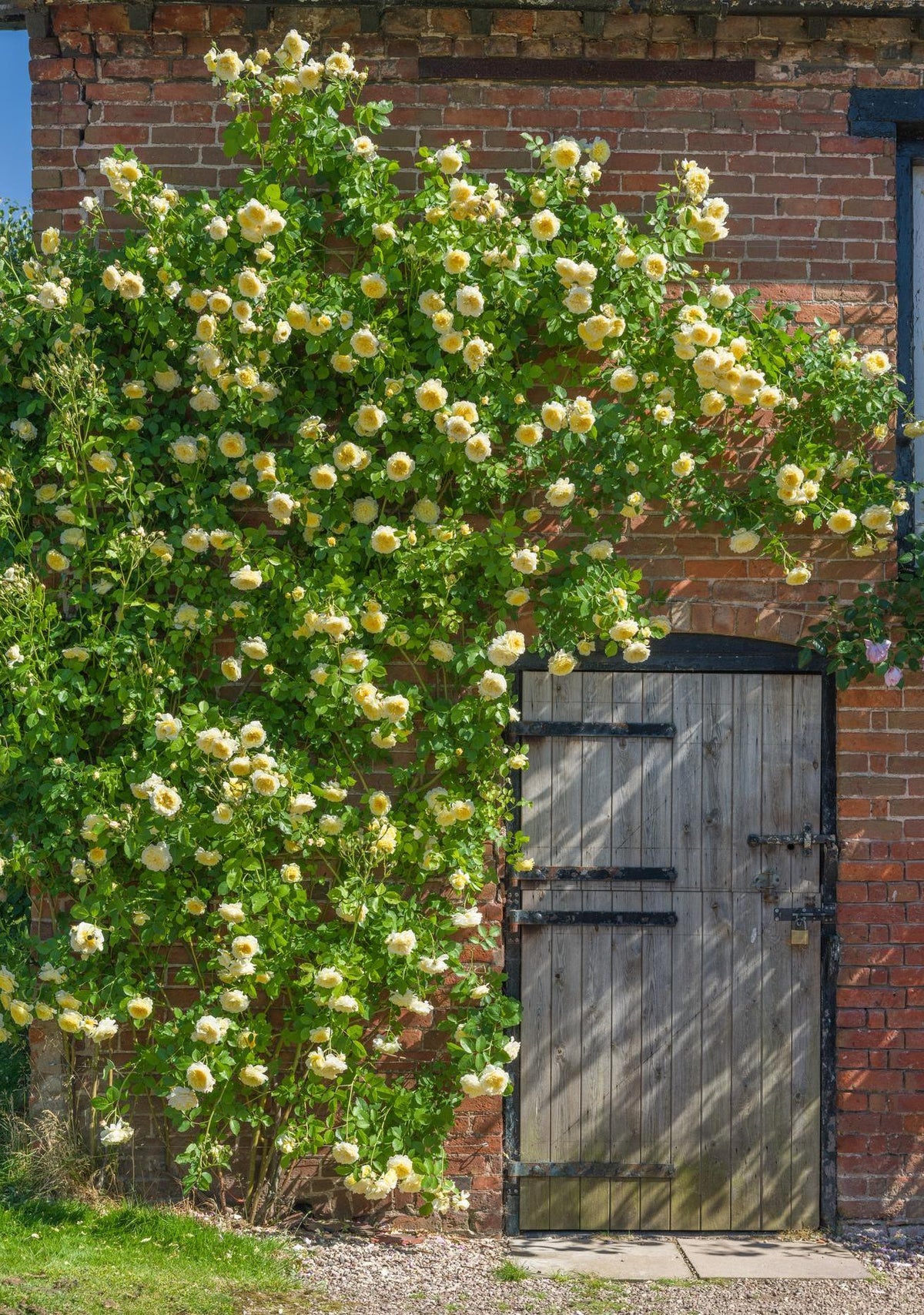
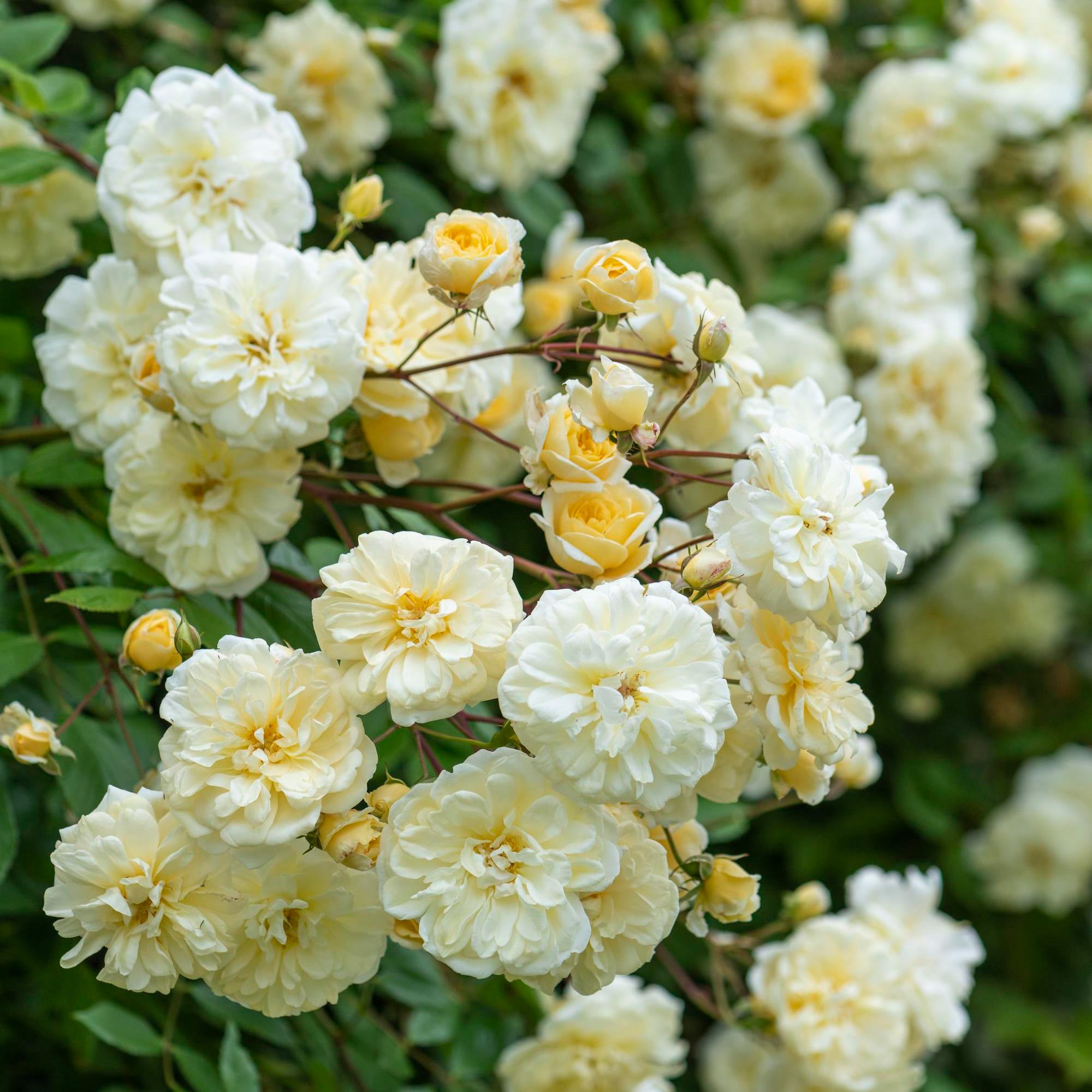
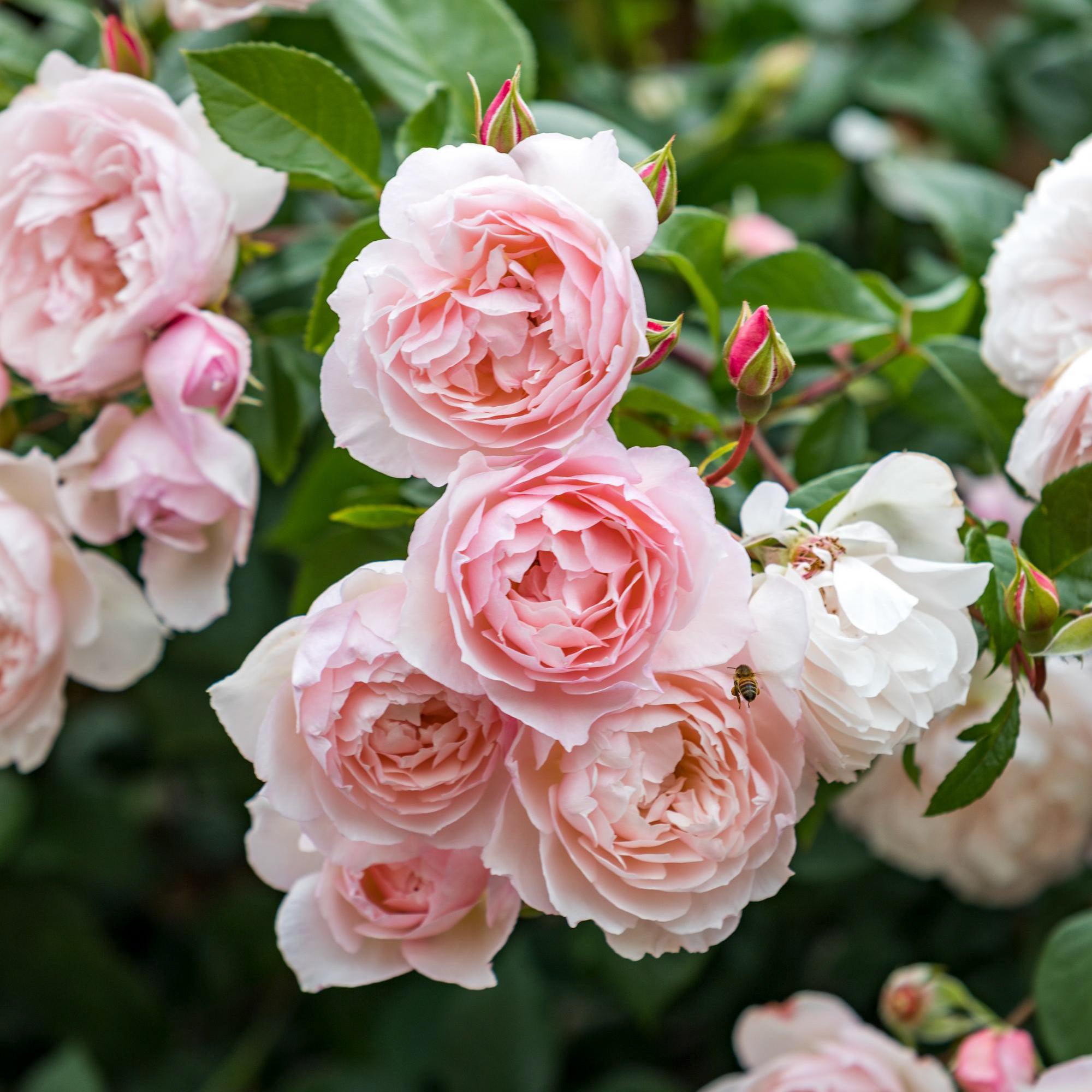
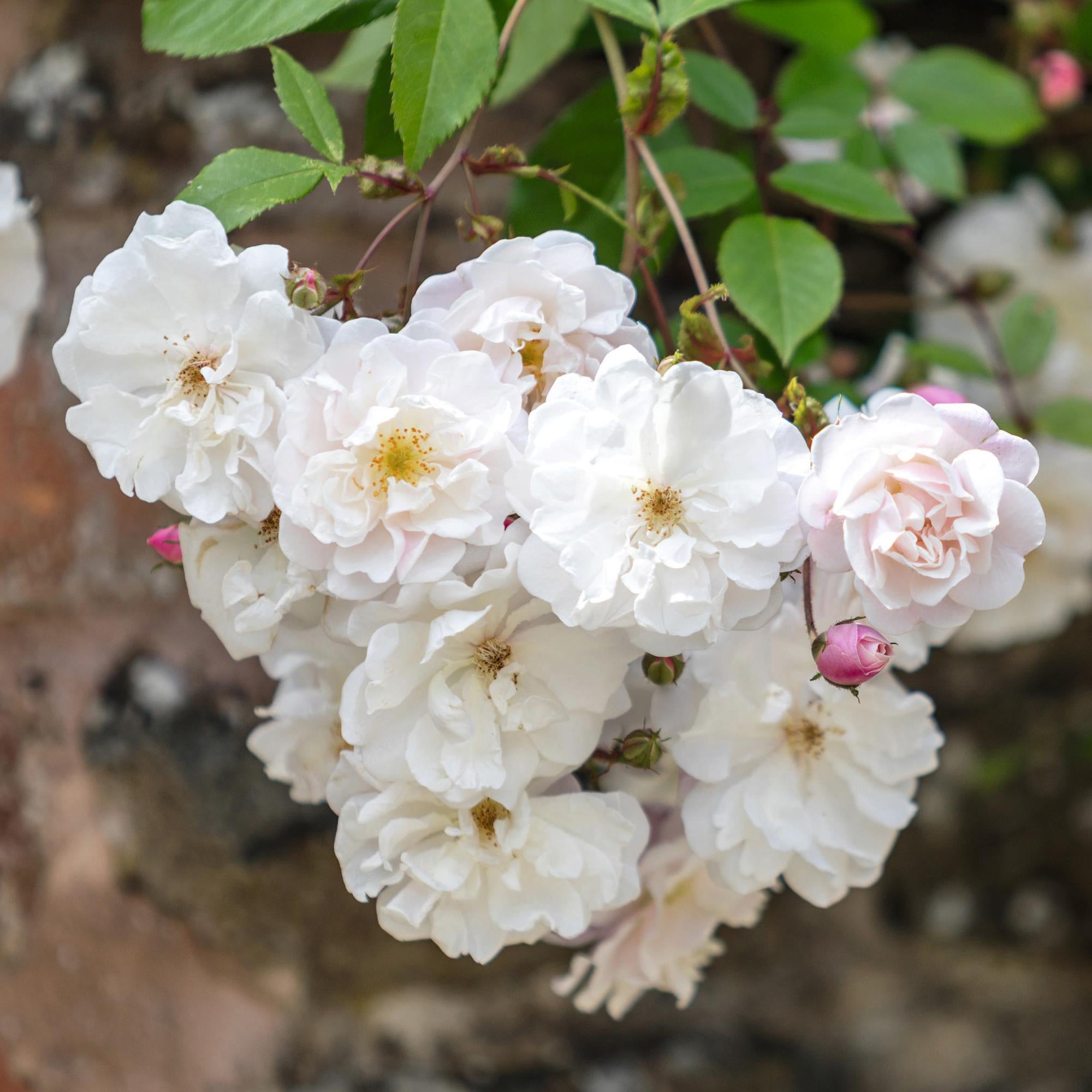
For larger walls and façades, vigorous climbing and rambling roses create a spectacular display. The Generous Gardener®, James Galway®, Malvern Hills®, The Lady of the Lake®, Adelaide D’Orleans and New Dawn are all wonderful choices for clothing the front of a house in blooms throughout the season.


Roses for Doorways
A climbing rose beside a front door creates one of the warmest welcomes a garden can offer. Trained around a porch, arch or doorway, it draws the eye towards the entrance while filling the air with fragrance each time you pass.
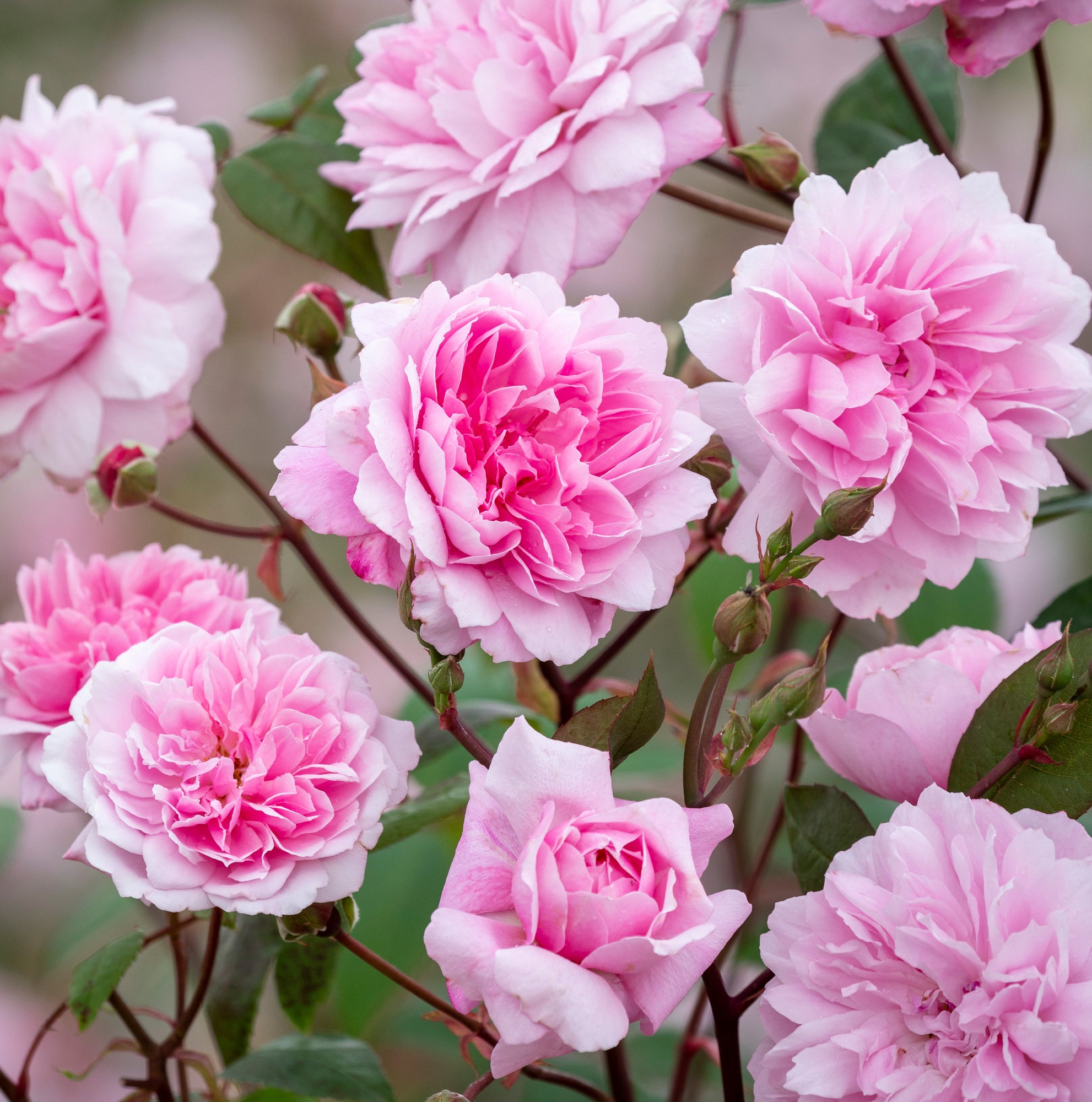
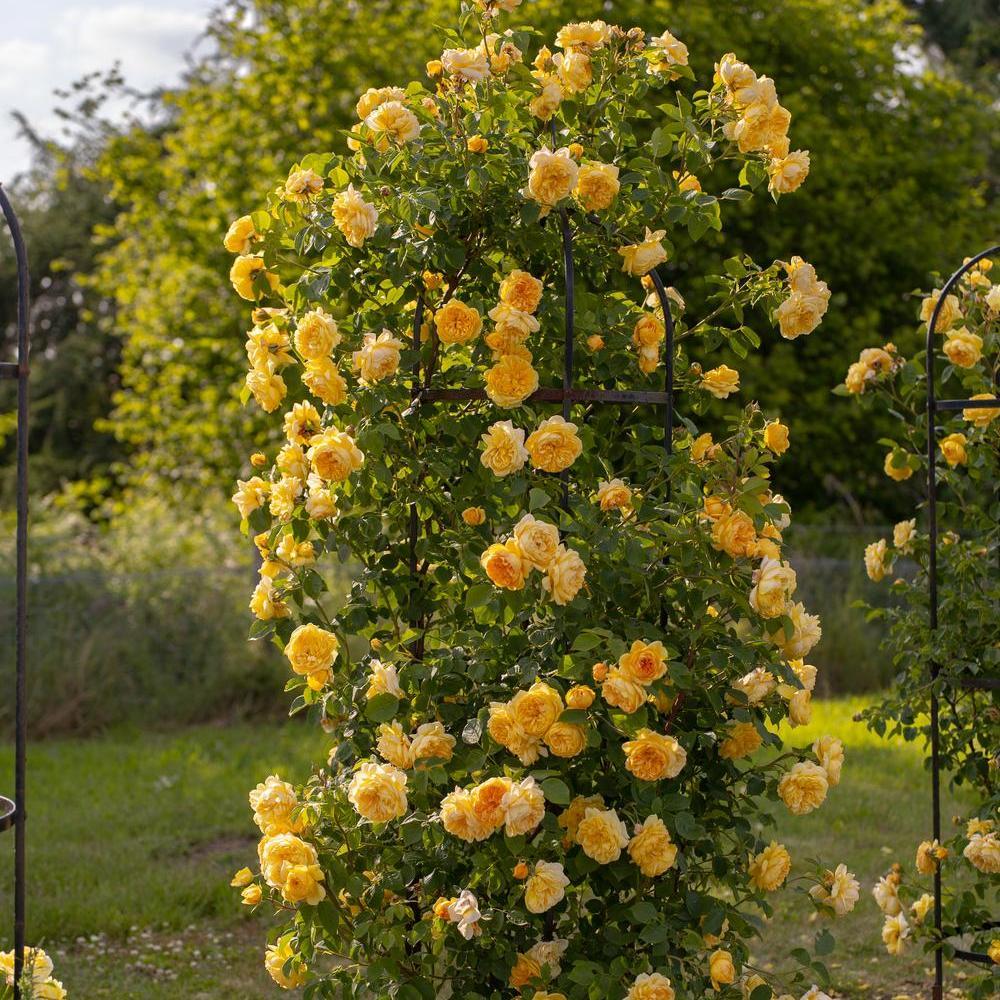
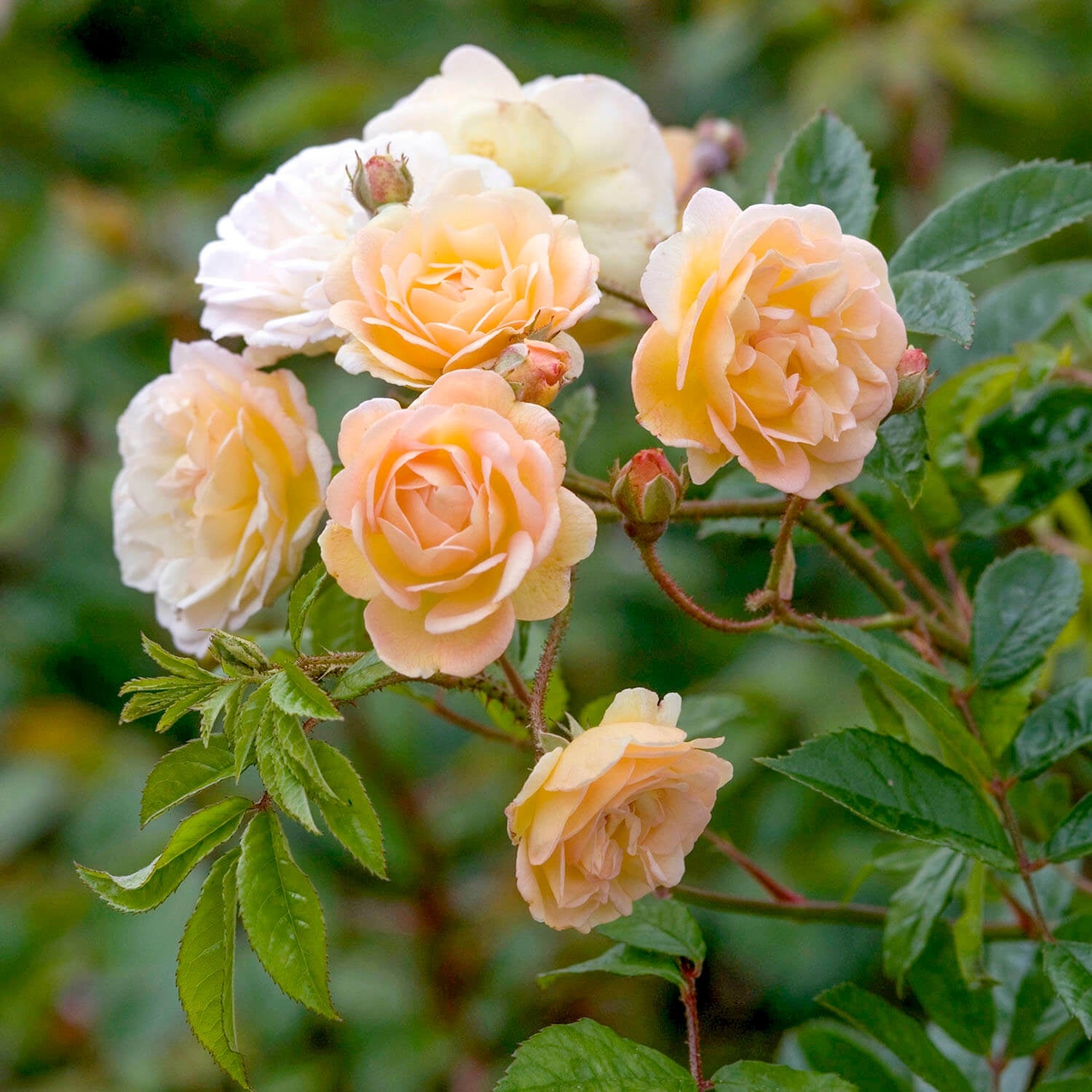
If your doorway sits close to a path or entrance, look for varieties that can be trained neatly without overwhelming the space. Claire Austin®, Strawberry Hill®, Mary Delany®, Bathsheba®, The Pilgrim® and Gertrude Jekyll® are all excellent choices for growing beside or around a doorway.
If you're planting close to frequently used paths, you may also wish to consider varieties with relatively few thorns, allowing visitors to enjoy their beauty and fragrance comfortably.




For a timeless look, place matching containers on either side of your entrance or train a pair of climbing roses to frame the doorway. Choosing flower colours that complement or contrast with your front door creates an elegant focal point.
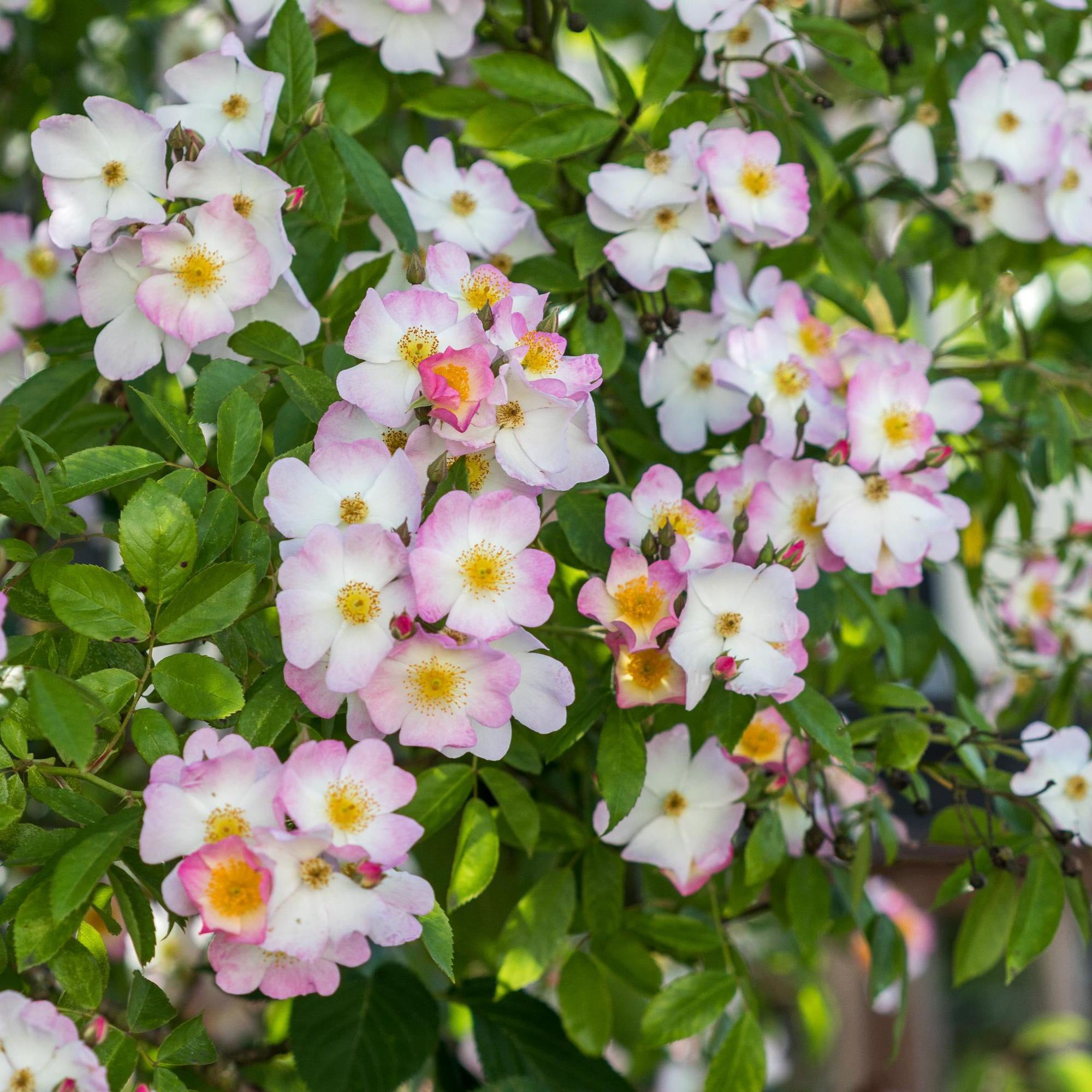
A softly flowering rambler weaving around a porch or across the front of a house instantly softens brickwork and introduces a relaxed, romantic feel. It's an effective way to bring the charm of a country garden to homes of every style.
Even where space is limited, climbing roses make use of vertical surfaces rather than valuable planting space. Walls, fences and porches become living features, bringing colour, fragrance and height without occupying much ground.

Unlike ivy, climbing roses cannot cling to walls by themselves. With a simple support system and a little guidance, however, they can be trained to produce an extraordinary display of flowers.
Step 1: Install your support
Before planting, install a sturdy support system.
Horizontal galvanised wires spaced approximately 30 to 45 cm apart are ideal. Position them around 10 cm away from the wall to allow air to circulate behind the plant.
Alternatively, use a substantial wooden or metal trellis.
Step 2: Plant away from the wall
Avoid planting directly against the house, where the soil is often dry because of the roof overhang.
Instead:
- Plant approximately 45 cm from the wall.
- Angle the rose gently towards its support.
Step 3: Train stems horizontally
This is the secret to achieving the greatest number of flowers.
Rather than allowing the main stems to grow straight upwards, gently fan them across the support and tie them as close to horizontal as possible.
This encourages flowering shoots to develop along the entire length of each stem, producing a wall of blooms instead of flowers only at the top.
Step 4: Tie with care
Secure stems using soft garden twine or flexible plant ties.
Leave enough room for each stem to thicken naturally as it grows.
No planting border? A beautiful entrance is still within reach.
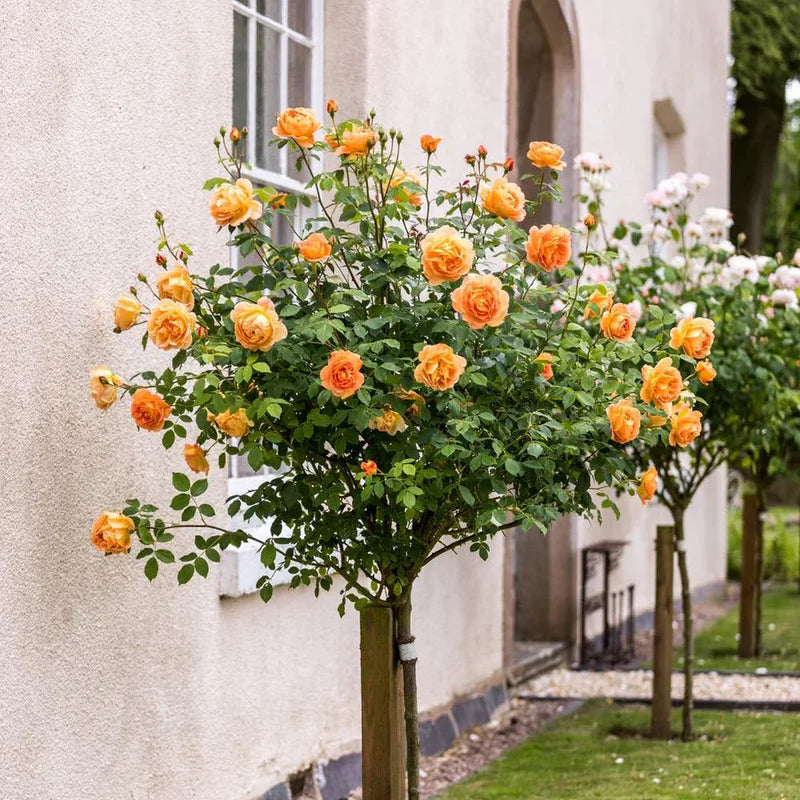
Many English shrub roses thrive in large containers, making them perfect for patios, paved front gardens and front doors.
Choose a sturdy container at least 60 cm wide and deep. The larger volume of compost helps retain moisture, keeps roots cooler during summer and provides the stability needed for healthy long-term growth.
-
Climbing Roses and Rambling Roses: Understanding the DifferenceClimbing roses and rambling roses each bring height, fragrance and beauty to the garden, but they do so in different ways. While both can transform walls, arches and pergolas, understanding their unique growing habits will help you choose the right rose for your space and enjoy its full potential for years to come.
-
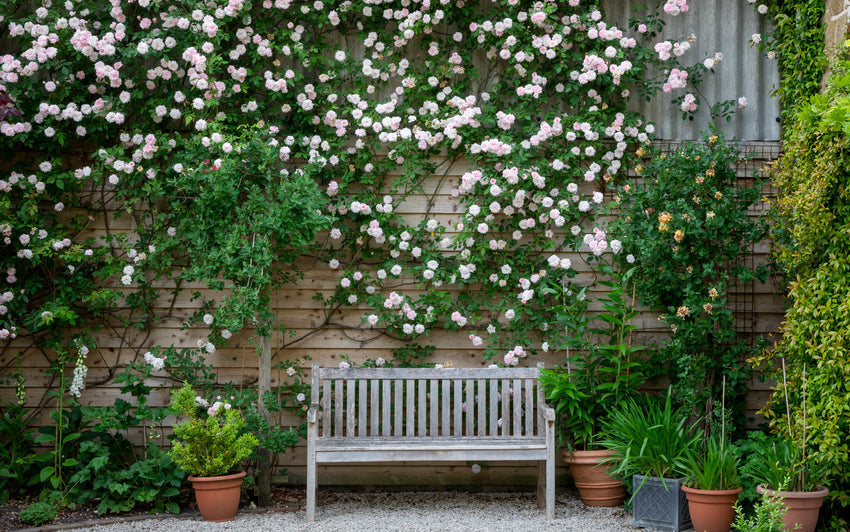
Creating Living Walls with Climbing and Rambling RosesA living wall has a way of transforming a space, turning a simple surface into a quiet theatre of petals, scent and shifting light. When English Roses form the foundation, the display becomes generous and enduring. Their repeat blooms, soft colours and naturally graceful habit bring depth and character to any vertical space, whether it is a boundary fence, a warm house wall or a tucked-away corner that needs a little life.
-
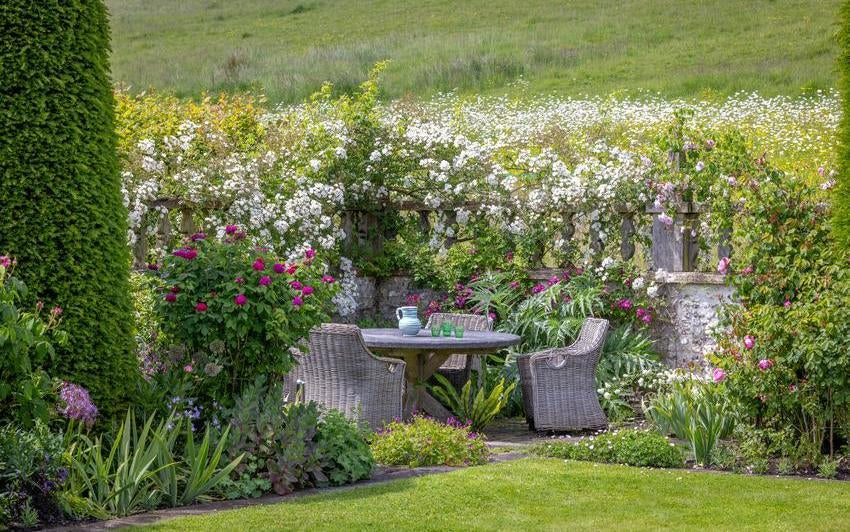
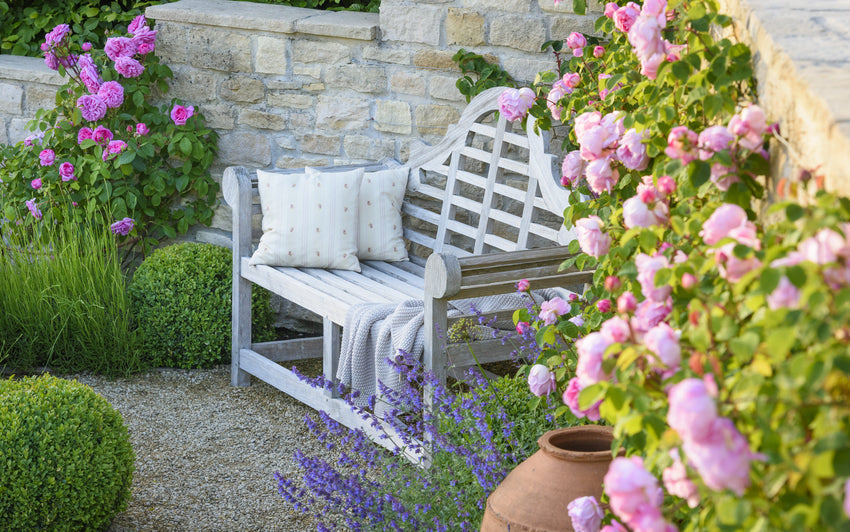
Garden Seating Ideas: How to Create a Beautiful Rose-Filled RetreatA well-placed seat can completely change the way you experience your garden. It creates a destination, encourages you to slow down and offers the opportunity to enjoy the beauty and fragrance of your roses from a different perspective.
-
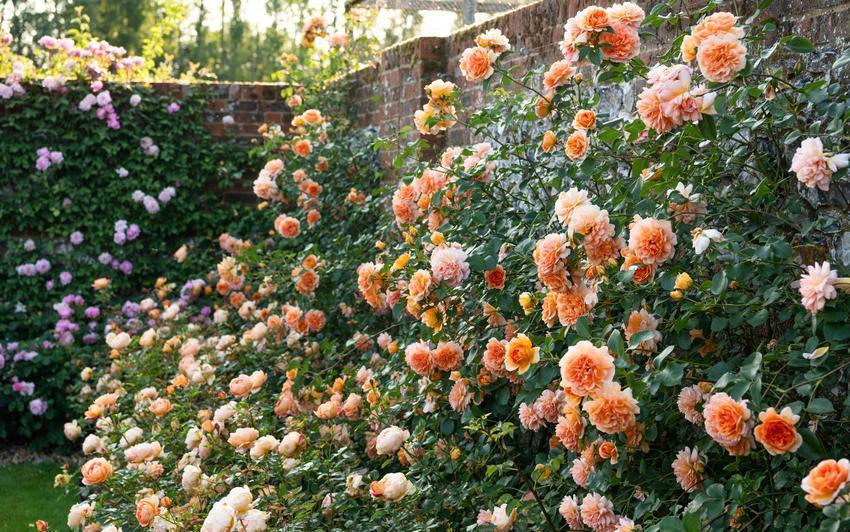
Think Beyond the Border: Growing Shrub Roses as Short ClimbersWhen choosing a rose for a garden wall, arch, or obelisk, most gardeners naturally turn to the traditional climbing section of the catalogue. Yet, the perfect vertical accent for your garden might not be a conventional climber at all.
-
Shaping the Garden with Climbing and Rambling Roses by Jo ThompsonClimbing and rambling roses are threads that run through every garden I create, quietly shaping and reshaping the mood of a place. There is so much to admire in a rose. Its colour, the form of each flower, its fragrance, and the way it ages all come together to create what matters most to me in a garden, its atmosphere.


